

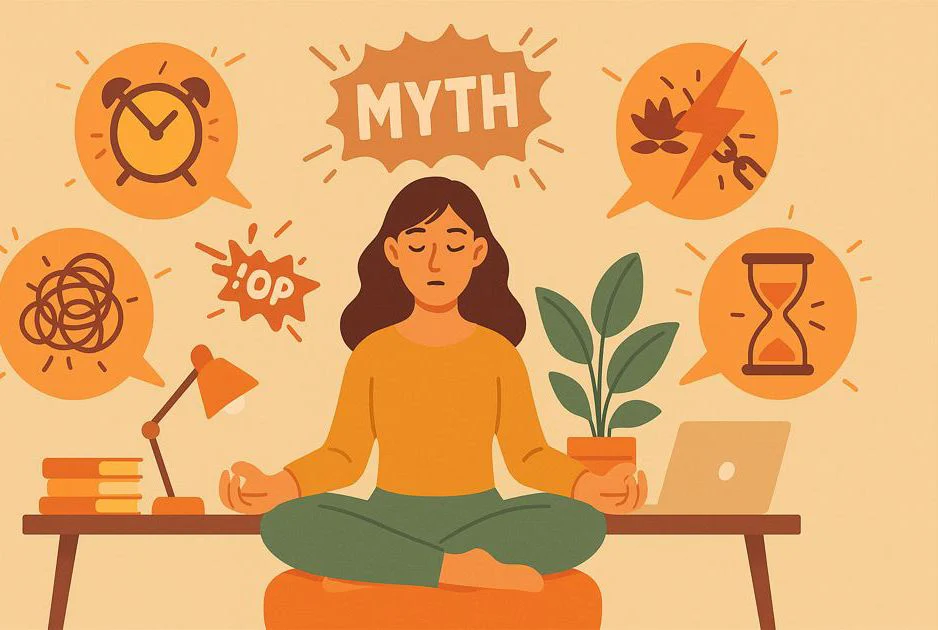
Imagine you have a toolbox – but not for your bicycle or kitchen, rather for your mind. Meditation is such a toolbox. Some seek the large hammer to combat stress, while others prefer the small screwdriver for everyday tasks. However, many dismiss the toolbox because they have heard somewhere that meditation is either impractical, too difficult, or simply not “their thing.”
To be honest, I used to think meditation was only for monks on mountains or esoteric fans with incense sticks. Somehow floating, somehow far away from real life. And maybe you have similar reservations – that’s totally normal. Most people have an image in their heads that has nothing to do with their own everyday lives.
Today, we’re going to take a look at five common myths that prevent many people from even trying meditation. Don’t worry, you don’t need to sit cross-legged or use a singing bowl. Together, we’ll take a look at what’s really true – and what you can safely forget. Let’s start with myth number one…
Table of contents
Myth 1: “You have to completely clear your mind”

Do you know that feeling when you finally want to sit down – perhaps for the first time ever – and your head just won’t cooperate? Instead of silence, your thoughts are racing: What’s still on my to-do list, did I pay the rent, what am I going to eat later? And you think, “Meditation means thinking about nothing – why can’t I do it?”
Here comes the all-clear: thoughts are completely normal; they are even part of meditation. The brain constantly produces thoughts, regardless of whether you are a beginner or have been practising for years. Even the professionals who have been studied report thoughts that come and go like clouds in the sky. There is no switch that resets everything to zero.
-

Anahata Harmony
49,95 € -
Manipura Strength
49,95 € -

Muladhara Balance
49,95 €



Meditation is actually much more about noticing these thoughts, observing them – and then letting them pass without getting caught up in them. It’s a bit like exercise: just because your mind isn’t completely “empty” when you’re jogging doesn’t mean you’re not getting any benefit from the workout. The movement still counts.
I still remember my first meditations. It felt like there was more chaos than before, with new memories and to-do lists constantly popping into my head. And that was okay! After a few attempts, I realised that it’s not about switching off, but about observing – and that immediately takes the pressure off.
So, the next time you realise that your head is anything but empty, congratulations, you are completely normal. Meditation is observation, not emptiness. Let’s move on to the next myth that often comes up: many people think that meditation is only for certain types of people…
Myth 2: “Meditation is only for spiritual or esoteric people.”
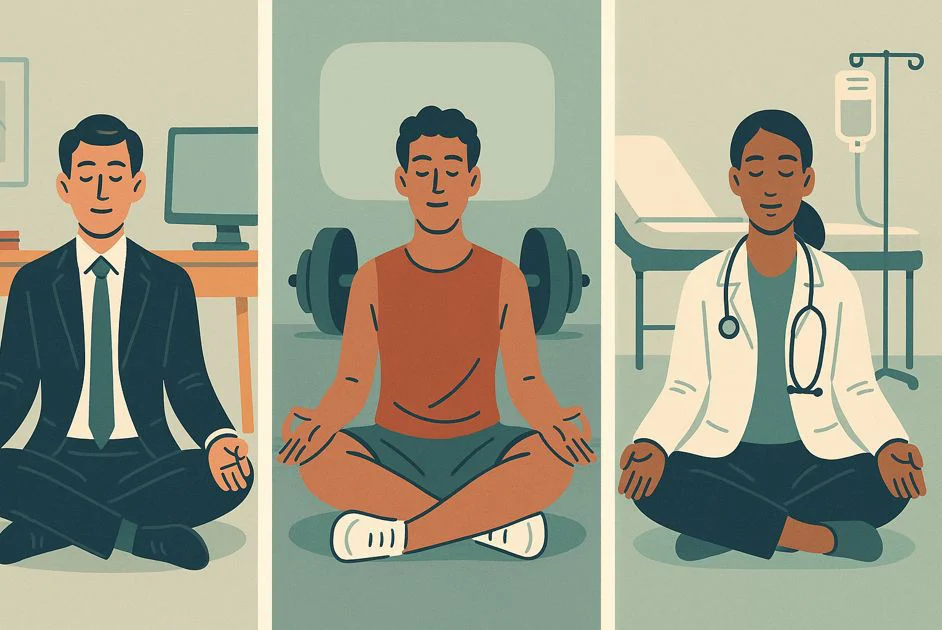
Perhaps you have this image in your mind: meditators sitting cross-legged, surrounded by incense sticks, somewhere on a yoga mat at sunset. See? The cliché runs deep. No wonder many people think meditation is an exclusive club for particularly spiritual or esoteric people.
But that is long outdated. Today, meditation is used by a wide variety of people: managers who take a moment to collect themselves before meetings; athletes who improve their performance through mindfulness; doctors who use meditation for stress management. And no, very few of them have a singing bowl on their desk.
Meditate better – sit differently
Meditation does not begin in the mind, but in the body. Studies show that an upright spine creates a…
Science has also long since discovered meditation. Mindfulness is taken seriously in medicine and stress research. Numerous studies show that meditation can lower blood pressure, strengthen the immune system and even improve concentration – without any religious trappings.
I felt the same way at first: I was hesitant because I thought I wouldn’t fit in. Later, meditation became an everyday tool for me, almost like brushing my teeth. No one asks you if brushing your teeth is spiritual – it’s just part of life because it’s good for you.
Meditation is not a secret club, nor is it an exclusive hobby, and it certainly does not require belief in anything supernatural. Anyone can meditate, regardless of their lifestyle or beliefs. Perhaps you still feel that you don’t have time for it? That’s exactly what the next myth is about…
Myth 3: “Meditation takes forever and doesn’t fit into everyday life.”

Perhaps you are familiar with this thought: “Sure, it all sounds good, but I don’t have 30 minutes free every day! Where am I supposed to squeeze it in?” This is probably one of the most common reasons why people don’t even try meditation in the first place.
But here’s the fact check: just three to five minutes are enough to notice a noticeable effect. It’s not about sitting in the lotus position for hours on end. It’s about mini-breaks that you can easily incorporate into your everyday life – while brushing your teeth, waiting for the bus or in the evening before going to sleep.
-
Anahata Harmony
49,95 € -
Manipura Strength
49,95 € -
Muladhara Balance
49,95 €
I also started with short sessions back then. Two minutes on the sofa, between two appointments. No big ritual, just closing my eyes for a moment, breathing, observing my thoughts. Over time, it became a little routine. It’s like exercise: no one runs a marathon on their first attempt. You start with short laps and slowly increase your distance.
Quality is important, not quantity. It is better to consciously pause for a few minutes every day than to struggle through half an hour once a month. Small steps make a difference in the long run.
And here’s another tip for advanced practitioners: you can incorporate meditation anywhere. At the supermarket checkout, while waiting at traffic lights, even during your lunch break. You don’t need perfect silence or a special place. Sometimes, the hustle and bustle around you is the best training ground.
The next preconception that holds many people back is the idea that meditation must always lead to immediate relaxation – and if it doesn’t, something is wrong…
Myth 4: “Meditation is relaxation – and if I don’t feel better, I’m doing something wrong.”
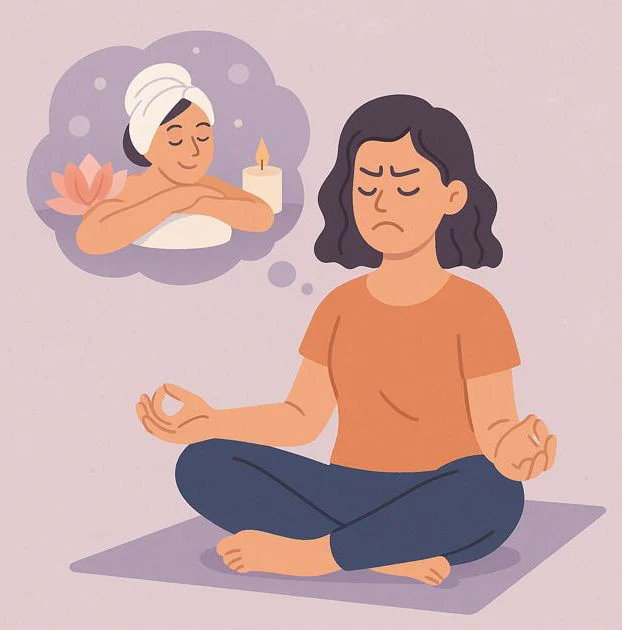
Many people imagine that you sit down, close your eyes, take a few deep breaths – and suddenly there is absolute calm. As if someone had flipped a switch and you were immediately completely relaxed, almost like after a day at the spa. Honestly? This expectation is quite common, but it also causes a lot of frustration.
Meditation is not an instant relaxation machine. There are days when sitting feels more like waiting for the next bus that just won’t come – restless, boring, somehow tedious. And sometimes, unpleasant feelings that you had previously suppressed well suddenly surface. This is not wrong, but part of the process.

How to find your perfect crystal
Choosing the right stone can be overwhelming at first – there is a huge variety available, and each …
From a scientific point of view: the positive effects of meditation build up gradually. It’s like muscle training – a single workout won’t make you stronger right away. The changes happen slowly, almost imperceptibly, but become apparent over time. And yes, there are also moments when you simply feel annoyed after meditating because it doesn’t seem to have “worked”.
I remember my first attempts: I waited for some kind of special feeling to come over me – that legendary enlightenment or at least a little bit of happiness. Instead, I often just felt impatient or slightly irritated because my thoughts were all over the place again. On days like that, I wondered if I was doing something wrong.
A humorous perspective can help here: if meditation always triggered a fireworks display of positive feelings, then there would probably be no more excuses not to do it. But that’s not how the mind works – and that’s perfectly okay.
You don’t have to feel better right away to benefit from meditation. Sometimes it’s like a workout day that feels exhausting but is still important. Keep at it, even if it’s not always pleasant. Let’s move on to another myth that puts unnecessary pressure on many people…
Myth 5: “Meditation is only successful if I am completely calm and disciplined.”

Perhaps you are familiar with this thought: “It doesn’t work for me because I simply cannot sit still. My mind does what it wants anyway.” Many believe that meditation is only successful if you sit motionless and totally disciplined like a Zen master – preferably without a single thought.
The truth is: there is no right or wrong way to meditate. Restlessness is a normal part of the process. Even people who have been meditating for years have days when they feel fidgety or their thoughts are racing. Perfection is not the goal; the goal is to keep at it.
Even after years of practice, I still have moments when my meditation feels more like a flustered flock of chickens than a tranquil lake. And you know what? That’s perfectly fine. Every attempt counts, no matter how restless or brief it may be. It gets easier with time, but it never becomes completely “perfect” – and it doesn’t have to be.
Top-rated products
-

Sahasrara Connect
49,95 € -
Muladhara Balance
49,95 € -
Swadhisthana Flow
49,95 € -
Manipura Strength
49,95 €




Compare it to training: not every session is a best performance day. Sometimes things go really well, sometimes they don’t. The important thing is to keep going and not stress yourself out when things don’t go as hoped.
Every meditation, even the chaotic ones, takes you a small step further. It’s about the habit, about regularly coming back to yourself – not about silence at the touch of a button. So don’t let it put you off if it doesn’t feel ‘right’. That counts double!
If you like, try simply sitting down – without expecting absolute peace and quiet. Observe yourself as you are, with everything that comes your way. And then see how you feel after a few days. Now take a look back – time for an honest conclusion and a brief outlook.
Creating habits – How to implement your 5-minute routine
ca. 5 minutes
Step 1: Define your micro time slots.
Consciously choose 2-3 minutes in your daily routine as a starting point (e.g. in the morning before your coffee, while brushing your teeth, in the evening before going to sleep). Important: Choose a time that already exists to minimise pressure.
Step 2: Link meditation to a habit.
Use the “if-then” rule: If I turn off the stove, then I close my eyes for 60 seconds and focus only on my breathing. Link the mini-meditation to a fixed daily task.
Step 3: Reduce your expectations to zero.
The goal of the first few weeks is not silence or relaxation, but consistency. Do not evaluate the exercise. When your thoughts wander (which they will!), say “thought” to yourself and gently return to your breathing. This is the training moment.
Step 4: Reflect after 7 days.
After a week, review when it was easiest and when it was most difficult. The routine is flexible – adjust it so that it feels right for you. Important: Keep a brief meditation tracker (app, notes) to visualise your progress.
Conclusion & Outlook
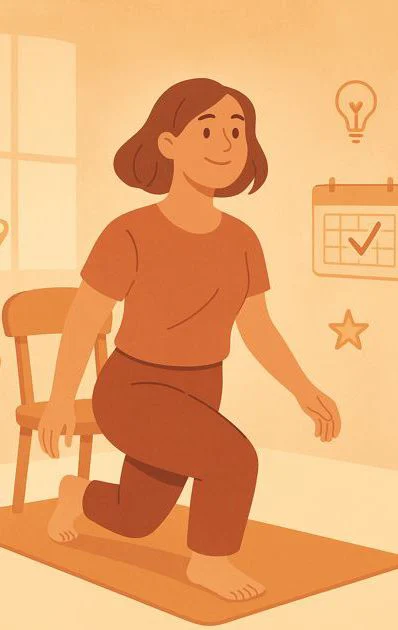
If you take another look at the five myths, you will quickly realise that it is often the ideas in our heads that hold us back more than the actual meditation itself. The pressure to do everything “right” from the outset prevents many people from even getting started.
Meditation is not a secret club, not something for the chosen few, and certainly not a competition. It is a tool that is available to everyone – no matter what your everyday life looks like or how “restless” you feel. It’s not about being perfect or experiencing total silence every day. It’s about trying it out, sticking with it, and treating yourself with a little more curiosity and forbearance.
Perhaps you will find your own, completely new approach. Perhaps meditation will become as normal for you as brushing your teeth or going for a walk – something that is simply part of your routine because it does you good. The biggest change often happens when we take the pressure off and just see what happens.
So give it a try, even if you still have doubts. Question your own preconceptions, allow yourself to take small steps and be patient with yourself. Perhaps meditation is actually much easier – and more suitable for everyday life – than you previously thought. It’s worth sticking with it, I promise!
True clarity: the most frequently asked questions about meditation and their answers
Do I have to completely clear my mind when meditating?
No, that’s the biggest misconception. Meditation does not mean switching off thinking, but merely perceiving the emerging thoughts and letting them wmove on without judgement (observing, not holding on). The brain is constantly producing thoughts – this is completely normal.
How much time per day should I set aside for meditation?
Just three to five minutes of micro-meditation every day is enough to achieve noticeable effects such as stress reduction and improved focus. It’s about quality and consistency (sticking with it), not hours of duration.
Is meditation only for spiritual or esoteric people?
Not at all. Today’s mindfulness practice is based on scientific findings and is used by managers, athletes and doctors to manage stress. It is a tool that can be used in everyday life without any religious connotations.
Is meditation only for spiritual or esoteric people?
Restlessness is not an obstacle, but normal. Success in meditation comes from returning to observation, not from sitting motionless and free of thoughts. Every restless session is an important training moment.
Do I have to feel better and more relaxed immediately when I meditate?
No. Meditation is a slow process of building resilience, not an instant relaxation button. Sometimes unpleasant feelings even arise. The long-term positive effects only kick in with consistent practice.
This is how meditation becomes a habit
The real moment when motivation arises Do you know that great feeling you get right after exercising…

5 reasons why your meditation is failing
Why do so many people give up their meditation practice after just a few weeks—even though they know…
Crystals in meditation practice
Many people say that meditation with crystals is just esotericism—but recent studies on mindfulness …

