


Why do so many people give up their meditation practice after just a few weeks—even though they know that meditation helps? From our experience with beginners and from research, we know that regularity is much more important than perfect sessions.
I reveal five invisible obstacles—and at the end, I give you a short exercise that you can use to immediately anchor your personal “why.” Five reasons why your practice is failing—plus a 3-minute exercise that you can try right away.
Write a quick comment now: Have you ever given up? Yes or no?
Perhaps you have also experienced how quickly initial motivation wanes.
Inhaltsverzeichnis
Why motivation alone is not enough – The hidden lever behind real change

We often start out full of enthusiasm: you may have read an inspiring book or seen an exciting interview and are convinced that this time you will really stick with it. The first few days everything goes according to plan, you sit on your mat in the morning, motivated and ready. But then everyday life gets in the way. An important appointment, tiredness after a short night—and suddenly the mat remains empty. After a short time, you ask yourself: Why can’t I stick with it, even though I know how good meditation is for me?
This highlights a key point: motivation feels powerful, but it is usually short-lived. It is like a spark that lights up quickly but fades just as quickly. Once the initial euphoria wears off, it takes more than just a good feeling or memories of past successes. What sustains you in the long term is a clear commitment—that is, the conscious decision to make space for meditation, regardless of how your day is going or how you feel at the moment.
Popular products
-

Muladhara Balance
49,95 € -
Swadhisthana Flow
49,95 € -
Manipura Strength
49,95 € -
Anahata Harmony
49,95 €




Our brains love repetition more than inspiration. Neuroscience studies show that regular repetition makes neural change more likely than single, motivated moments; long-term practice forms connections in attention and emotion networks. Every time you sit down on your mat despite inner resistance, you strengthen these new pathways. Gradually, the practice becomes second nature, similar to brushing your teeth every day—you think about it less, it’s just part of your routine.
The experience of many long-term practitioners shows that hardly anyone is highly motivated every day. Even advanced practitioners experience restless nights, stressful workdays, or moments when they would rather turn over and go back to sleep. What helps them is a small, fixed routine. A simple but effective tip: sit down for five minutes at the same time every morning, no matter how you feel. This fixed 5-minute morning session can become your anchor—it’s short enough to leave no room for excuses, yet still gives you the momentum you need to stick with it.
Discipline is often more reliable than short-term motivation. With each regular session, you not only strengthen your meditation practice, but also your ability to deal with stress, sensory overload, and inner turmoil. Your brain learns to collect itself and calm down even in chaotic situations. In short, regularity shapes the brain’s networks, not occasional inspiration.
But how do you manage to truly live up to this commitment—especially on days when everything seems to be going against you? What gives you the strength to start over again and again, even when circumstances are difficult? This is exactly where your personal “why” comes into play.
Find your true ‘why’ – The 5 reasons that will keep you going

Many people start meditating because they hope to achieve greater relaxation. However, this motivation is often not enough to keep them going in everyday life—especially when stress and fatigue take over. Studies suggest that a deeper, personal “why” increases the likelihood of integrating meditation into your daily routine in the long term. The following five reasons go beyond pure relaxation and offer you a stable basis for continuing even on difficult days.
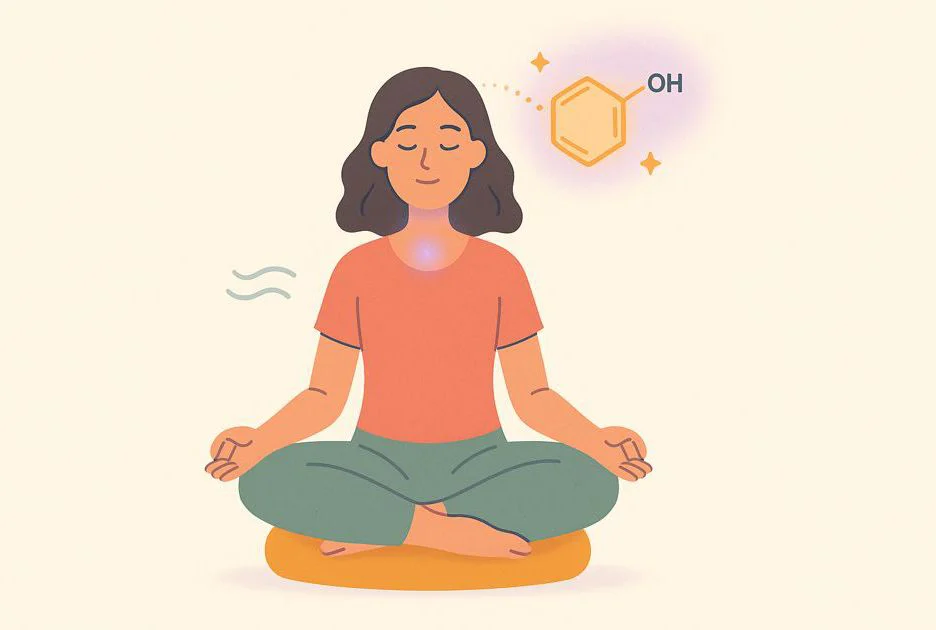
First: stress regulation. Meditation helps to take the body out of alarm mode. Even short breaks in everyday life—for example, three conscious breaths between appointments—can reduce the stress response. For beginners, it is enough to sit down for two minutes in the morning or evening and consciously focus on your breathing. Advanced practitioners can pause specifically in stressful moments and extend the break to five minutes.
This is how meditation becomes a habit
The real moment when motivation arises Do you know that great feeling you get right after exercising…
Second: Emotion regulation. Meditation teaches you to distance yourself from your impulses. Instead of reacting immediately to anger or frustration, you can pause for a moment and observe your feelings. A simple exercise to start with: When you feel an emotion rising, name it internally—for example, “anger” or “restlessness.” Those who are already a little more experienced can specifically accompany difficult feelings with their breath and observe how they change.
Third: Strengthen self-awareness. Regular practice sharpens your awareness of inner signals. A two-minute body scan helps beginners to feel their own body more consciously. Advanced practitioners can extend the exercise to five minutes and try to perceive even subtle sensations without evaluating or naming them.
Fourth: Develop self-compassion. Compassion exercises help you treat yourself more kindly—especially when things don’t go as planned. For beginners, a small gesture is a good place to start: place your hand on your heart and say a kind phrase to yourself, such as “It’s okay to be who I am.” Those with more experience can incorporate a short metta meditation regularly and send good wishes to others as well as themselves.
Fifth: Acceptance of setbacks. Meditation shows you that setbacks are part of the process. Instead of criticizing yourself for a missed day, you can remind yourself that every attempt counts and repetition shapes behavior. For beginners, this means simply starting again after a break. Those who have been practicing for a while can observe how their approach to “bad days” changes over time.
Take a moment now and think about which of these five reasons appeals to you the most. Formulate your personal “why” in one sentence, for example: “Because I want to deal with stress more calmly so that I can remain kind to myself even in difficult times.” Write this sentence down—in your cell phone, on a piece of paper, or in your notebook. This will give you a clear anchor that will remind you even when your motivation wanes.
With this personal reason, meditation becomes more than just a task on your to-do list. It becomes a practice that strengthens you in your everyday life—no matter how turbulent things may be at the moment. However, many people still cling to the idea that meditation is only “right” if it is completely calm and perfect.
The myth of perfect meditation – Why failure is part of the process
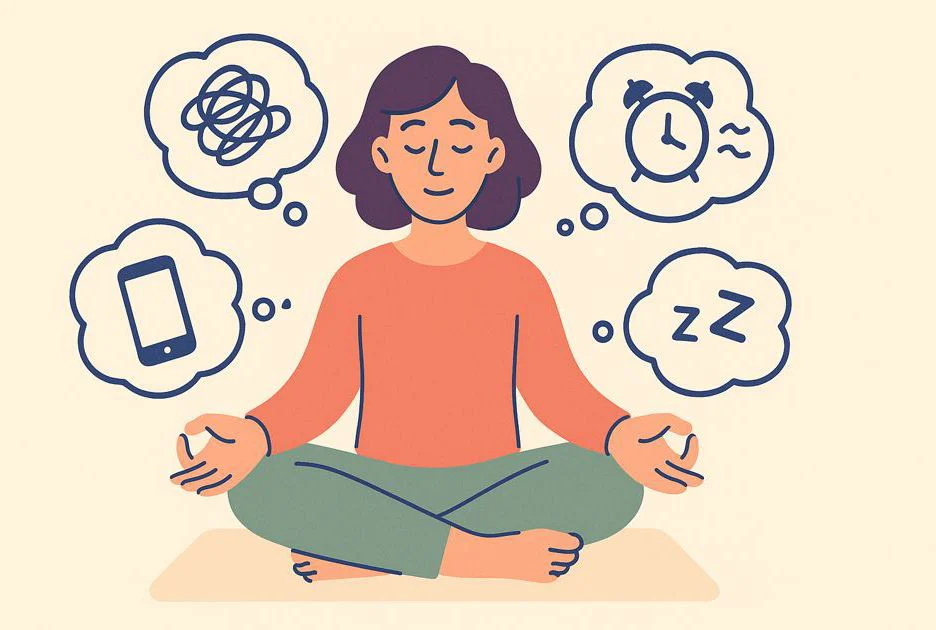
There is no such thing as perfect meditation. This is one of the biggest myths that prevents many people from really sticking with it. We often imagine that meditation must be like an island of absolute tranquility—but the reality is quite different. You sit down, and after just a few breaths, thoughts arise that seem to go on forever. You quickly get the feeling that you are doing something wrong or that you are not good enough.
It is precisely this pursuit of perfection that often blocks actual progress. Many beginners believe that everything always runs smoothly and clearly for experienced meditators. However, studies show that even seasoned practitioners regularly experience phases of inner turmoil; the difference is usually that they continue regardless. It is not the technique that solves everything, but the ability to remain present even on chaotic days. Those who practice regularly develop precisely this perseverance—and that is much more important than any single “perfect” session.
Best-selling products
-
Muladhara Balance
49,95 € -
Swadhisthana Flow
49,95 € -
Manipura Strength
49,95 € -
Anahata Harmony
49,95 €
Short or restless sessions still have measurable effects—research shows that even brief exercises such as a body scan or five minutes of conscious breathing observation can lead to acute stress reduction, improved mindfulness, and initial neurophysiological changes. So it’s not about how calm you are or how long you sit. What matters is regularity and the willingness to engage in the practice again and again – regardless of how your day is going.
From a neuroscientific perspective, perfection is not a benchmark either. Intensive and regular practice has been proven to lead to changes in attention networks and sleep oscillations. This means that even on days when you feel restless or your thoughts are racing, your brain continues to work and build new connections. Every moment on the mat counts, even if it feels imperfect.
Many people believe they have to fulfill certain conditions—a fixed sitting posture, absolute silence, a specific duration. But even two minutes of observing your breath or a short body scan can be effective, even if you feel distracted or restless. There is no secret formula for what is right or wrong in meditation. The practice is alive and can feel different every day.
Perfectionism often leads people to give up too soon. Those who believe that meditation must always be successful quickly lose their joy and motivation. On the other hand, those who accept that difficult or “bad” sessions are also part of the process develop genuine self-compassion. It is precisely in these moments that you learn not to judge yourself. This makes your practice more stable and deeper in the long term.
If things are chaotic today, sit down for two minutes, simply feel yourself breathing in and out, and say to yourself: “This is a restless session—okay.” This little exercise will help you let go of perfectionism and still stick with it. This will help you develop more self-compassion and be better equipped to face the challenges of everyday life.
What really matters in the end is not the perfect session, but that you keep practicing with your personal why. This lays the foundation for real change—and that is precisely the crucial step on your journey.
Your “why” as an anchor – The first step counts
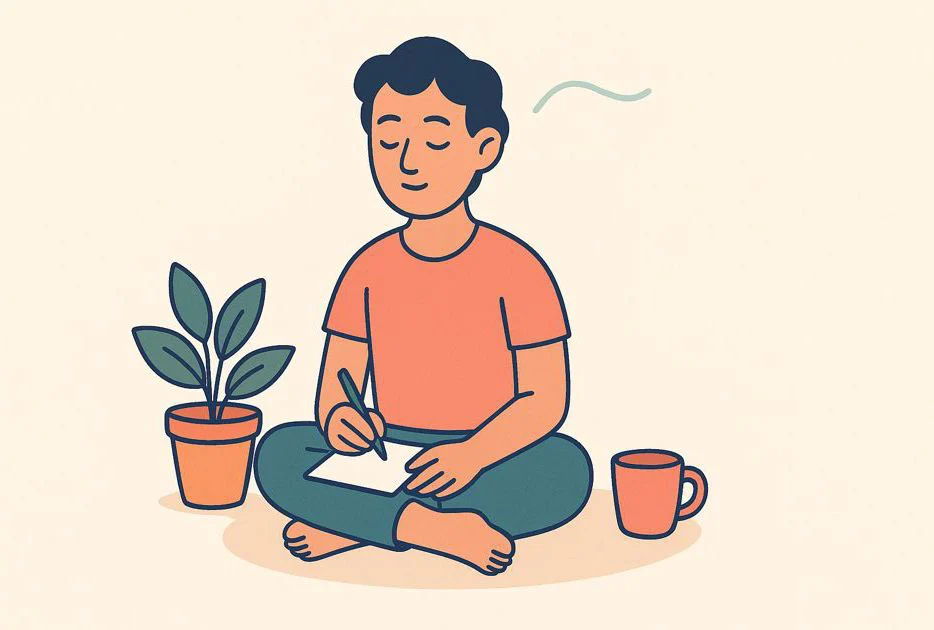
A strong “why” is your anchor for practice—especially on days when it’s difficult. Just 3–5 minutes a day can make a noticeable difference, as studies on short mindfulness exercises show. Write down your personal “why” on a piece of paper and stick it on your bathroom mirror, for example. Try reserving the first five minutes of your day for meditation for a week.
This is how meditation becomes a habit
The real moment when motivation arises Do you know that great feeling you get right after exercising…
Here is a simple technique to get you started: Sit comfortably, close your eyes, and focus your attention on your breathing. Take four conscious breaths, then simply observe the coming and going of your breath for two minutes. If thoughts arise, gently bring your attention back without judging them.
Share your “why” in one sentence in the comments below and write about what has slowed you down the most so far. Setbacks are part of learning—the more often you start again, the more likely change will be.
Frequently asked questions about long-term meditation practice
Why can’t I stick with meditation in the long term?
Often, the personal “why” is missing. Focus on small, fixed routines and find your individual motivation to integrate meditation into your everyday life in a sustainable way.
How can I stick with meditation even during stressful times?
Choose a fixed time, e.g., in the morning, and stick to short sessions (e.g., 5 minutes). Regularity counts more than perfection—especially on stressful days.
What should I do if my mind is restless during meditation?
Accept distraction as part of the practice. Even short, restless sessions promote mindfulness and stress regulation. The important thing is to keep at it—not to strive for perfection.
What role does my personal “why” play in meditation?
A clear reason anchors your practice. Write it down and remind yourself of it when you’re feeling unmotivated—this will strengthen your discipline in the long term.
Is there a perfect way to meditate?
No. There is no such thing as perfect meditation. The key is to practice regularly and accept setbacks. Every attempt counts on your path to greater mindfulness.
This is how meditation becomes a habit
The real moment when motivation arises Do you know that great feeling you get right after exercising…

