

Do you know the feeling that despite morning meditation or short breathing exercise you are always internally stressed, torn or empty? Maybe you’ve already tried a lot, but sometimes this diffuse feeling that something is missing remains – a deeper sense or real connection. Often behind it is a blocked crown chakra, which sits as an energy centre at the vertex of your head and is responsible for your spiritual balance.
Studies show that regular meditation can not only reduce stress hormones such as cortisol, but also noticeably increase general well-being – and this is exactly where the work with the crown chakra comes in. In this video, I’ll show you how to recognise if your crown chakra is out of balance, and how to regain clarity and inner peace with simple exercises.
Perhaps you have already wondered why some people radiate so much serenity, while others often seem restless.
Table of contents
THE SEAT OF SPIRITUALITY: WHERE THE CROWN CHAKRA REALLY WORKS
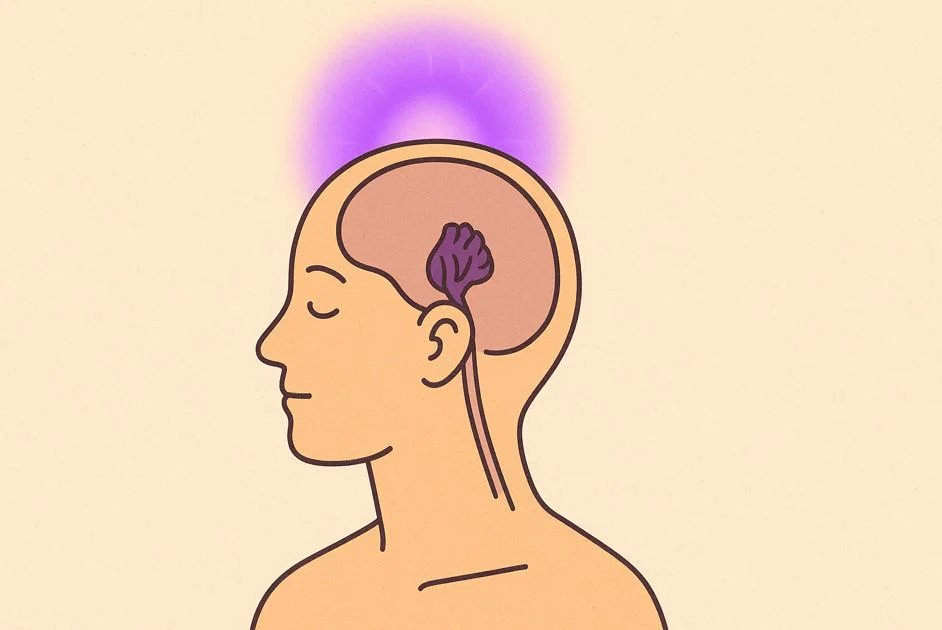
The seat of spirituality, the crown chakra – also called Sahasrara – is located at the vertex of your head. It is the seventh and last energy centre in the classical chakra system. While many areas of the body are easily felt in everyday life, this upper point often goes unnoticed. However, this is exactly where a key to your sense of meaning, clarity and inner tranquillity lies. The crown chakra is considered a connection between you and what is greater than yourself – some call it the universe, others the higher self or just a sense of width.
-

Anahata Harmony
49,95 € -
Manipura Strength
49,95 € -
Muladhara Balance
49,95 €

The symbolism of the crown chakra is closely linked to the colours violet and white. Violet stands for spirituality, transformation and inner growth. White is often associated with clarity and purity. These colours reflect the qualities you can experience when the crown chakra is in balance: a clear mind, openness to new perspectives and a deep sense of belonging. It is not about detached esotericism, but about a tangible connection to yourself and your life.
The crown chakra acts like a fine antenna. It receives impulses from within you and from your environment. In many traditions it is described as the seat of the highest consciousness. Recent scientific studies show that meditation and mindfulness can actually cause changes in the brain. With the help of MRI images, it was possible to prove that regular meditation increases the thickness of the prefrontal cortex – this is the area responsible for concentration, serenity and clear thoughts. This confirms that these ancient practises can also help to gain more inner peace and overview from a modern point of view.
Another exciting aspect is the connection to the pineal gland, which sits in the centre of the brain. It controls the production of melatonin, a hormone that is crucial for your sleep-wake rhythm. When the crown chakra is in balance, the pine gland can work optimally – this is reflected in better sleep, more stable mood and more energy in everyday life. Studies show that meditation can not only lower cortisol levels – i.e. the stress hormone – but also promote melatonin production. This means that with targeted exercises for the crown chakra, you can reduce stress and at the same time improve your sleep quality.
Many people don’t notice the crown chakra until it doesn’t work properly. Typical signs are concentration problems, headaches or phases in which you feel disoriented. Some feel a pressure on the head or are suddenly sensitive to light. Especially those who perceive themselves well often realise that these symptoms are related to inner restlessness or overload. The crown chakra affects not only your thoughts, but also your physical well-being.
You can include the crown chakra in your everyday life in a practical way. A simple exercise that is suitable for beginners is the conscious attention to the vertex of your head. Sit up straight, relax your shoulders and feel how you can move fresh energy up with each breath. When you exhale, you let go of all the tension and superfluous thoughts. Just a few minutes a day can help to develop more clarity and balance.
For advanced users, a visualisation is suitable: Imagine that a lotus flower opens above your head, whose leaves move gently with every breath. The light you perceive can be purple or white, depending on what feels like you’re right. This technique is traditionally used in yoga to expand consciousness and promote a state of inner width. Many report that this creates a feeling of lightness and serenity.
It is important that you do not put yourself under pressure. It is not about achieving immediate “enlightenment”, but about small steps towards more awareness and balance. Meditations focussed on the crown chakra can help you feel more secure and clearer. Just try it, for example, in the morning after waking up or in the evening before going to bed.
Sometimes you only realise in retrospect how much the crown chakra influences your everyday life. If you learn to pay attention to the signals of your body and mind, you can react early and provide targeted compensation. In the next section, we’ll look at how to recognise if your crown chakra is out of balance – and what warning signs help you to be more aware of yourself.
RECOGNISE WARNING SIGNS: HOW TO NOTICE A BLOCKED CROWN CHAKRA
Sometimes everything goes as usual on the outside – you have completed your tasks, slept enough, and yet this diffuse feeling of not being completely inside remains. Many people experience exactly this emptiness, as if something essential is missing. It can feel like you’re disconnected from yourself or life. Often behind such sensations lies a blocked crown chakra. This blockage has a subtle but lasting effect: it separates you from your sense of connection, from meaning and liveliness.
The typical warning signals often begin on the mental level. You may find it difficult to enjoy things you used to enjoy. A lack of sense or a deep exhaustion, especially in the head area, are noticeable. Your thoughts are circling, you reflect a lot, but it feels like you are groping in the fog – clarity remains. Many report that life seems grey and enthusiasm is almost completely lacking.
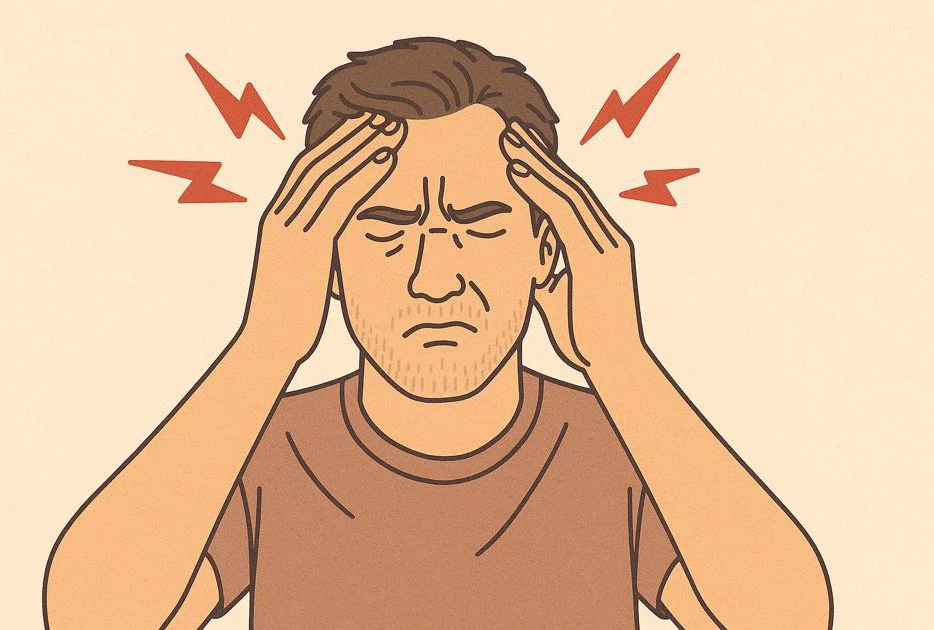
Physical symptoms may also indicate a blockage in the crown chakra. These include headaches and migraines, which appear for no reason. Interestingly, studies show that meditation can significantly reduce the frequency of migraine attacks. This underlines how closely the condition of the crown chakra is associated with your physical well-being. Sensitivity to light, a dull pressure at the vertex or recurrent sleep disorders are further indications. Such complaints are often misorganised because they have no obvious cause. Especially when everything is medically clarified, it is worthwhile to look at the subtle level.
What meditation can teach us (6 surprising effects)
Six surprising effects – but which one have you been missing out on completely? Most people want les…
Not only a lack of energy, but also an excess can be problematic. An overactive crown chakra is often reflected in the fact that the head cannot switch off. Flows of thought do not stop, and a feeling of superiority or detachment arises – often accompanied by a loss of empathy. The connection to everyday life is getting weaker, relationships are faltering because real compassion is difficult. You feel like you’re out of action, watching everything from a distance, without really participating.
In my practice, I often experience that people who “live in the head” a lot feel separated from their own body and the here and now. They alternate between lack of drive and inner restlessness, without ever coming to rest. Only when they regain contact with the body through conscious breathing exercises or meditation, a feeling of grounding and balance slowly sets in – often accompanied by a new joy of life.
From a scientific point of view, the connection between crown chakra and pine gland is particularly exciting. The pineal gland, also called the epiphysis, regulates the hormonal balance and is significantly involved in the production of melatonin. If it is out of balance, you usually feel it immediately: sleep problems, lack of drive and mood swings occur. Research shows that meditation and interior view promote the activation of the pineal gland, which can have a positive effect on your well-being and mental balance.
Your intuition also suffers when the crown chakra is blocked. You may feel that you no longer have access to your inner wisdom. Decisions are difficult, uncertainty increases, and creative solutions are not made. Especially people who have to function in everyday life or place high demands on themselves often overlook these fine warning signals. They are an important indication that it is time for a return to your favour.
The crown chakra forms a crucial interface between body, mind and spiritual consciousness. If this channel becomes unbalanced, the interplay of thinking, feeling and acting loses its harmony. A cycle can arise: the less clarity you have, the more you withdraw, which in turn further blocks the energy.
In everyday life, such warning signals are often ignored or dismissed as normal mood swings. “This is definitely just the weather” or “I’m just not that spiritual” are typical thoughts. But especially with recurring exhaustion, disinterest or inner distance, it is worth taking a closer look. Some people even feel a fine tingling sensation at the apex as soon as they relax or open up – a sly hint that something is moving in the energy system.
If you notice these warning signs, you can take action. Even small rituals such as conscious pauses, short breathing exercises or mini-meditations help to harmonise the energy field and release ballast. It is not about solving everything immediately, but about creating more clarity and connection step by step.
In the next section you will learn how you can use simple techniques such as breathing, meditation and the mantra OM to have a targeted impact on your crown chakra.
PRACTICAL WAYS TO ACTIVATE: BREATH, MEDITATION AND THE MANTRA OM
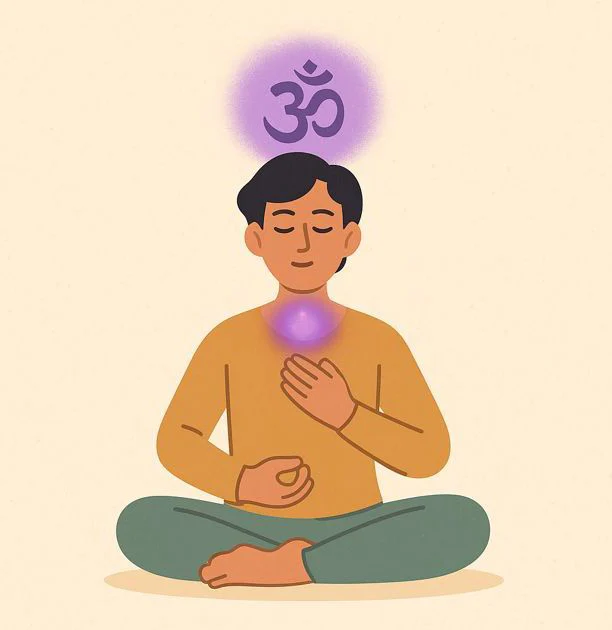
Many people notice in everyday life that they are physically present, but mentally wander again and again or do not feel properly centred. Especially when the head does not come to rest, a targeted practice can help to gain more clarity again. The activation of the crown chakra often succeeds with simple techniques that you can use at any time – whether you are just starting out or already have experience with meditation.
A proven entry is a short breathing practice, which you can perform comfortably while sitting. Sit up straight, relax your shoulders, and close your eyes. Gently direct your attention to the highest point of your head – the crown of the crown. Breathe slowly and deeply through your nose. Imagine how with each breath purple or white light flows through your vertex into your body. When you exhale, this light spreads soothingly throughout the body. It is enough if you concentrate on this idea of light without wanting to force anything. Even a few conscious breaths can help calm the mind and strengthen the feeling of connection.
TOP-RATED PRODUCTS
-
Sahasrara Connect
49,95 € -
Muladhara Balance
49,95 € -
Swadhisthana Flow
49,95 € -
Manipura Strength
49,95 €


For many, it is helpful to put the mantra “OM” into practice. You can repeat the OM quietly for yourself or tone it out loud – both work. The sound of the OM is firmly anchored in meditation practice and is associated with the crown chakra. Studies show that the chanting of OM can lead to a so-called gamma synchronisation in the brain, which is associated with a state of clarity and inner peace. Many experience a noticeable relaxation in the head area when toning OM and report that the mind is expanding.
If you feel comfortable with visualisations, you can imagine that a lotus flower opens at the vertex of your head. With each breath, this flower unfolds further and lets light flow into your body. This simple but effective idea supports the connection to your higher consciousness and fosters the feeling of ease. It’s not about creating perfect images, but about staying open to experience.
There are also good reasons to meditate regularly. Research shows that an eight-week mindfulness practice not only increases subjective well-being, but also has measurable effects in the body. Thus, meditation can lower the level of the stress hormone cortisol and even reduce inflammatory markers such as CRP. This means that your daily practice not only affects your mood, but also your health. Those who regularly meditate also benefit from improved sleep quality and a higher resistance to stress.
For advanced users, it is worthwhile to combine breath, visualisation and OM in a targeted manner. Take a deep breath, imagine the light, and let the OM swing through the headroom as you exhale. Feel how more tranquillity and clarity spread with each pass. The conscious combination of these techniques strengthens the effect and helps to harmonise the crown chakra sustainably. Especially on days when you feel stressed or separated, this practice can make a noticeable difference.
If you want, you can supplement the meditation with short affirmations. Phrases like “I am open to clarity and inner peace” or “I connect with my highest self” support orientation and help to maintain focus. The regular repetition of such affirmations can deepen the effect of practice and remind you in everyday life to stop again and again.
It is important to remain patient with yourself. Not every meditation immediately leads to deep experiences, but just a few minutes of conscious breathing and focussing on the crown chakra can change your perception. Many feel after a while that they react more calmly to stress and feel more balanced overall. The practice can be easily integrated into everyday life – for example, in the morning after waking up or in the evening before going to bed.
After meditation, it is worth sitting still for a moment and tracing how body and mind feel. Maybe you notice more width in your head, a gentle tingling or just a pleasant silence. These conscious transitions help to anchor the effect of practice and to take it into everyday life.
Many are looking for further ways to support their meditation and to strengthen the crown chakra in a targeted manner. There are different approaches that you can try out to deepen your own experience and set new impulses.
GEMSTONES FOR THE CROWN CHAKRA: POWER OF AMETHYST, SELENITE AND DIAMOND
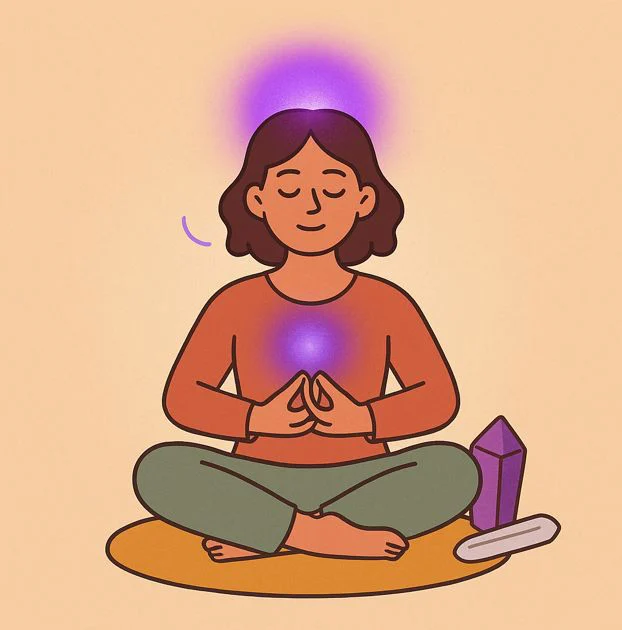
In addition to meditation and breathing exercises, many people like to reach for gemstones to support their practice around the crown chakra. Amethyst and selenite in particular have established themselves as companions when it comes to bringing more clarity, tranquillity and awareness into everyday life. The effect of these stones is often subjectively described – they invite you to explore with mindful curiosity how your own perception changes when meditating or in everyday life.
Amethyst is one of the most famous stones related to the crown chakra. He stands for clarity, intuition and inner peace. Already in ancient cultures, amethys was associated with spiritual purity and spiritual alertness. Many report that when meditating with Amethyst, they experience a feeling of relaxation and spiritual order. It is important to remain open and curious: just feel whether the amethyst feels clarifying or calming for you. It is not a question of expecting a certain effect, but of seeing the practice as an invitation to consciously observe one’s own condition.
Why your thoughts sabotage you – and how to stop them
How often do you find yourself thinking, “It won’t work anyway”? That’s exac…
Selenite differs significantly from the amethyst in its radiance, but is also often used for the crown chakra. Selenite is considered purifying and supportive when it comes to letting go of old thought patterns or getting in the mood for a clear start before meditation. Many people find selenite cool and light, almost like an energetic kick of freshness. A popular ritual is to gently brush selenite over the vertex or along the forehead – as if you were energetically “brushing” the head. Here, too, there is no right or wrong. Just observe whether you feel clearer or freer after use.
The application of amethyst or selenite is uncomplicated. You can place one of the stones on the vertex during meditation or hold it in your hand. You will concentrate on your breath and observe how the interplay of breath, body and stone feels. A little technique for beginners: Sit down comfortably, close your eyes and hold the amethyst loosely in your hand. Breathe in and out, focussing your attention on the area of your parting. Feel if there is more tranquillity or clarity with each breath. It’s not about spectacular changes, but about subtle differences that you better perceive over time.
Also in everyday life you can use amethyst or selenite as a small reminder of your intention. Many carry a stone as a pendant, bracelet or pocket stone with them. This provides a gentle focus on the crown chakra, without you having to constantly think about it. The stones act like a silent anchor that always reminds you of moments of mindfulness. Especially in stressful situations, it can help to pick up the stone briefly, take a few conscious breaths and get a clear head again.
Scientifically, there is so far no clear evidence of a direct effect of gemstones on the body or mind. Most experiences are based on subjective perceptions and mindful practice. Therefore, it is recommended to see the application as a personal experiment: Try how meditation or small rituals with amethyst or selenite feel to you. Maybe after some time you will feel more tranquillity, clarity or just a little more presence in everyday life. It is crucial that you remain honest with yourself and do not put yourself under pressure to immediately notice a change.
Some like to associate the gemstone practice with affirmations or small daily routines. For example, while holding an amethyst in your hand, you can tell yourself inwardly: “I open myself for clarity and tranquillity.” Or you can use selenium to consciously let go and make room for new thoughts. The clearer your intention is, the easier it is to integrate practice into everyday life.
Gemstones do not replace meditation or breathing exercise, but they can be a valuable addition to strengthen your connection to the crown chakra. They invite you to stay mindful and take small breaks again and again. With time, a very own routine is created that supports you in everyday life – no matter how hectic it is around you.
If you feel that gemstones help you keep your focus or remind you of your inner alignment, feel free to use them. It’s less about the perfect technique, but about what really supports you. In the next step, we will look at how you can bring even more depth into your practice with affirmations and simple routines – so that the connection to the crown chakra remains not only theory, but also becomes noticeable in everyday life.
AFFIRMATIONS AND EVERYDAY ROUTINES: STRENGTHEN YOUR CONNECTION TO THE UNIVERSE
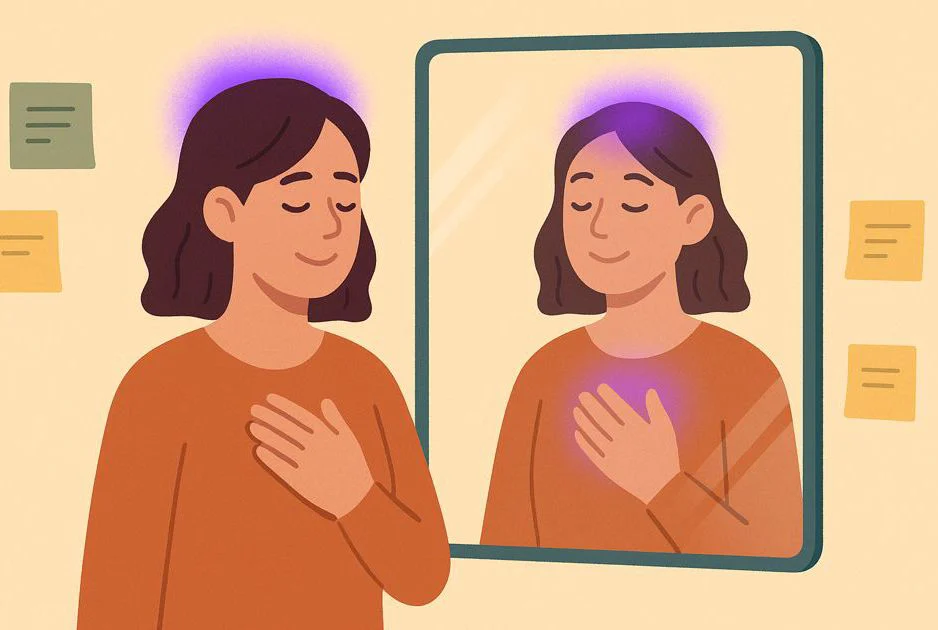
Many people realise that it is a real challenge in everyday life to keep the connection to the crown chakra alive. This is where affirmations and small routines start, which help you to pause regularly and realign yourself. Affirmations such as “I am one with the universe” or “I am open to clarity and leadership” best fulfil their effect if you repeat them consciously and with feeling. It is crucial that you do not rely on the mere resaying, but that the words seem short – maybe you even feel how something changes in your attitude.
A practical way to incorporate affirmations into your everyday life is a small note on the mirror or a reminder in the mobile phone. These simple anchor points remind you to pause for a moment and focus on your inner alignment. It is often enough if you quietly pronounce your affirmation in the morning while brushing your teeth or in the evening before going to bed, while you take a few conscious breaths. So the practice becomes part of your daily routine without you having to plan extra time.
OUR MEDITATION PILLOWS
-
Anahata Harmony
49,95 € -
Manipura Strength
49,95 € -
Muladhara Balance
49,95 € -
Sahasrara Connect
49,95 €
If you already have experience with meditation, you can combine affirmations with breathing work. Take a deep breath, repeat your affirmation internally, and feel the tranquillity and spath spread in your head as you exhale. If you like, you can hold an amethyst or selenite in your hand to further focus attention. This combination of conscious words, breathing and body perception enhances the effect and ensures that you anchor your practice in everyday life.
This technique can also be used in short breaks in between. For example, take a little breather at work: close your eyes for a moment, take a deep breath and tell yourself inwardly: “I am connected to the light in me.” These mini-moments help you reduce stress and keep yourself centred again and again. Research shows that such mindfulness practises lower the level of stress hormones such as cortisol and strengthen emotional balance in the long term. A meta-analysis also shows that self-affirmation techniques can reduce the stress response and promote well-being.
Especially when you practice yoga, you can specifically integrate affirmations into certain positions. In the head position or in the rabbit position, the connection to the crown chakra can be felt particularly well. As you focus on your breathing, repeat your affirmation and imagine how light flows over your vertex with each breath. This not only reinforces the effect of the exercise, but also helps to consciously direct the energy.
It is completely normal when the effects of these routines only gradually become noticeable. Many report that over time they develop more confidence in their intuition and come to rest more easily. Affirmations act like little anchors that always bring you back to the here and now and sharpen your attention. It is important that you do not put yourself under pressure to immediately feel a big change. Every little step counts, and continuity makes the difference.
Even if a day gets out of hand or you forget your routine, that’s no reason to give up. Accept imperfection as part of the process. It’s not about being perfect, but realigning the focus again and again. With time, an inner stability is created that helps you to face challenges more calmly.
If you stick to it and regularly incorporate affirmations and small rituals into your everyday life, you will notice how your perception changes. You become more mindful, perceive meaning and joy even in small moments and develop a deeper connection to yourself. The crown chakra becomes a quiet companion that will help you get through the day more clearly and relaxed.
These simple techniques show that it doesn’t take complicated rituals to bring spiritual practice into everyday life. Even small conscious steps make a noticeable difference – and that’s exactly what it’s all about: experiencing presence, clarity and connectedness in the here and now.
SUMMARISED
The crown chakra can be a valuable resource for everyone in everyday life – no matter how spiritual you feel. Meditation, yoga and gemstones such as amethyst support you in experiencing more clarity and inner connection. Even short, conscious breaks have a positive effect: Studies show that meditation not only increases well-being, but also improves sleep quality.
Try it directly today: Take three minutes for a little breathing or meditation exercise and observe what changes – maybe you already feel more tranquillity or a clearer head.
FREQUENTLY ASKED QUESTIONS ABOUT THE CROWN CHAKRA & SPIRITUAL BALANCE
WHAT IS THE CROWN CHAKRA (SAHASRARA) AND WHAT DOES IT STAND FOR?
The crown chakra (Sahasrara) at the apex of the head is the energy centre for spirituality, finding meaning, inner clarity and the connection to the higher self or universe.
HOW DO I RECOGNISE SIGNS OF A BLOCKED CROWN CHAKRA?
Symptoms can include inner emptiness, concentration problems, headaches, migraines, sleep disorders, lack of sense, or a sense of decoupling.
WHAT EXERCISES HELP TO ACTIVATE AND STRENGTHEN THE CROWN CHAKRA?
Conscious breathing exercises with visualisation of violet/white light, the toning of the OM mantra, meditations and affirmations are effective practises.
IS THERE SCIENTIFIC EVIDENCE FOR THE EFFECT OF CROWN CHAKRA WORK?
Studies show that meditation can reduce stress hormones, increase well-being, improve sleep quality and cause positive changes in the brain.
WHICH GEMSTONES SUPPORT THE WORK WITH THE CROWN CHAKRA?
Amethyst and selenite are traditionally used to promote clarity, intuition and inner peace. They can support meditation and mindfulness practises.
This is how meditation becomes a habit
The real moment when motivation arises Do you know that great feeling you get right after exercising…
5 reasons why your meditation is failing
Why do so many people give up their meditation practice after just a few weeks—even though they know…
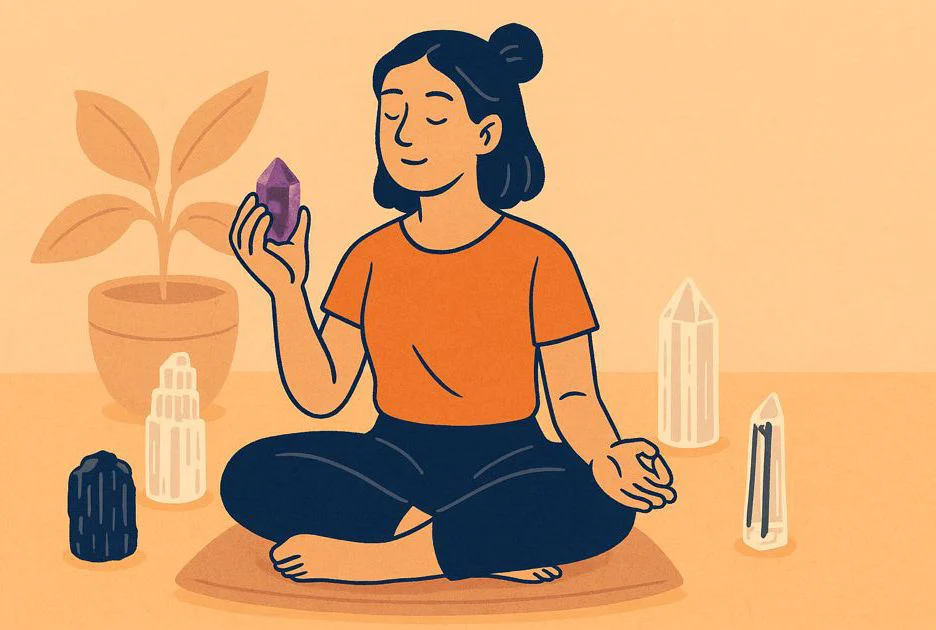
Crystals in meditation practice
Many people say that meditation with crystals is just esotericism—but recent studies on mindfulness …
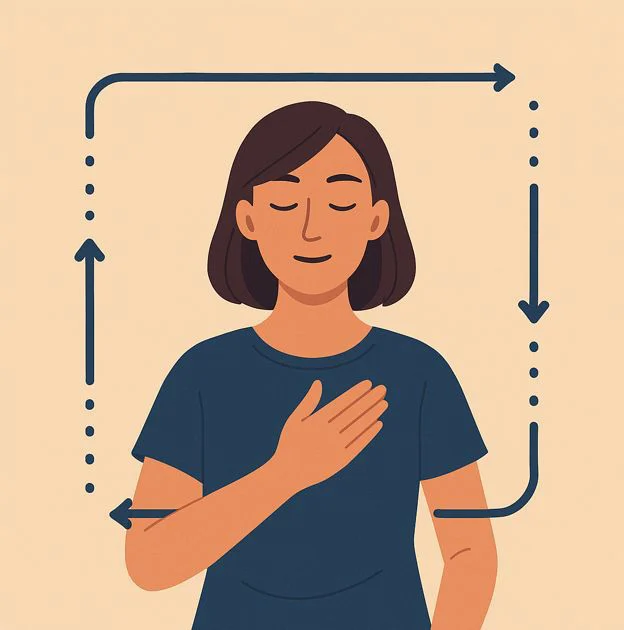
Box breathing stops stress immediately
Most people breathe incorrectly—and that is one of the main reasons why meditation is often difficul…
5 Myths About Meditation: The Truth That’s Changing Your Life
Imagine you have a toolbox – but not for your bicycle or kitchen, rather for your mind. Meditation i…
Meditate better – sit differently
Meditation does not begin in the mind, but in the body. Studies show that an upright spine creates a…

