

Do you know that feeling of going through your to-do list in your head as soon as you get up? Today, we’re going to put an end to that. In this video, you’ll learn five simple exercises that only take 30 to 60 seconds each – perfect for trying out right away in your everyday life.
These exercises are simple and build on findings about the effects of short mindfulness practices. You don’t need any previous experience, just a little curiosity. One of the tips can even be implemented while you’re holding your morning cup of coffee.
Try out an exercise right after watching the video and let me know which one helped you the most. Start with small changes – they can make a noticeable difference in bringing more calm and focus to your day.
You will find out exactly what this looks like in the section on morning rituals.
Table of contents
Start the day with a clear head: morning rituals for greater awareness
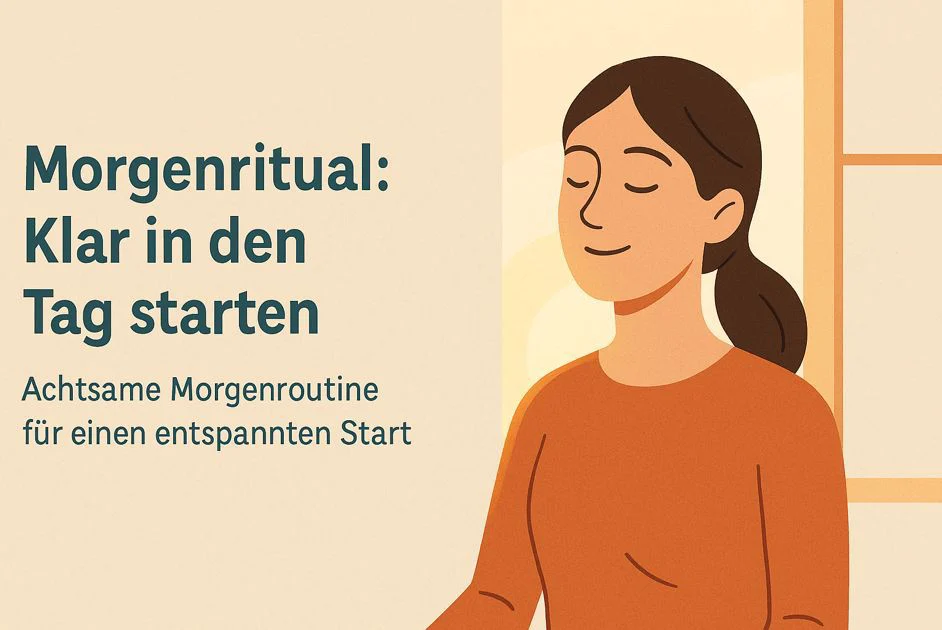
Many people start their day as if they were jumping straight out of bed and onto the running track – their heads full of appointments even before breakfast is ready. No wonder it sometimes feels more like a sprint than a relaxed start. What if you did a quick warm-up for your mind instead? This is where mindful morning rituals come in: they help you not only start the day, but also shape it actively and clearly.
The best part is that it really doesn’t have to be a big programme. Studies on MBSR and short mindfulness interventions show that regular, short rituals can reduce stress and irritability and improve the ability to regulate emotions. For example, you can simply lie in bed and do a very short, 1–3-minute body scan – slowly scan your body from head to toe with your inner gaze, without pressure, just observing. Or you can drink your first glass of water very consciously, as if it were a little ritual. Feel the cool water touch your mouth and flow into your body – this brings you right into the here and now. Even simpler: open the window, take a few deep breaths and observe what is happening outside. It sounds simple, but it is precisely these little moments that give you a clear head before the day really gets going.
Popular products
-

Sahasrara Connect
49,95 € -
Muladhara Balance
49,95 € -
Swadhisthana Flow
49,95 € -
Manipura Strength
49,95 €




You don’t have to be a meditation pro to do this. It’s enough to simply focus on your senses and movements for the first few minutes after waking up. Optional – for advanced practitioners: leave your mobile phone off for the first 10–15 minutes. Many people report that this significantly reduces morning rumination and makes for a more relaxed start to the day.
If you incorporate these little anchors regularly, you will notice how much calmer and more focused your day begins. And best of all, you can even try the next exercise right at your desk or while waiting in line – so be sure to stick with it.
Conscious breathing: How to find peace with breathing exercises
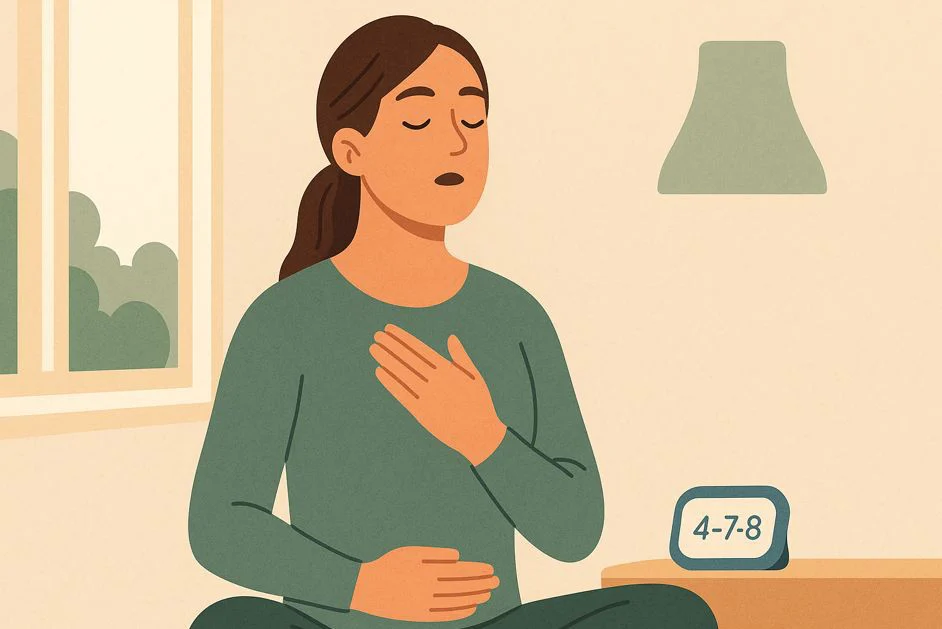
Sometimes, in the midst of all the hustle and bustle, it is enough to simply take a deep breath to reconnect with yourself. Imagine you are standing at the supermarket checkout, the queue is barely moving, your thoughts are racing – this is exactly when you can press your inner reset button: conscious breathing. It sounds simple, but that is precisely where its power lies. In short, conscious breathing exercises activate parasympathetic responses and can reduce heart rate and stress reactions, as studies on breathing and mindfulness practices have shown.
The basis is really straightforward. As soon as you notice your stress levels rising, switch to pause mode internally. Let’s do this together right now: take three deep breaths in and out with me – slowly and in such a way that you can really feel your stomach rising and falling. You don’t need any special technique or equipment, just yourself and your breath. These short breathing breaks alone will help your body to calm down and clear your head.
What is the solar plexus chakra?
If you often feel stressed, energyless or irritable, this is sometimes not due to improper nutrition…
If you want to go one step further, try a popular variation: the 4–7–8 technique. You breathe in for four seconds, hold your breath for seven seconds and then breathe out slowly for eight seconds. It’s like a quick reset for your nervous system and works almost anywhere – on the bus, at your desk or even in the bathroom. If you find it difficult to hold your breath, for example if you have respiratory problems, then just stick to three deep, slow abdominal breaths without pausing. The main thing is to stay mindful.
With a little practice, conscious breathing will become your personal tool for greater serenity – no matter where you are. And we’ll take a look at how you can use this mindfulness in other everyday situations, using eating as an example.
Mindful eating: Enjoy your meal as a mini break
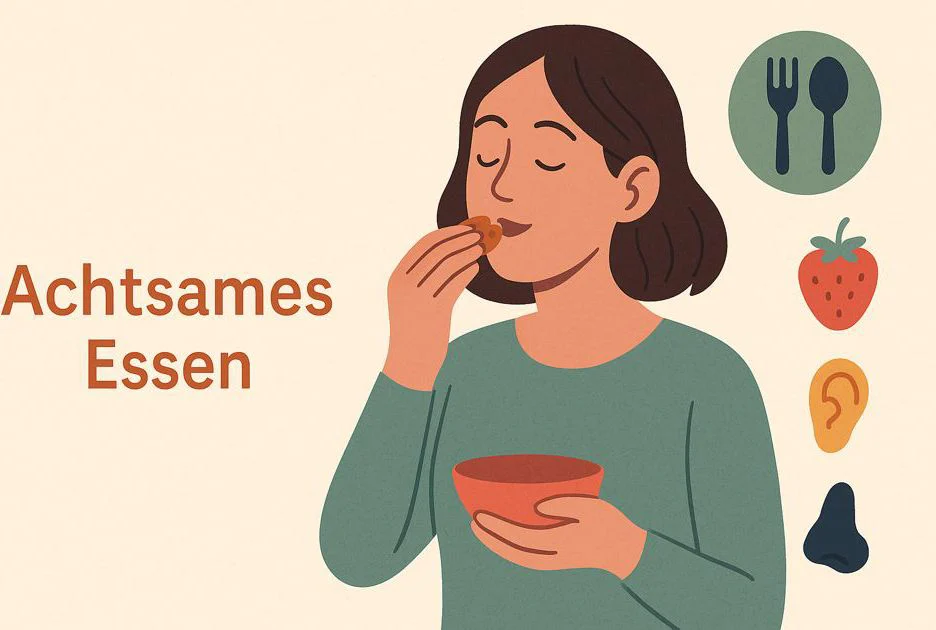
Imagine you are treating yourself to a piece of your absolute favourite chocolate. Not just casually, but very consciously. Many people snack while looking at their mobile phones or with something else going on in the background – this is the opposite of mindful eating. When you really enjoy your food, eating feels like a little break from everyday life, almost like a mini wellness moment for your taste buds.
The basics are super simple and can be applied to any meal. First: put away all distractions – no mobile phone, no laptop, no television. Second: look closely at your food, smell it, feel its texture. Take a moment before you take your first bite. Third: chew much more slowly than usual – consciously take your time to chew and savour the flavour. You will notice how many nuances you suddenly perceive that you would otherwise miss. Even chewing becomes a little discovery tour: how does your snack crunch or melt? Listen to it.
Handmade Meditation Cushion
-
Anahata Harmony
49,95 € -
Manipura Strength
49,95 € -
Muladhara Balance
49,95 € -
Sahasrara Connect
49,95 €

If you want to try this out, why not turn it into a mini challenge: try this exercise the next time you have a snack and let me know in the comments whether you notice more flavour. Studies on mindful eating show that conscious eating can reduce emotional eating and binge eating and make eating habits healthier. Stress levels and digestion also benefit from it – so it’s more than just a nice side effect.
Every meal can become a little break that slows down your day and gives you new energy. And that’s exactly what the next tip is about: how you can recharge your batteries with short, conscious breaks in between.
Conscious breaks: short breaks for more energy
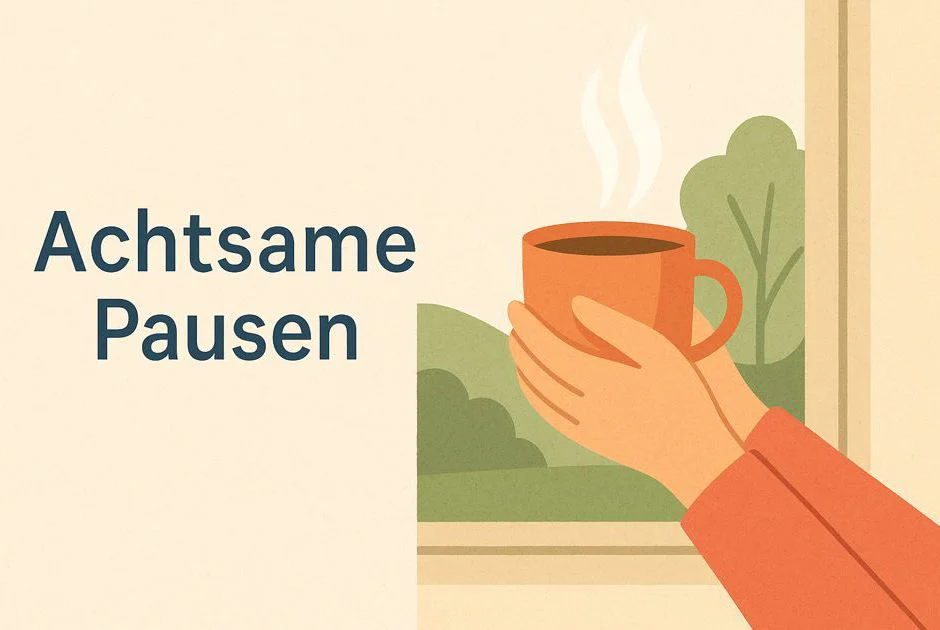
Do you know that afternoon slump when suddenly nothing works anymore and you feel like you’ve just finished a long sprint? That’s exactly when a conscious break helps – like a quick pit stop so you can get going again. Many people think, “I don’t have time for that, my calendar is full.” But honestly, you don’t need a large block of time for it. Even a 30-60 second conscious break can have a noticeable effect – studies show that short mindfulness breaks can improve concentration and stress response.
Try it out right now: sit down, relax for a moment, close your eyes and take a deep breath in and out. Do a 60-second check: feel your body to see where you might be tense or tired. Then take three conscious, deep breaths and relax your shoulders. You can do this anywhere – at your desk, in the kitchen or even on the bus. You don’t need to prepare anything, just pause for a moment. If you like, set a timer or use a fixed trigger: simply take a short break after every hour at your desk – this is often enough to help you think more clearly again.
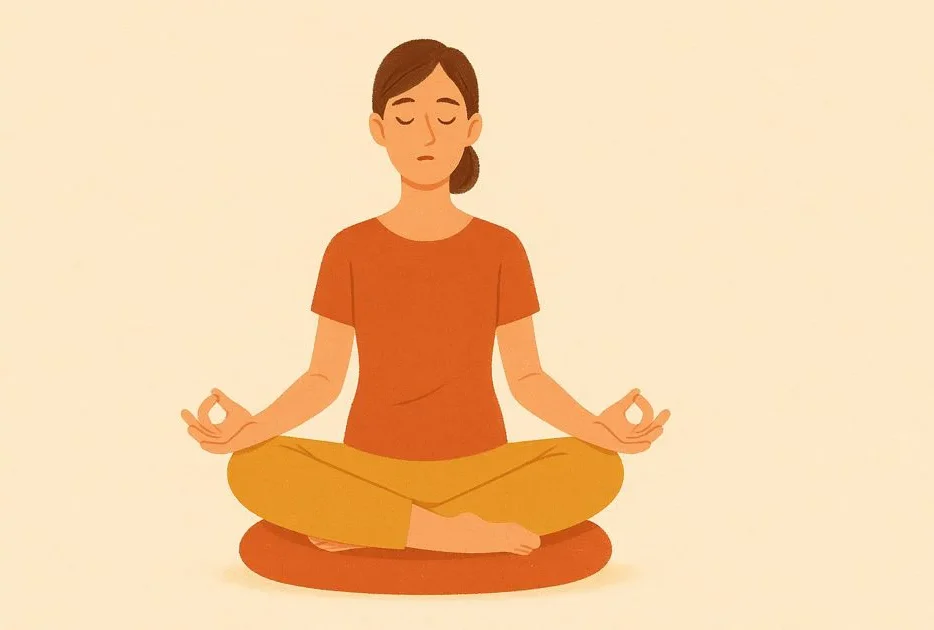
Meditate better – sit differently
Meditation does not begin in the mind, but in the body. Studies show that an upright spine creates a…
For advanced learners, you can combine the break with a little stretching exercise or stand up briefly and walk a few steps. Movement stimulates the circulation and helps to relieve tension. It is important that you really take conscious notice of the break and do not glance at your mobile phone at the same time. It is not about performance, but about a moment of stillness – whether you are sitting, standing or walking.
Taking short breaks like this helps you stay focused, make fewer mistakes and feel fresher overall. If you take regular short breaks, you will often quickly notice how your mind becomes clearer. And sometimes, just a moment of mindfulness is enough to steer your day back in the right direction – especially if you get moving again afterwards.
Mindful movement: everyday exercise as a conscious experience
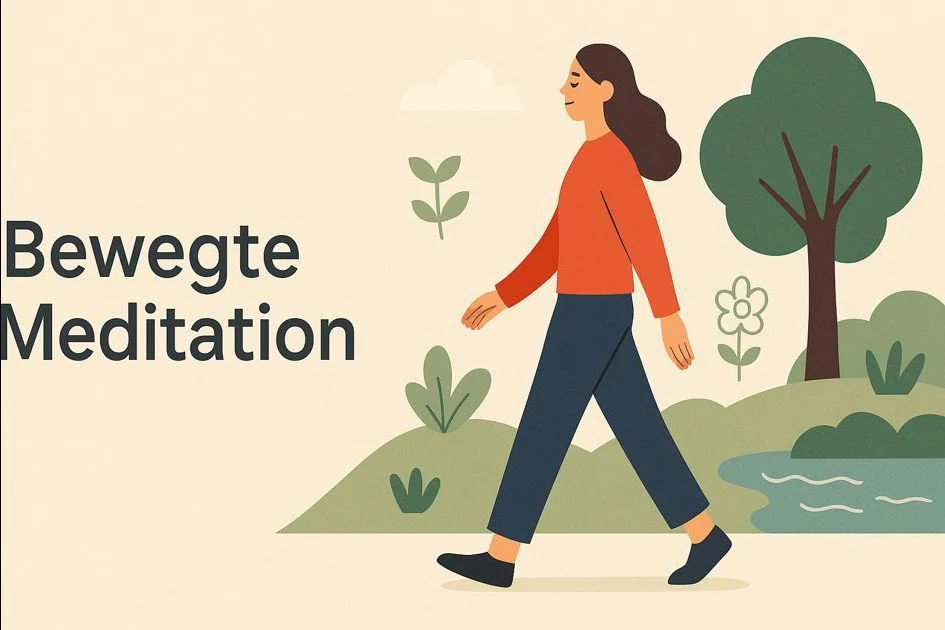
Sometimes exercise is more than just sport – it can become a conscious experience that grounds you in everyday life. Imagine walking through the park, not as a sprint to the next bus stop, but as a small, moving meditation. As you do so, you notice everything around you: the rustling of the leaves, the ground beneath your feet, perhaps a fresh breeze on your face. That is exactly what mindful movement is. It’s not about how fast or how intensely you’re moving, but how present you are and what your body is telling you.
Mindful movement means focusing fully on the here and now when walking, doing yoga or even cycling at a leisurely pace. Feel how your muscles are working, how your steps feel, and observe your breathing. Leave your mobile phone in your pocket and treat yourself to this conscious time just for you. Research shows that combinations of movement and mindfulness – such as mindful walking or yoga – have a positive effect on stress, interoception (i.e. body awareness) and general well-being.
Try this simple exercise: as you walk, breathe in with every step and breathe out with every second step. This will immediately put you into a calm rhythm and help you stay fully in the moment. Tip for advanced practitioners: Combine movement and breathing even more consciously by changing direction or varying your pace. And very important: If you have a history of trauma or feel uncomfortable focusing on your body, start gently and with small, short sessions. You don’t have to force anything – it’s about well-being, not performance.
With these small exercise units, you can consciously take time for yourself in your everyday life. This is not a training plan for professionals, but an invitation to discover exercise as a source of strength. Stay curious and try out what works for you – this way, mindfulness will gradually become part of your day.
Small steps, big impact – keeping mindfulness alive in everyday life
Mindfulness can be seen as a playing field: it’s not about setting records, but about small, conscious actions in everyday life. In short: a short morning ritual, conscious breathing, mindful eating, mini breaks and mindful movement – choose one thing and stick with it. Even one conscious moment can change your day.
What is the sacral chakra?
Many people think that chakras are pure fantasy or esotericism. However, studies now show that medit…
Research shows that regular practice over weeks and months brings more lasting benefits – so it’s better to take small steps consistently than to do one big programme. Try an exercise today, such as 60 seconds of conscious breathing, and write in the comments how you feel afterwards.
Feel free to subscribe if you want more practical exercises. A small step today = a calmer day tomorrow.
Frequently asked questions about mindfulness exercises in everyday life
What are some simple mindfulness exercises for beginners?
Simple mindfulness exercises are short rituals such as conscious breathing, mindful eating or short breaks that you can incorporate directly into your everyday life to reduce stress and find more inner peace.
How can mindfulness help me make my everyday life more relaxed?
Start with small exercises such as conscious breathing in the morning, mindful eating or mini breaks. Just a few minutes are enough to get through the day feeling more relaxed.
Do short mindfulness exercises also work?
Yes! Just 30–60 seconds of conscious breathing or a mini break in between can calm the nervous system and immediately provide more relaxation.
What are the benefits of the 4-7-8 breathing technique?
The 4-7-8 breathing technique helps to reduce stress and calm down more quickly. It is ideal for feeling more relaxed in stressful moments.
Who are these mindfulness exercises suitable for?
The exercises are suitable for everyone – beginners and advanced practitioners alike. They can be flexibly incorporated into everyday life and promote greater presence and well-being.
This is how meditation becomes a habit
The real moment when motivation arises Do you know that great feeling you get right after exercising…

