

Many people think that chakras are pure fantasy or esotericism. However, studies now show that meditation has measurable effects on brain activity, stress responses, and even sleep quality—and many of these effects are directly related to issues such as emotion, creativity, and zest for life. These are precisely the areas associated with the so-called sacral chakra.
In this text, you will not only gain in-depth background knowledge, but also learn a simple 5-minute evening exercise that you can try out for yourself to see how small changes affect your well-being. At the end, I will also explain how you can test for yourself in just three nights whether anything has changed for you.
If you are open to practical change, just try out the exercise at the end. First, let’s take a look at what the sacral chakra really is—and why the topic has more to do with your everyday life than many people think.
Table of contents
What’s really behind the sacral chakra?
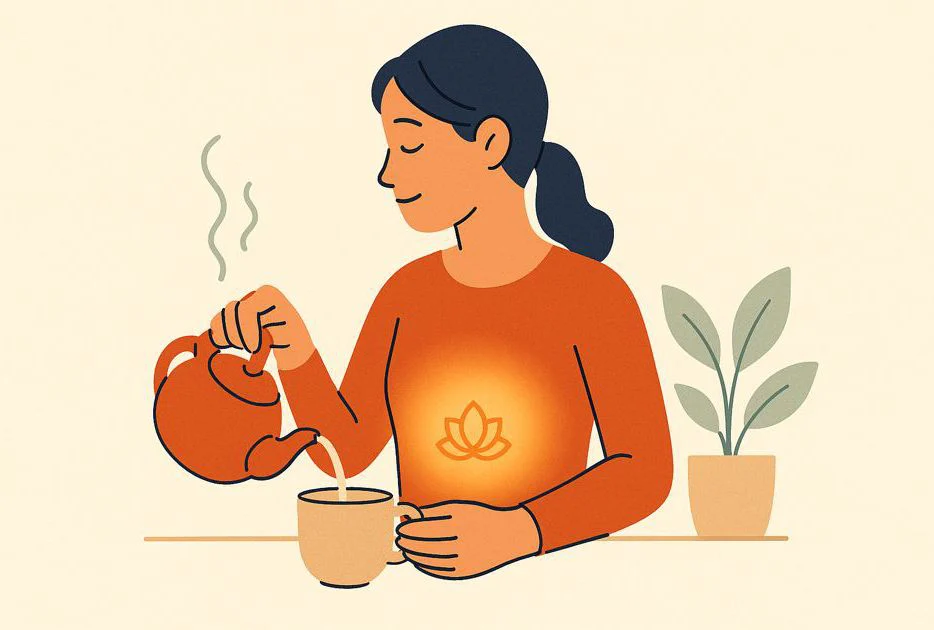
First of all: The sacral chakra is a cultural, symbolic model from yoga traditions – its descriptions, such as location, color, or elements, are meant to be pictorial and serve as a language for inner states. In traditional belief, the sacral chakra, also known as Svadhisthana, is symbolically located about a hand’s breadth below the navel. It is associated with the color orange, and the element of water symbolizes flow and change. All these associations are metaphors for joie de vivre, creativity, and the ability to connect with emotions and pleasure.
What does this mean for you in everyday life? Many people experience phases in which they feel listless, sleep poorly, or have few creative ideas—without any clear reason. Perhaps you sometimes have time for yourself but cannot really enjoy it. Or you want to express yourself creatively, but inspiration fails to materialize. In relationships, too, you may find yourself closing off or being unable to allow much closeness. Such feelings are widespread and can have many causes—stress, excessive demands, hormonal fluctuations, or simply too little rest. In chakra teaching, they are interpreted as signals that creative life energy has stalled. The sacral chakra serves here as a metaphor for emotional flexibility, spontaneity, and openness to enjoying life.
-

Swadhisthana Flow
49,95 €

But what about the scientific perspective? Is there any evidence that such symbolic models are also linked to measurable processes in the body? For years, neuroscience has been investigating how emotions, creativity, and pleasure arise in the brain and how they can be influenced by mindfulness or meditation. Researchers have found that regular meditation correlates with measurable changes in brain regions that play a role in attention, emotion regulation, and self-awareness—for example, in the prefrontal cortex and through changes in gray matter.
A brief look at current studies: Findings from MBSR (Mindfulness-Based Stress Reduction) studies show, for example, that even eight-week courses can improve stress responses and sleep quality. At the same time, both functional and structural changes in the brain were measured. EEG studies also confirm that mindfulness exercises can lead to greater emotional resilience and promote creativity. While these effects are not direct proof of chakras, they do show that meditation and mindful practice strengthen emotional and creative potential—precisely the areas that the sacral chakra symbolically describes.
Typical signs that your life energy is not flowing properly include listlessness, sleep problems, or blocked creativity. Important: These symptoms can have many different causes and are not a clear indication of a “blockage” in a chakra. Nevertheless, it can be helpful to understand such signs as an invitation to take care of your own well-being and try out small changes.
How does it feel when you feel more joy and creative energy again? And how can meditation help activate this energy in everyday life? We’ll take a look at exactly that based on the latest research findings.
Science meets life energy: What meditation does to your body
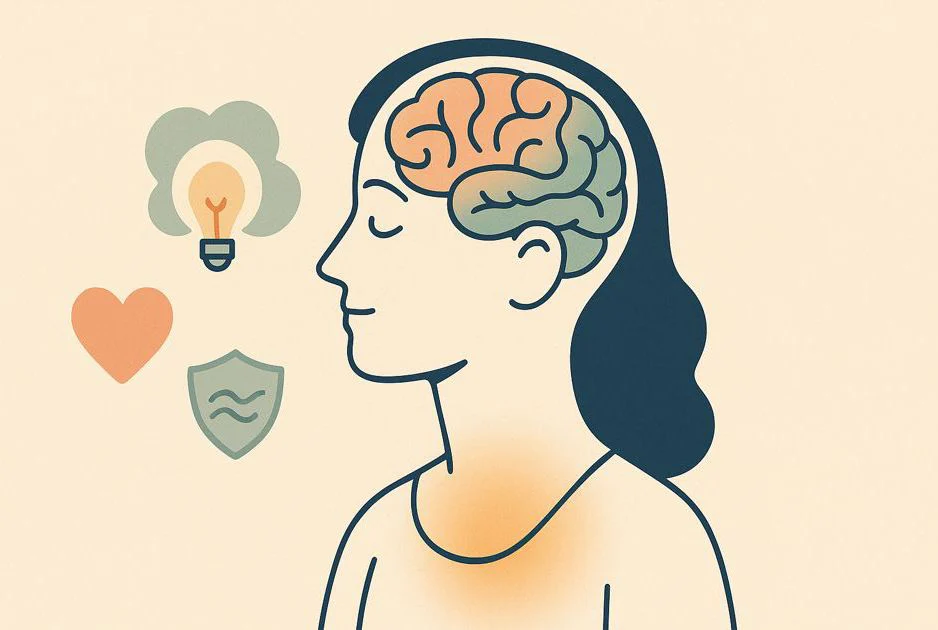
When we talk about meditation, many people first think of relaxation—taking a short break, closing your eyes, and hoping that everything will feel easier afterwards. But meditation can do much more than just help you switch off for a moment. Research in recent years shows that regular mindfulness practice actually causes measurable changes in the body and brain that go beyond mere well-being.
Today, scientists use modern methods such as MRI scans and EEG measurements to study these effects in more detail. Studies report local increases in gray matter in brain regions associated with attention and emotion processing. EEG studies also show that certain patterns, such as theta and alpha activity, change after intensive meditation. Example: In an EEG setting, increased theta and alpha activity was measured in experienced meditators after a period of intensive practice. Other studies found improvements in sleep EEG parameters after a few weeks of meditation. These changes are not proof of chakras, but they show that even short, regular meditation sessions can cause significant changes in the brain and body.

Your guide to choosing your perfect crystal
In our fast-paced, digital world, more and more people are longing for a deeper connection to nature…
Important to note: Many studies show such effects, but research is still ongoing. There are differences in methodology, and not every study comes to the same conclusions. The findings so far are promising, but they do not provide definitive answers to all questions. Nevertheless, it can be said that people who meditate regularly often experience better regulation of stress and emotions. Many report that they react more calmly in everyday life, are less impulsive, and feel more creative. Mindfulness practice seems to make the brain more resilient to emotional fluctuations. What you can realistically expect: more inner peace, often improved sleep quality, and, over time, more creative clarity—but no immediate, dramatic personality change.
A practical example from everyday life: In the evening, sit quietly for five minutes, place your hands on your lower abdomen, and focus on your breathing. After a few days of this little routine, you may notice that you can relax more easily in the evening, sleep better at night, and wake up feeling more refreshed in the morning. During the day, you also feel more energetic, are more open to new ideas, and are more inclined to engage in conversations or creative projects. Many people who integrate regular mindfulness practice into their everyday lives have experiences like this—not only in my courses, but also in many scientific studies.
One exciting aspect is the connection between sleep and life energy. Good, deep sleep ensures that you feel energetic and balanced. If you consistently don’t get enough sleep, your motivation, mood, and creative energy will noticeably decline. Researchers confirm that even short meditation sessions in the evening can improve sleep quality and strengthen emotional flexibility. This means you can deal with unpleasant or surprising feelings better, find new solutions faster, and develop more creative ideas. Nevertheless, many people underestimate how powerful such a small daily mindfulness routine can be for the body and mind.
A brief but important note: If meditation triggers unpleasant or strong emotional reactions in you, reduce your practice or seek professional guidance. Everyone reacts differently, and it is perfectly acceptable to proceed at your own pace.
Perhaps you have already asked yourself how you can tell whether your life energy is flowing freely or whether you are blocked internally. Sometimes it is small signals in everyday life that indicate an imbalance—even if everything seems fine at first glance.
Test yourself: An exercise for balance and creative energy
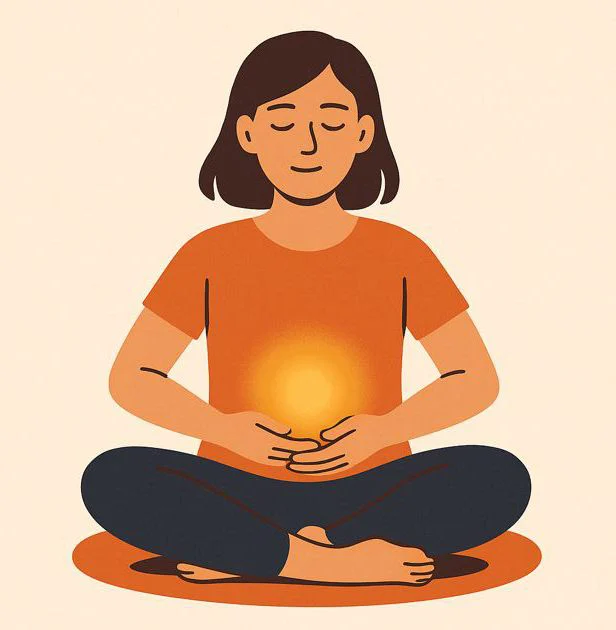
An effective way to strengthen your balance and creative energy is a short, targeted exercise that you can try out for yourself. The method is simple, requires no prior knowledge, and only takes about five minutes. Studies such as Li et al. 2018 show that just six minutes of focused mindfulness before bedtime can reduce inner restlessness and improve sleep quality. Other studies also show that even short routines of 5 to 13 minutes a day have noticeable effects on well-being and relaxation. With this exercise, you can test for yourself how conscious attention to your body and breathing affects you.
Sit comfortably, place your feet firmly on the floor, and rest your hands loosely on your lower abdomen. Close your eyes if you feel comfortable doing so, and breathe calmly in and out through your nose. Feel your abdomen gently rise and fall. Focus your attention on the area just below your navel. With each inhalation, imagine a warm, orange light flowing into this area and gently spreading. As you exhale, imagine tension and stressful feelings flowing out of your body like water. Optionally, if it feels good for you, you can gently circle your hips—small, gentle movements that remain relaxed. If you have limited mobility, simply skip this part.
Most popular products
-
Muladhara Balance
49,95 € -
Swadhisthana Flow
49,95 € -
Manipura Strength
49,95 € -
Anahata Harmony
49,95 €



During the exercise, keep your attention on your lower abdomen. You may feel warmth, a sense of expansiveness, or even new thoughts or ideas emerging. Notice if anything changes in your mood or your body. The point is not to expect immediate, dramatic effects, but to notice small changes. This exercise is most effective when done in the evening before bed. It helps your nervous system to wind down and creates space for restful sleep. Three evenings in a row is a good start to observe changes. Research shows that regular repetition brings the best results – so stick with it, even if you only feel small differences at first.
To measure your progress, you can do a quick self-assessment before the first evening and after three days of practice: Rate your sleep quality, overall energy level, and creative impulse on a scale of 1 to 10. Make a quick note of the values so that you can compare whether and how anything has changed. Feel free to share your experiences in the comments—that way, others can benefit from your observations.
Important: If you experience fear, dizziness, panic, or an overwhelming feeling during the exercise, stop the exercise, continue to breathe calmly, and seek support if necessary, for example from a coach or therapist. Everyone reacts differently, and it is perfectly fine to choose your own pace.
With this simple technique, you can directly experience how conscious mindfulness and physical focus affect your life energy and creativity. Even small changes in your routine can make a noticeable difference—try it out and observe how your everyday life develops.
In summary
The sacral chakra serves as a helpful metaphor for better understanding personal issues such as creativity, the ability to enjoy life, and emotional openness. Meditation and targeted mindfulness exercises have been scientifically proven to reduce stress, improve sleep quality, and promote creative impulses. The exercise presented here is a practical method that allows you to experience these effects directly in your everyday life.
Important: These approaches are not a substitute for medical or psychotherapeutic treatment. If you have serious mental health issues, you should definitely seek professional help. The effects of meditation are often cumulative—small daily steps usually have a greater impact than occasional rituals.
If you try this exercise, feel free to write in the comments how your sleep or mood has changed. You can find more practical exercises in other videos on this channel.
FAQ: Sacral Chakra, Life Energy & Meditation
What is the sacral chakra and what does it represent?
The sacral chakra, also known as Svadhisthana, is a symbolic energy center for zest for life, creativity, emotions, and the ability to feel pleasure. It is associated with the color orange and the element of water, which symbolizes flow and change.
How can I recognize a “blockage” in the sacral chakra?
Signs can include listlessness, sleep problems, lack of creativity, or difficulty allowing and enjoying emotions. These symptoms indicate that your life energy has stalled.
Can meditation really activate life energy?
Yes, scientific studies show that regular mindfulness and meditation practice has measurable positive effects on brain activity, emotion regulation, stress management, and even sleep quality, which directly strengthens the areas of the sacral chakra.
Is there a simple exercise for the sacral chakra?
A 5-minute mindfulness exercise in the evening, focusing on your breath in your lower abdomen and imagining warm, orange light, can help activate your life energy and improve the quality of your sleep.
What are the benefits of sacral chakra activation?
A strengthened connection to the sacral chakra can lead to more joy in life, increased creativity, better emotional flexibility, more restful sleep, and a feeling of inner balance.

