

Do you think meditation means “thinking nothing” and sitting completely still? Wrong! In this video, I’ll show you how you can reduce your tension and sharpen your attention in just 5 minutes with a simple technique – no prior knowledge or esoteric bells and whistles required.
Today, it’s all about looking consciously instead of getting lost in weird tips. You’ll learn a method that you can use immediately and again and again. Progress doesn’t happen overnight, but through regular practice – just like training at the gym, it’s repetition that counts, not perfection.
It’s best to get a timer right away and find five quiet minutes later on, because we’re going to try out the exercise together. And here’s a little tip in advance: there’s no such thing as failure here. Practising is already a success.
Let’s take a look at why many people still shy away from meditation and what really lies behind it.
Table of contents
Myth vs. reality: What you really should know about meditation
Many people think of meditation as a secret world full of incense sticks, monks and complicated rituals. But the reality is quite different: meditation is actually nothing more than mental training – like a workout, but for your mind. Imagine your brain is like a muscle. No one expects you to have a six-pack after your first workout. It’s just as unrealistic to expect absolute silence in your head after your first meditation session. It’s more about practising regularly, even if it sometimes seems chaotic or boring.
You don’t have to try to switch off all your thoughts or drift off into a state of mental nirvana. It’s enough to simply sit down and observe what is happening right now – be it thoughts, noises or even the feeling that everything is too much. That’s exactly what the exercise is about. The trick is to keep coming back when you notice that you are drifting off. It’s like training: every attempt counts, not perfection.
Meditation cushion
-

Manipura Strength
49,95 € -
Anahata Harmony
49,95 € -
Swadhisthana Flow
49,95 € -
Sahasrara Connect
49,95 €




Research shows quite clearly that meditation is not hocus-pocus. You don’t need a singing bowl, candles or a spiritual name. It’s simply a matter of sticking with it. Small, regular sessions are more effective than infrequent, long sessions. Studies from background research show that even short, regular exercises can have measurable effects: in laboratory studies, a very short breathing exercise reduced acute distress, and functional changes were observed after a short training period in regions such as the anterior cingulate cortex and the insula – areas responsible for attention and stress processing. However, the extent of the effects depends on how often and how regularly you practise. There are also mixed results for some biological markers, such as inflammation levels or the famous telomere research. The research shows many promising signs, but not all effects have been clearly proven in all studies.
A common stumbling block at the beginning is the expectation that meditation must be perfect right away. Many believe that they should not have any thoughts, otherwise they are doing something wrong. But the opposite is true: it is precisely when you notice that your mind is wandering that you are training your mind the most. It’s like jogging – every step that leaves you out of breath is training for your endurance. Progress comes through repetition, not ideal conditions.
Changes can also be detected in the brain: the areas responsible for focus and emotional control become more active and gain more “power”. This means that you react less impulsively and find inner peace more easily – without having to sit still for hours on end. Every distracting thought is like a weight that you briefly lift. Let go, move on, keep going.
So you don’t have to be a monk or turn your life upside down to benefit from meditation. It is a practical tool for anyone who wants more clarity and serenity in their everyday life. And best of all, getting started is much easier than many people think. Just a few minutes a day can bring about noticeable changes – without any pressure, but with real results.
Five minutes, big impact: How to get started right away
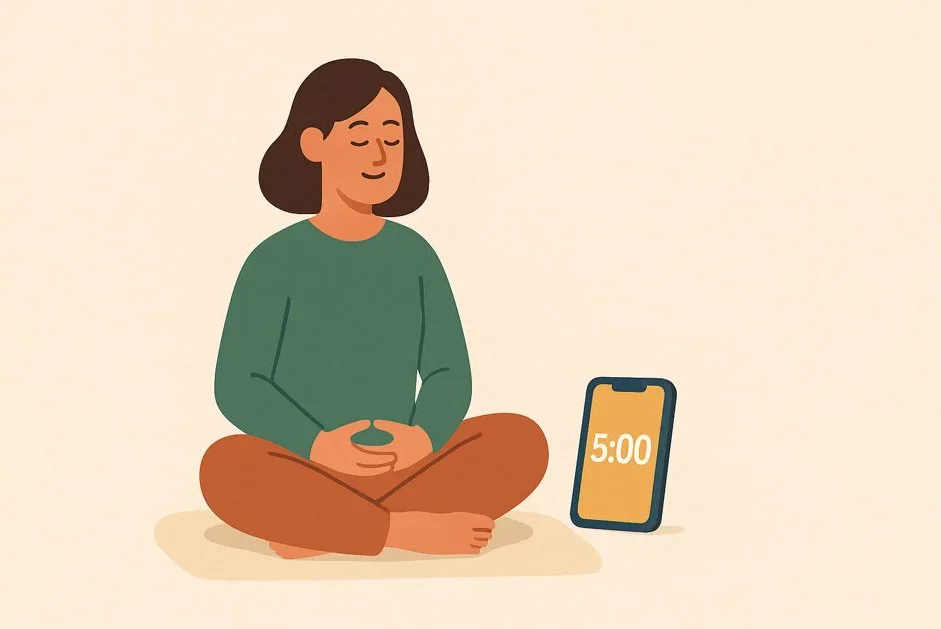
You may have heard that small changes often have the greatest effect. The same applies to meditation: you don’t need to run a marathon, just set aside a fixed, short time for yourself. Many people imagine that meditation must be time-consuming or long, but that is a misconception. Research shows that just five minutes a day can be enough to give your mind noticeably more peace and focus. Small pilot studies show that even a 5-minute breathing exercise can reduce acute distress; other studies report that short, regular training sessions improve attention.
Think of meditation as a daily mini workout. It’s more beneficial to stick with it for a short time every day than to put in a huge effort every few weeks and then stop again. Routine is key – just like brushing your teeth. It’s best to find a fixed time, for example in the morning after getting up or in the evening before going to bed. This way, meditation becomes an integral part of your daily routine instead of a chore that you constantly put off.
What do colors have to do with meditation?
Pause for a moment: Imagine your next meditation session—what image do you see? Many people ignore t…
Many people initially think that these short sessions are not effective enough. However, studies show that many participants report less stress, improved mood and greater serenity in everyday life after just a few days or weeks. This is because your brain adapts to regular exercise over time – especially in the areas responsible for concentration and stress regulation. Importantly, research shows that regular practice yields the best results. The optimal amount is still being investigated, but five minutes a day is better than half an hour every now and then.
Let’s get down to the practical implementation: Sit upright, preferably with both feet on the floor. Lean back and relax, but keep your back straight – this will keep your body alert and prevent you from falling asleep straight away. Set a timer for five minutes so you don’t have to keep glancing at the clock. Close your eyes and focus your attention on your breathing – feel the air passing your nostrils or how your chest and abdomen move as you breathe in and out. Breathe naturally, without forcing anything. If thoughts arise (and they will), that is completely normal. Simply gently bring your attention back to your breathing. That is the essence of the exercise.
If you already have a bit of routine or feel like a little extra boost, you can do a quick body scan at the end of the five minutes: slowly move your attention from your feet up to your head and notice how each area feels. This gives the exercise an extra dimension, but it is not a must.
It’s not about sitting still for as long as possible or achieving perfect results right away. The key is to stick with it and really allow yourself those five minutes. The more often you practise, the easier it will be to remain calm and clear-headed in everyday life. And if you’re wondering what actually happens when your mind keeps wandering – don’t worry, that’s all part of it.
Distraction as a training partner: Why failure is impossible when meditating
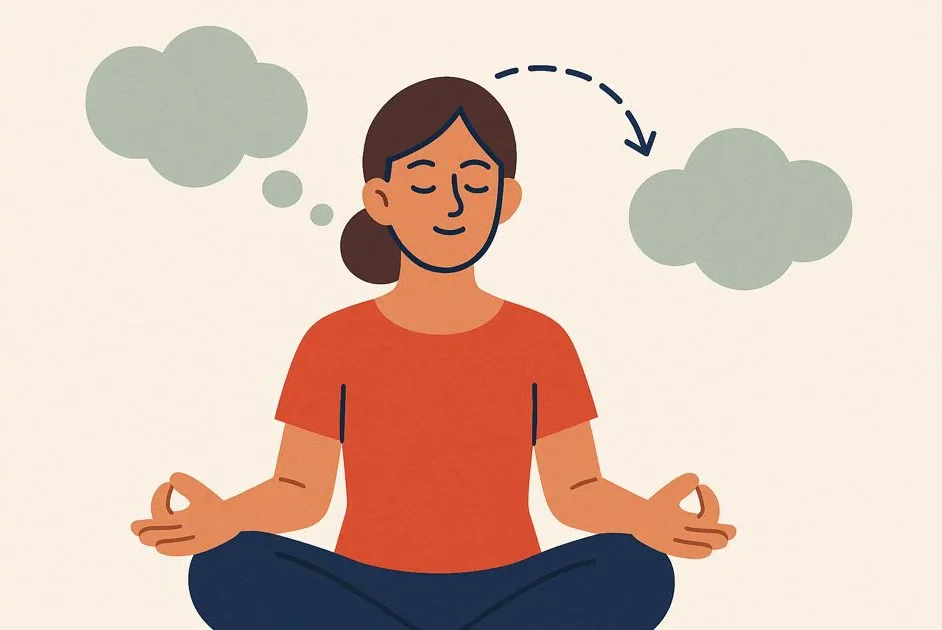
Imagine that your mind is like a lively dog in the park when you meditate: you let it off the leash, and it immediately dashes off – sometimes here, sometimes there. This is exactly what happens with your thoughts. Many people think they have failed if they cannot remain calm and focused at all times. But the opposite is true: every time you gently call your ‘thought dog’ back, you are training yourself to do exactly what matters – bringing your attention back. It’s not perfect calm that counts, but perseverance. Background research describes how repeatedly bringing your attention back strengthens the activity and connectivity of frontoparietal networks and the anterior cingulate cortex, i.e. the areas of the brain responsible for attention control and conflict monitoring.
Many compare meditation to a white canvas on which there should not be a single smudge – but that is an illusion. Thoughts, noises, feelings: everything is allowed to arise. The real training stimulus comes when you notice that you are distracted and then consciously bring your attention back. It’s like muscle training: it’s not holding the dumbbell, but repeating the movement that makes you stronger. The more often you bring your attention back, the easier it becomes over time.
Popular products
-
Sahasrara Connect
49,95 € -
Muladhara Balance
49,95 € -
Swadhisthana Flow
49,95 € -
Manipura Strength
49,95 €

Even experienced meditators experience distractions – they just deal with them more calmly. The difference is that they no longer see distractions as a defeat. They register what arises, do not judge it, and return to their focus in a friendly manner. It is precisely this attitude that ensures that you are less likely to lose your composure in everyday life and deal with stress more calmly. It is not about emptying your mind, but about dealing flexibly with what is there.
In practice, it looks like this: you sit there, concentrating on your breathing, and suddenly a thought pops into your head, such as ‘Did I turn off the stove?’ or ‘What’s on the agenda for tomorrow?’. Instead of getting annoyed, you can simply label the thought with a neutral word such as “thought” or “ah” and then gently redirect your attention back to your breathing. This helps you to gain distance and not immediately get caught up in a cycle of rumination – a small trick that has a big effect. The more often you practise this shift, the easier it will be for you to let go.
Important: If you experience strong emotional reactions or flashbacks during the exercise, stop and seek support—in cases of trauma, a trauma-sensitive teacher or therapist is recommended. Meditation should strengthen you, not overwhelm you.
Studies show that friendliness and curiosity in dealing with distractions improve the ability to regulate emotions. You learn to deal with difficult feelings more calmly and not to let yourself be controlled by every impulse. The decisive factor is not how calm your mind is during meditation, but how you deal with interruptions. Every excursion of your thoughts is a training session for your mind – even if it sometimes feels chaotic.
A little tip for your next session: if you notice that you are drifting off, smile briefly and remind yourself that this is exactly the point of the exercise. There is no such thing as failure, only training. And the more often you do this, the stronger your mental muscles will become.
This way, meditation becomes a real tool that you can use anytime in your everyday life – without any pressure to perform. Keep at it, give it a try, and you will see: every attempt brings you further.
Your first step: meditation for real change
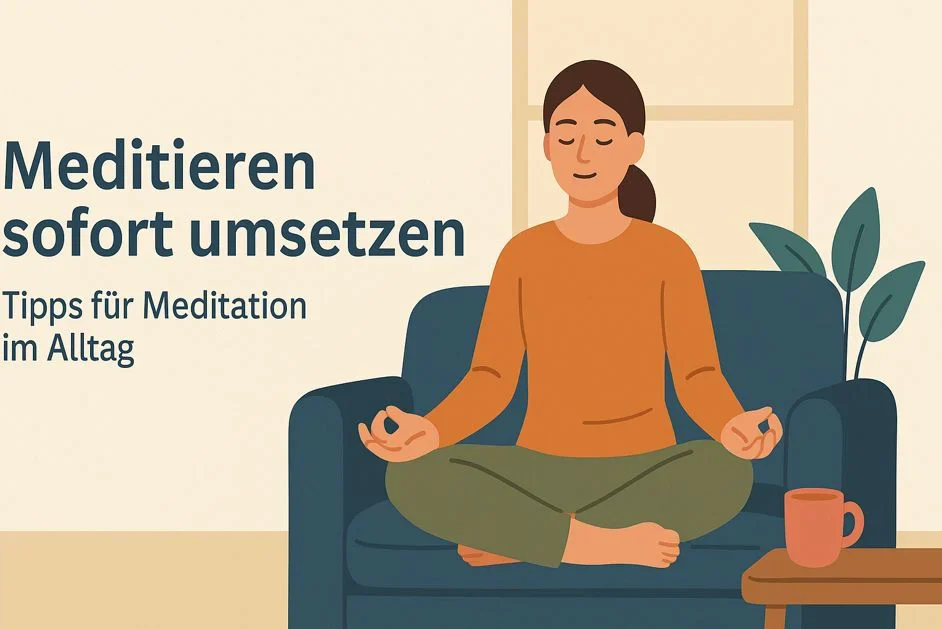
Meditation is like a tool that anyone can use in everyday life – you don’t need any prior knowledge, just a little curiosity. Just get started: find five minutes today, sit comfortably, close your eyes and focus on your breathing. Let thoughts come and go without pressure. Make it a habit, not a chore – small steps count.
Resilience is the reward for persevering
Did you know that regular meditation changes your brain in a similar way to a software update? Studi…
If you suffer from severe anxiety, depression or trauma, combine meditation with professional support.
Write in the comments: Have you tried the 5-minute exercise – how do you feel now? Five minutes a day – no esoteric nonsense, just training that works if you stick with it.
Everything you need to know about meditation for beginners
What exactly is meditation?
Meditation is simple mental training. You observe your thoughts instead of stopping them, thereby sharpening your focus and reducing stress.
How do I start meditating as a beginner?
Sit quietly for five minutes and concentrate on your breathing. When thoughts arise, gently bring your attention back to your breathing.
Does meditation work even if I’m not perfect at it?
Yes, you train most when you are distracted! Every repetition improves your attention – perfection is not necessary.
Do I need any special requirements or prior knowledge?
No, you can start right away. You don’t need any experience, just five minutes of time and the willingness to practise regularly.
What are the effects of a daily 5-minute meditation?
Just 5 minutes a day can strengthen your concentration, noticeably reduce stress and promote serenity in your everyday life.
This is how meditation becomes a habit
The real moment when motivation arises Do you know that great feeling you get right after exercising…
5 reasons why your meditation is failing
Why do so many people give up their meditation practice after just a few weeks—even though they know…
Crystals in meditation practice
Many people say that meditation with crystals is just esotericism—but recent studies on mindfulness …

