

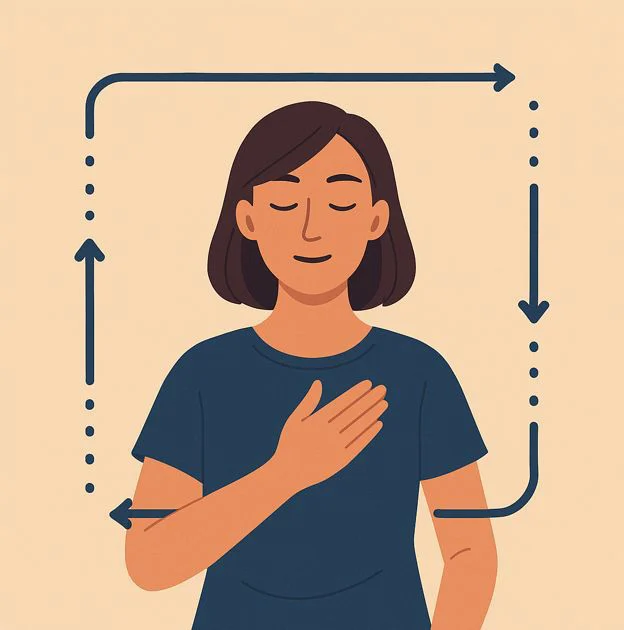
Most people breathe incorrectly—and that is one of the main reasons why meditation is often difficult. If you breathe shallowly and high in your chest, you remain trapped in your nervous system’s stress mode. Your body interprets this as constant alertness, which is precisely why you find it so difficult to calm down internally or stay in the moment.
The exciting thing is that your breath is the only direct bridge to your nervous system. If you learn to control it consciously, you can also control your state of mind—from tension to calm, from chaos to clarity.
People have been using this principle for thousands of years: in yoga it is called pranayama, in Buddhism anapanasati, mindfulness of breathing. Today, modern science can explain exactly why it works—via the parasympathetic nervous system, the body’s “brake” that activates your rest mode.
In this video, I’ll show you how you can flip that switch using two simple but effective breathing techniques—abdominal breathing as a foundation and box breathing as a structured tool. You don’t need any prior experience, just a little attention. Let’s get started together.
Table of Content
Why breathing is meditation
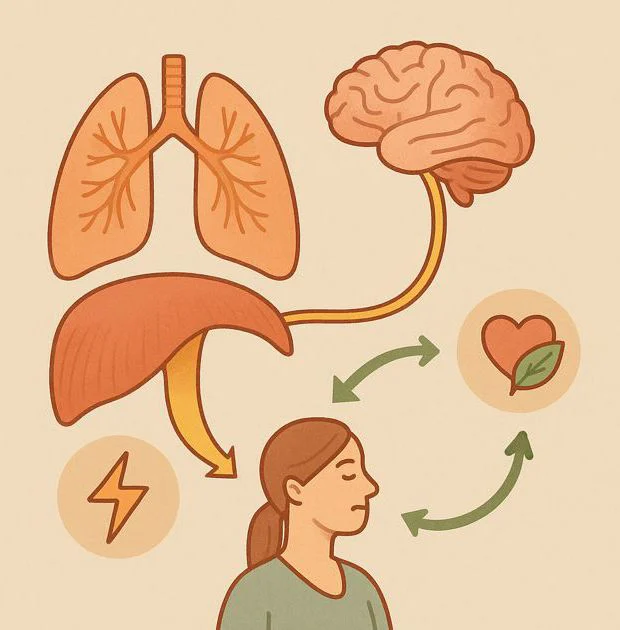
Breathing is the invisible bridge between body and mind. It happens automatically—yet you can influence it at any time. That’s what makes it so special: it connects your body’s unconscious processes with your conscious actions. When you breathe shallowly and quickly, you signal danger to your body. This activates the sympathetic nervous system—the part of your nervous system that puts you in a state of alertness and performance. Your heart rate, blood pressure, and muscle tension increase. This is exactly what happens when you are stressed.
On the other hand, as soon as you lengthen your exhalation and calm your breathing, you activate the parasympathetic nervous system—the part responsible for regeneration, digestion, and rest. It’s as if a switch in the body flips from “doing” to “being.”
Meditation cushion
-

Anahata Harmony
49,95 € -
Manipura Strength
49,95 € -
Muladhara Balance
49,95 € -
Sahasrara Connect
49,95 €




In many traditions, this insight has been central for centuries. In yoga, conscious breathing is called pranayama, which translates as control or guidance of life energy. In Buddhism, the breath is the object of mindfulness: Anapanasati, the mindful observation of inhalation and exhalation. And in Zen meditation, it is said that those who follow their breath follow life. No matter which school—everywhere, silence begins with breathing.
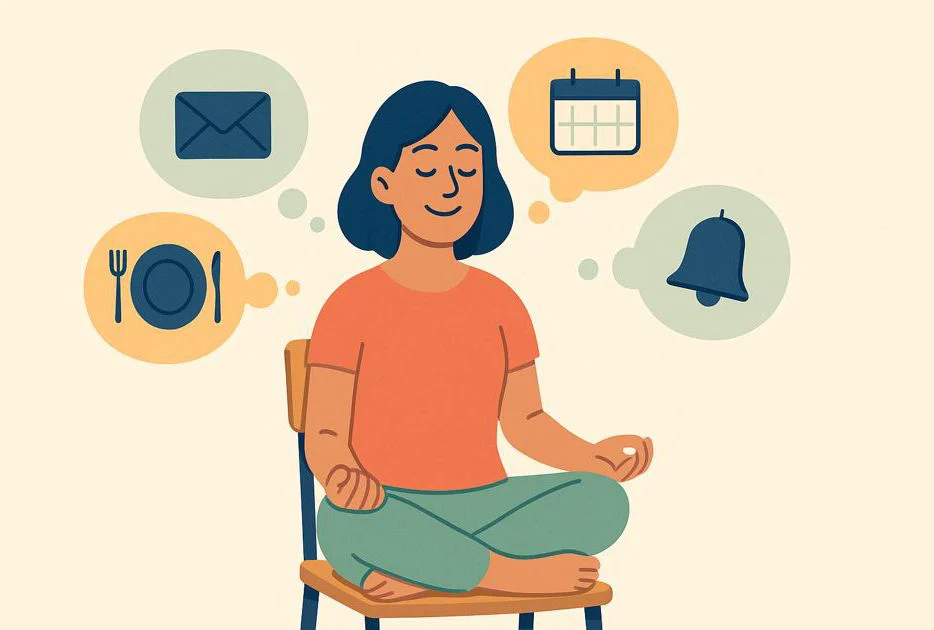
Many beginners stumble right here: they try to stop their thoughts. But thoughts cannot be stopped—they calm down when you feel your breath. Your breath becomes an anchor, always the point to which you return when your mind drifts away. It is training, not failure. Let every thought lead you back to your breath. Then meditation begins automatically.
I have often observed this myself, including with clients: only when their breathing became deeper did calmness set in. Before that, there was only effort and a silent struggle in their minds. The moment when someone truly breathes is noticeable—their shoulders sink,
your gaze softens, your tone calms. Your body knows what peace feels like, you just have to let it happen.
Once you have found this anchor, you need one more thing: stability. And that starts with a solid foundation—abdominal breathing.
Abdominal breathing – the foundation of inner peace
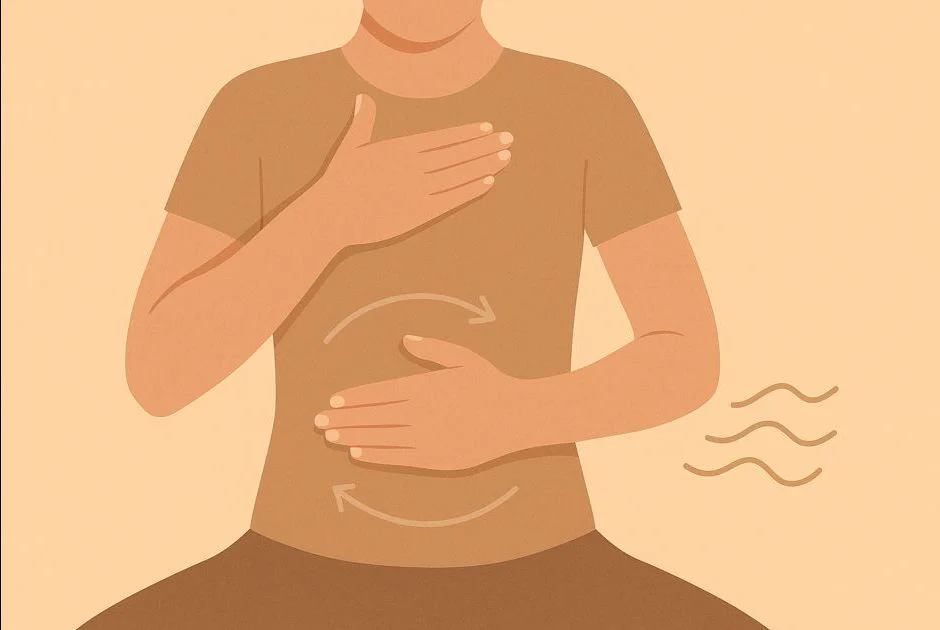
Most people breathe too shallowly. This happens unnoticed: due to constant tension, desk work, clothing that is too tight, or simply out of habit. Breathing remains stuck in the chest, short and hasty. This keeps the body in a constant state of readiness. To find peace, we must reverse this habit—and breathe into the abdomen again.
The diaphragm plays the main role here. It is your largest breathing muscle, a dome under your ribs. When you breathe in deeply, it lowers, your stomach bulges slightly outward, and your lungs fill completely. When you exhale, it rises again and the air flows out gently. This movement massages your internal organs, improves blood circulation, and helps activate the parasympathetic nervous system. Abdominal breathing is therefore not “esoteric,” but pure biology—your nervous system loves it.
Meditating is like brushing your teeth
How can it be that we know the motto for exercise: three times a week is enough, more is a…
Try this little test: Place one hand on your chest and one on your stomach. Breathe normally. Which hand moves? If your chest rises higher, you are probably breathing shallowly. Now breathe in slowly through your nose so that your stomach rises and your chest remains still. Then breathe out slowly—at least two seconds longer than you breathed in. Repeat this a few times. Feel how each exhalation releases some tension.
You don’t have to force anything. Breathing is something you don’t have to do—you just let it happen. With each breath, your system becomes clearer and calmer. After just three or four conscious breaths, many people notice that their heart is beating more slowly and their thoughts are flowing without getting stuck.
A common mistake is to push too hard or focus on performance. Your breathing should remain light. If you try to “do it,” you will only tense up more. And impatience is normal—especially if you have been breathing in stress mode for years, your body needs some time to let go.
Once you have a good feel for the basics, you can try a little bonus for advanced practitioners: after each inhalation and exhalation, pause for a moment, one to two seconds, before beginning the next cycle. This mini-silence deepens the effect. It is like a brief moment between two waves—calm, present, completely there.
Once you have internalized this abdominal breathing technique, you can structure it. This will give you a tool that will help you stay calm even in moments of acute stress: box breathing.
Box breathing – structure for the mind
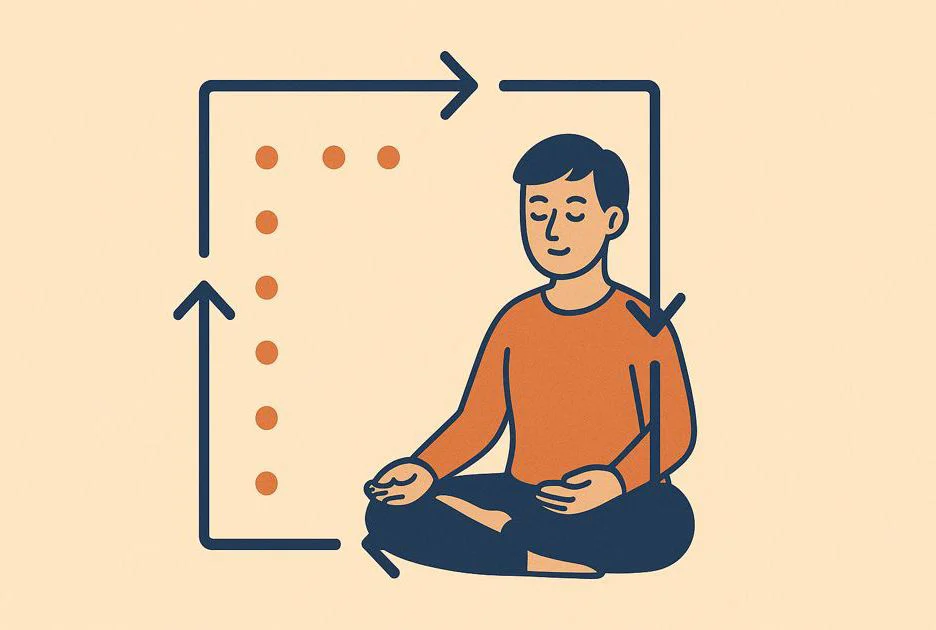
If abdominal breathing is your foundation, then box breathing is your training plan. It gives your breath a clear structure—four equal sections that create calm and focus. The rhythm is: inhale for four seconds, hold for four, exhale for four, hold for four. A simple but powerful formula that is used in areas where people have to function under extreme pressure – such as in military training or therapeutic settings. The reason: this form immediately takes you out of mental chaos and into a stable, measurable state of calm.
Popular products
-
Muladhara Balance
49,95 € -
Swadhisthana Flow
49,95 € -
Manipura Strength
49,95 € -
Anahata Harmony
49,95 €

Why this works is no coincidence. Your brain loves patterns and symmetry. When you breathe evenly and count internally, you synchronize your body and mind. Counting ties your focus to a real task. You no longer think, “I have to calm down,” but simply follow your breath. Something fascinating happens: the steady rhythm lowers stress hormones, stabilizes your heartbeat, and activates the same calm response as gentle music or meditation. Only it’s more controllable—you control it yourself through your breath.
Let’s go through the exercise. Sit upright, shoulders relaxed, gaze straight ahead. Now breathe in through your nose and slowly count to four. One… two… three… four. Then hold your breath gently—no straining, just stay still—and count to four again. Now exhale calmly, through your mouth or nose, at the same pace. Finally, hold again, count to four, before starting the cycle again. After three to four rounds, you will notice how your body noticeably slows down and your head becomes clearer.
How-to guide: Using box breathing
nach belieben
Find position
Sit comfortably and upright. Relax your shoulders and start with deep abdominal breathing to activate your diaphragm.
Inhalation
Gently close your eyes and breathe slowly through your nose, drawing air deep into your belly as you count slowly to four.
Hold
Hold your breath gently and relaxed—don’t push. Count quietly to four in your head.
Exhaling
Let the air flow out of your belly in a controlled manner through your mouth or nose while counting to four again. Try to empty your lungs completely.
Hold
Hold your breath when your lungs are empty, only for as long as it feels comfortable. Count to four.
Repeat cycle
Restart your circulation – 5 to 10 repetitions are ideal for noticeably calming the nervous system.
At first, it helps to count aloud to stabilize your rhythm. Later, quietly repeating the numbers in your head will suffice. And if you lose your rhythm, it doesn’t matter. Just start again. The point is not to breathe perfectly, but consciously. This trains the same quality as meditation: presence.
This technique is perfect for everyday situations when your system is overstimulated. Before an important appointment, after an argument, or when your thoughts are racing, box breathing immediately brings you back to center. Combine it with abdominal breathing by breathing deeper into your diaphragm as you inhale and exhale. This will enhance the effect. Over time, the rhythm will become almost automatic. The beauty of it is that you don’t need a mat, no preparation, no quiet room—just yourself and four breaths.
Once you know both techniques, you have tools that you can use anywhere. They are not “just for meditation,” but are intended for your real life. This is mindfulness in action—and this is where true peace begins.
Closing remarks
Breathing is actually easy. But conscious breathing changes everything. It switches your body from tension to presence, bringing you back to the present moment. Abdominal breathing creates your foundation—it calms your system from the inside out. Box breathing gives your mind structure and support when life gets loud. Together, they form the perfect duo for more clarity, focus, and serenity in everyday life.

Creative combinations of crystals
Combining different stones can not only be aesthetically pleasing, but can also bring together diffe…
Try both today: a few deep abdominal breaths in the morning or a round of box breathing when your head is spinning. It takes hardly any time, but it can change your whole day. And when you realize how much calmness you have within yourself, you will understand: meditation does not begin in the mind, but in the body—with each inhale and exhale.
If you want more techniques like this for inner stability and genuine calm in everyday life, subscribe to the channel. It’s not about perfection, but about living with clarity again.
Questions & Answers: Box breathing, abdominal breathing, and the path to inner peace
What does abdominal breathing (diaphragmatic breathing) do?
Abdominal breathing (diaphragmatic breathing) is the foundation of relaxation. It maximizes oxygen intake, massages internal organs, and directly activates the parasympathetic nervous system (resting nerve) to reduce stress hormones and establish physical calm.
How do I use box breathing (4-4-4-4) in acute stress situations?
Box breathing is an instant tool. Breathe in for 4 seconds, hold for 4 seconds, breathe out for 4 seconds, and hold again for 4 seconds. This symmetrical rhythm forces the mind to focus and immediately switches the nervous system from chaos to measurable stability.
Is box breathing better than normal meditation?
Box breathing is a structured pranayama tool for rapid regulation. It does not replace classic, thought-based meditation, but rather complements it. It creates the physical basis of calmness that is often necessary for a meditative state.
How often should I practice abdominal breathing to see benefits?
Even three to five minutes of conscious abdominal breathing every day is enough to recondition the nervous system. Practice is more important than perfection. Regular practice strengthens the muscle memory for rest mode.
Can I use box breathing anywhere, e.g. at work?
Yes. Box breathing is discreet and requires no aids. It was developed specifically for high-stress situations. Use it before meetings, after difficult conversations, or while waiting to immediately regulate your state.
This is how meditation becomes a habit
The real moment when motivation arises Do you know that great feeling you get right after exercising…
5 reasons why your meditation is failing
Why do so many people give up their meditation practice after just a few weeks—even though they know…
Crystals in meditation practice
Many people say that meditation with crystals is just esotericism—but recent studies on mindfulness …

