

Did you know that regular meditation changes your brain in a similar way to a software update? Studies show that the first noticeable effects can occur after just a few weeks – and after eight weeks, measurable changes in areas of the brain were even detected in tests. This mainly affects attention, memory and the ability to find creative solutions. This is not rocket science, but the state of the art in research: brain scans show that areas responsible for focus and memory grow after structured programmes.
Today, we’ll take a look at what actually happens in your mind when you meditate – and how you can get started right away with a simple 3- to 5-minute exercise. Get ready for your personal upgrade – step by step.
Table of contents
Ihr Gehirn als Trainingsgelände: das Upgrade-Prinzip
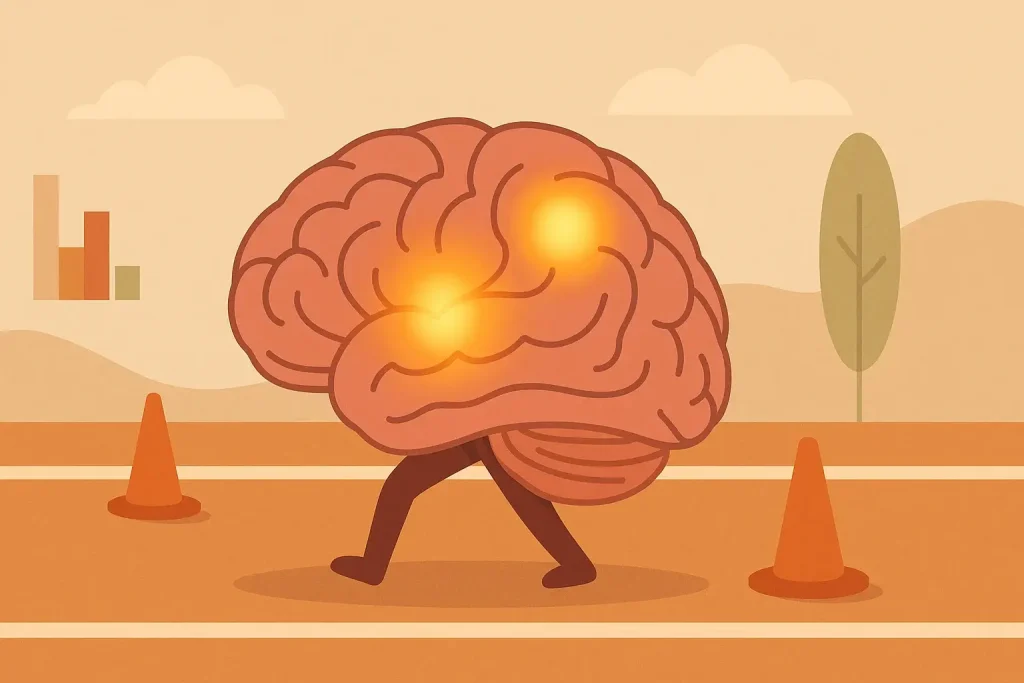
Imagine your brain is like the operating system on your mobile phone. Every day you meditate, it gets a small update – not huge changes all at once, but lots of mini improvements that really add up over time. This may sound unusual at first, but it has long been scientifically proven. Brain scans from studies show, for example, that after eight weeks of structured meditation, the grey matter in the hippocampus increases and changes are also evident in the prefrontal cortex and cingulum. And the best thing is: you don’t need incense sticks or a trip to a monastery. Short, daily sessions are enough to give your mind a real upgrade.
When people think of meditation, they often picture monks on mountains or individuals with ample time and minimal stress. However, meditation can be a real game changer, especially in stressful everyday life. It functions like a pit stop in Formula 1 – pause briefly, refuel, and everything runs smoothly again. A short pit stop means greater clarity and fewer impulsive reactions. And you don’t have to sit still for hours to achieve this. Studies show that just 5 minutes a day can make a difference. Ideally, after a few weeks, you should increase to about 10 to 13 minutes a day – studies have shown significant improvements in attention and self-control in this range.
Popular products
-

Sahasrara Connect
49,95 € -
Muladhara Balance
49,95 € -
Swadhisthana Flow
49,95 € -
Manipura Strength
49,95 €




One area that benefits particularly is the hippocampus – essentially your long-term memory storage. Studies involving eight-week meditation programmes show that the volume or density of this area increases measurably. At the same time, changes occur in the prefrontal regions responsible for attention and self-control. Many participants report that they are better able to remember names, appointments and details from conversations and remain more focused. These effects are objectively verifiable in some studies, although the magnitude of the effect depends on how regularly and intensively you stick with it.
You don’t need any fancy equipment or a coach who spends hours explaining how you should sit. For most people, it’s enough to just get started and incorporate short daily exercises. Important: If you have had traumatic experiences or have serious mental health issues, it is a good idea to consult a specialist beforehand.
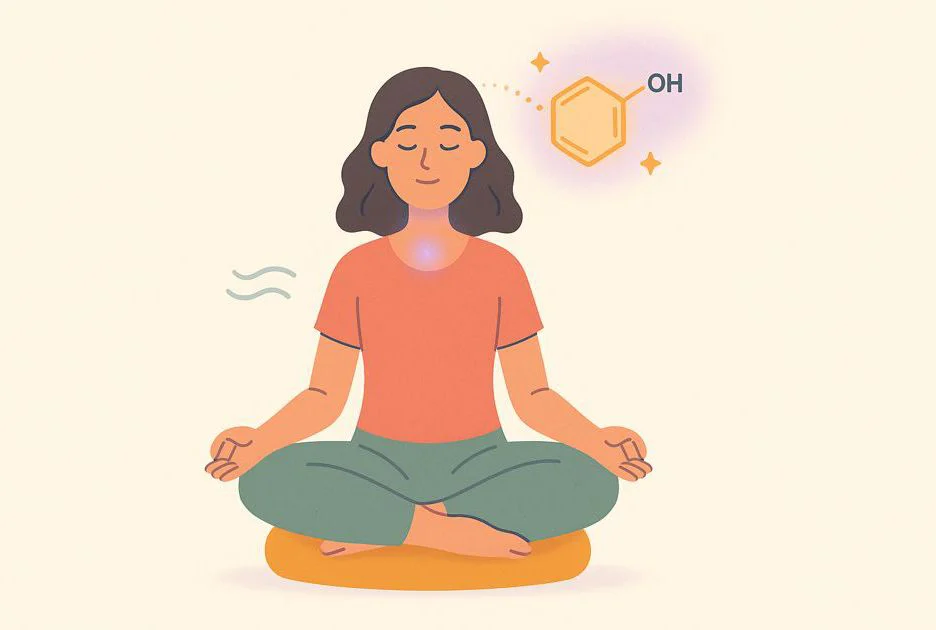
Here is the starter version for your mental training ground: Sit comfortably, close your eyes slightly and spend five minutes just observing your breath at the tip of your nose. Every time you notice your thoughts wandering, gently bring them back to your breath. That’s all there is to it! Goal for the next few weeks: Slowly increase to 10 to 13 minutes a day. Many people notice after just a short time that they remain more focused and clear in their everyday lives.
If you already have some experience, you can expand the exercise: at the end of the meditation, spend a minute observing your entire body – from your feet to the top of your head. This trains your attention and makes your mind more flexible. The more often you stick with it, the easier it will be to switch between focus and relaxation in everyday life.
Over time, you will notice that you are not only more focused, but also more relaxed throughout the day. With every mini update, your brain gains more power and flexibility. And it is precisely this inner strength that you need when it comes to not letting everyday stress get to you so much.
Stress resilience: your protective shield against everyday madness
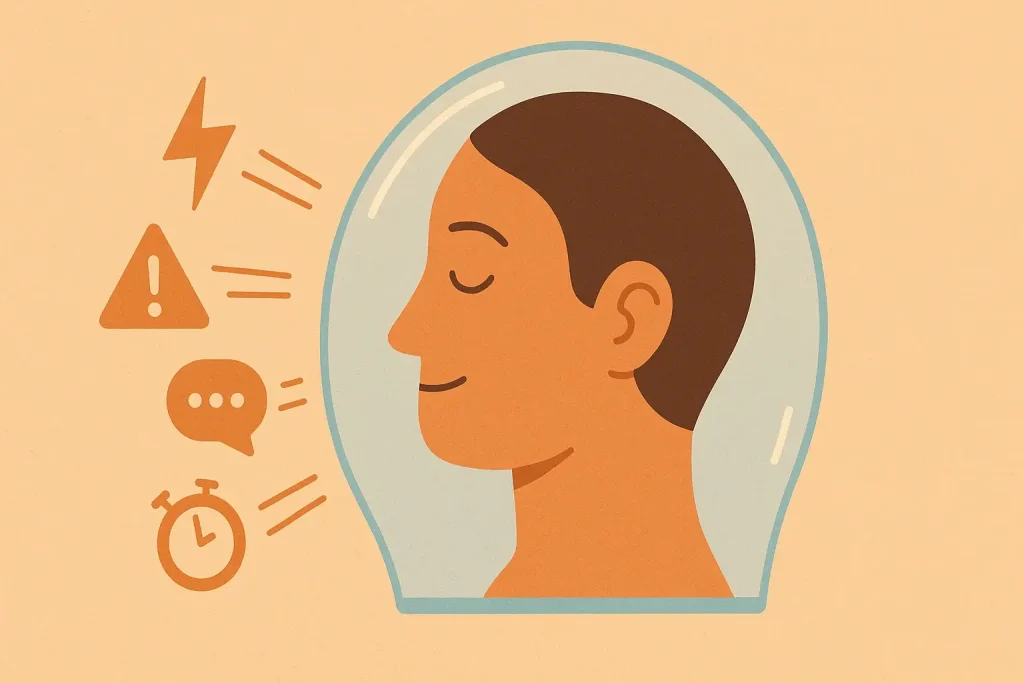
Some people seem to have a built-in shield against stress – everything just bounces off them. Perhaps you sometimes wonder why a full calendar upsets you, while others remain completely calm. This is where stress resilience comes into play: it is not a coincidence, but something you can train yourself to do. It’s not about becoming tougher or colder, but about dealing with pressure more intelligently. Many people think that stress is simply bad luck or a question of character. However, we now know that regular meditation can change your stress profile and influence how your body reacts to difficult situations.
Imagine your stress centre in your head as an alarm system – that’s the amygdala. It kicks in immediately when something goes wrong. This is exactly where meditation has an exciting effect: studies show that the amygdala reacts less strongly to stress stimuli in meditators and the connection to control centres such as the prefrontal cortex improves. This means fewer automatic alarm reactions and more conscious control. So you don’t immediately jump at every trigger, but can pause for a moment and decide for yourself how to react. It’s like an extra seatbelt in everyday life.
What is the crown chakra?
Do you know the feeling that despite morning meditation or short breathing exercise you are always i…
You may want to know whether this is really measurable. In fact, there are many studies that show that people who meditate regularly often have lower stress reactivity and recover more quickly from stress. Some studies found lower cortisol and inflammation levels after mindfulness training, while others show mixed results. Nevertheless, the trend is clear: over time, the body builds up a natural buffer against stress. This applies not only to healthy people, but also to those who are under constant pressure due to their job, illness or family stress. Even a few weeks of daily, short meditations can make a difference. Ten minutes a day is a realistic start, and several studies have found positive effects after just a few weeks of regular practice.
Now for the practical side: when you feel the first signs of stress in your everyday life – whether it’s a rapid pulse, tense shoulders or a queasy feeling in your stomach – pause for a moment. Take three deep breaths in and out, making each exhalation slightly longer than the inhalation. This mini intervention helps your nervous system to regain its balance. In this way, you expand your ‘window of tolerance’ – the range within which you can remain calm and clear-headed, even when things get hectic. You can do this anywhere: at the office, on the train, even while shopping.
For advanced practitioners, it is worth taking a closer look at your body signals. The sooner you notice small signs such as a tense neck or tingling hands, the faster you can take countermeasures. Sometimes, a quick check-in with yourself is enough to prevent you from slipping into a spiral of stress. And importantly, if focusing on your body brings up unpleasant memories or strong feelings – for example, after stressful experiences or trauma – it makes sense to seek support from a trauma-sensitive professional. Meditation is not a panacea, and sometimes professional guidance is simply necessary.
As you can see, meditation is not a magic trick that makes stress disappear completely. But it gives you tools that allow you to react more calmly, clearly and flexibly in everyday life. This not only brings more inner peace, but also opens up new possibilities for dealing with challenges. And it is precisely this clarity and flexibility that are key when it comes to not only functioning in everyday life, but also finding new ideas and creative solutions.
Creativity and clarity: How meditation can inspire your everyday life
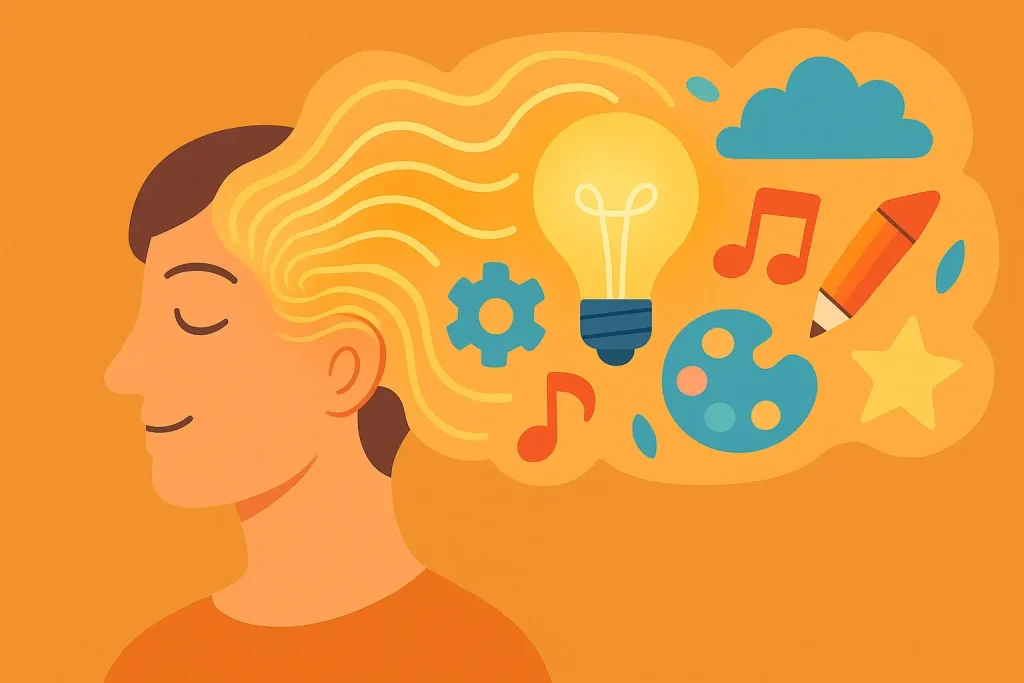
In everyday life, it sometimes feels like there’s a radio playing in your head that never stops – news, playlists, discussions, all jumbled together. This ‘thought radio’ is not just a feeling: there is a network in the brain, the Default Mode Network (DMN), which is responsible for these endless thought loops and monologues. When it gets too loud, it drowns out the quiet, creative impulses you actually want to focus on. Neuroimaging studies show that meditation reduces activity in the DMN – which means less brooding about yourself and more mental space. At the same time, the connection between the networks for attention and executive functions improves. This is exactly what creates space for new ideas.
A busy mind often blocks access to fresh solutions – like an email inbox that is overflowing and no longer lets important messages through. The more you brood, the harder it becomes to find creative approaches, whether at work, in your studies or in your private life. Many people report that after a short period of meditation, they find it easier to come up with new ideas. This is not because they have suddenly become geniuses, but because their brains are less preoccupied with old stories or worries about the future. Many practitioners report that regular mindfulness practice increases the likelihood of creative ideas because it slows down the merry-go-round of thoughts.
Popular products
-
Sahasrara Connect
49,95 € -
Muladhara Balance
49,95 € -
Swadhisthana Flow
49,95 € -
Manipura Strength
49,95 €
What can you do specifically? Here is a mini exercise that helps immediately: Sit comfortably, close your eyes and focus your attention on your breath at the tip of your nose for three minutes. Feel how the air becomes cooler or warmer as you breathe in and out. If thoughts arise, that’s perfectly normal – just gently bring your focus back to your breathing. Mini exercise: 3 minutes of nasal breathing focus – this slows down the chatter in your head and creates space for new ideas. This short practice is ideal for beginners and can be incorporated into any break.
If you already have some experience or are curious, try open monitoring meditation. This involves observing everything that arises – sounds, feelings, thoughts – without judging or holding on to them. It’s like a coach who keeps an eye on the whole playing field instead of focusing on one player. Open monitoring trains you not to immediately judge or push away new stimuli – this increases your cognitive flexibility and thus the chance of discovering unusual connections. That’s exactly what you need when you’re looking for creative solutions in everyday life.
Studies show that even short daily exercises are associated with improved attention and memory performance – often just a few weeks are enough to feel the first effects. The more often you stick with it, the clearer your head will become. You will notice how you suddenly have that decisive insight in a meeting or come up with better ideas when studying. None of this is coincidence, but rather the result of regular training for your mind.
Make these exercises a regular part of your day. Even short sessions make a difference and help you clear your head. It’s worth sticking with it – because every little step you take helps your brain progress.
Your daily update pays off
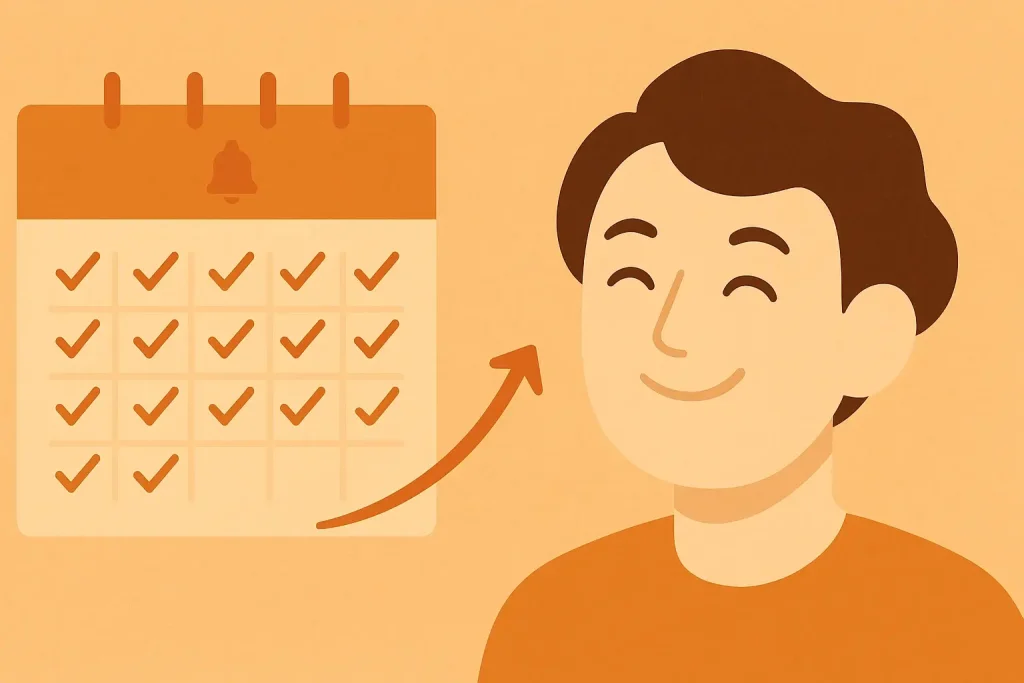
Just like a mobile phone, which runs better and better with small updates, your brain works in the same way: with short, regular meditation sessions, you can train your focus, serenity and creativity step by step. Small, regular training sessions add up – studies with eight-week programmes show real changes in the brain. Even with just a few minutes a day, you will often notice improvements in your attention span and mood.
Note: Meditation is generally safe, but around 5–8% of participants occasionally report feelings of restlessness or discomfort. If you have a history of mental illness or trauma, it is best to seek professional support.
This is how meditation becomes a habit
The real moment when motivation arises Do you know that great feeling you get right after exercising…
Do the 3-minute breathing exercise now, write in the comments how you felt about it, and if you like the practical approach, subscribe for more everyday tips. A small daily update. A long-term upgrade. Start with 3 minutes today.
Frequently asked questions about brain upgrades through meditation
How does meditation affect the brain?
It increases concentration and creativity and reduces stress – proven by changes in the brain.
When will I notice an effect?
Often after just a few weeks of daily meditation – studies recommend 8 weeks for noticeable results.
Can anyone start immediately?
Yes, even with simple exercises starting at 3 minutes per day – no prior knowledge is necessary.
Does meditation really help against stress?
Yes, it reduces stress reactions and strengthens inner balance in everyday life.
Should I be concerned about side effects?
Meditation is usually safe. If you have a history of mental illness, it is advisable to seek medical advice.
This is how meditation becomes a habit
The real moment when motivation arises Do you know that great feeling you get right after exercising…
5 reasons why your meditation is failing
Why do so many people give up their meditation practice after just a few weeks—even though they know…

