

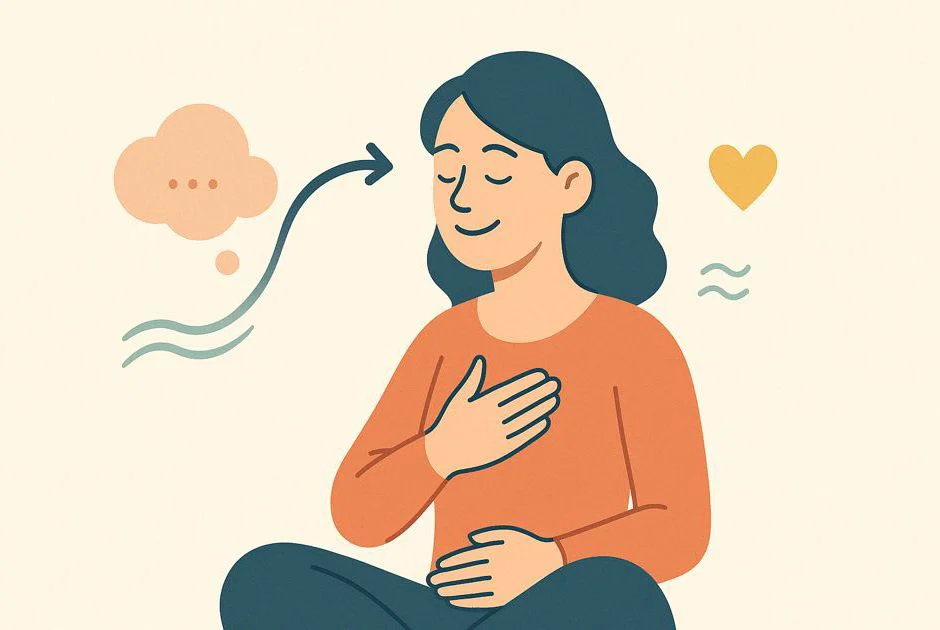
Here’s a simple test: Sit down comfortably and consciously count three breaths – one when you inhale, two when you exhale, three when you inhale again. Take a moment to check in with yourself: Did your thoughts wander anyway? Don’t worry, this happens to almost everyone – our minds like to jump from topic to topic, even when we pause for just a moment.
Today, I’ll show you why counting your breaths can make such a difference. You’ll learn how a small neurological switch works and get a mini exercise that you can use right away in your everyday life. Expectation: You won’t be able to quiet everything right away – that’s completely normal.
Stay tuned, because I’m about to show you what really goes on in your head when you simply count from one to three.
Table of contents
Your head as a task manager: why counting stops autopilot
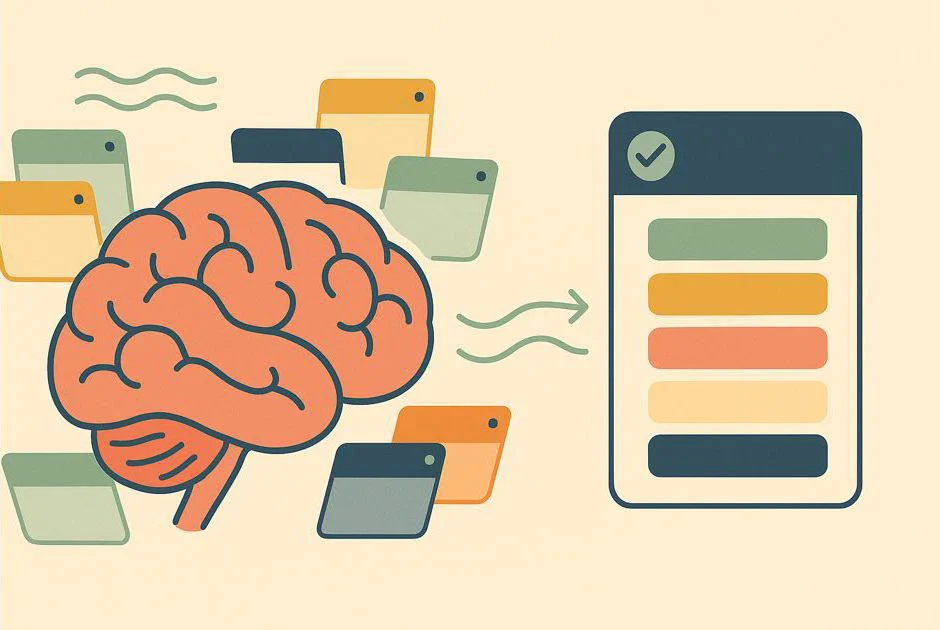
Imagine your head is like a laptop with too many tabs open – new thoughts pop up everywhere: appointments, worries, spontaneous ideas. No wonder everything runs slower and sometimes feels like a minor system crash. This is exactly how our brain works when too many thoughts rush through it at once. We constantly open new “thought tabs” that drain our energy and distract us.
Now you may be wondering: why should counting your breaths help to untangle this jumble of thoughts? It helps because it engages your working memory, leaving less space for automatic rumination. In short, conscious counting occupies capacity in your working memory, thereby reducing activity in networks that drive rumination – the so-called default mode network. It’s like a task manager that closes all unnecessary programmes and gives your mind more power to focus on what’s important.
Try it out right now: count ‘one’ as you breathe in and ‘two’ as you breathe out – and repeat this without putting any pressure on yourself. If you lose count, just start again at one. This isn’t a defeat, but training for your focus. With each counting cycle, you give your mind a clear, small task. It is so simple that it does not overwhelm you, but so concrete that it quietens the constant background noise. When you are counting, there is less room for to-do lists, brooding or self-doubt. It is as if you are clearing a small path through the jungle of your thoughts.
Most popular products
-

Muladhara Balance
49,95 € -
Swadhisthana Flow
49,95 € -
Manipura Strength
49,95 € -
Anahata Harmony
49,95 €




Scientists have even made this visible: when people consciously count their breaths in the laboratory, brain scans show that the default mode network – responsible for daydreaming and constant brooding – is significantly less active. Imagine it like a concert where the loud background music is suddenly turned down so you can hear the main melody better. This is not a trick, but a measurable change in the mind. And best of all, after just a few conscious breaths, many people feel the inner noise diminishing. The voices that remind you of unfinished tasks or try to drag you back into old worries become quieter. Counting is like a little reset in the middle of everyday life.
If you catch yourself drifting off again, don’t worry. Returning to counting is exactly what you are training yourself to do. Each restart strengthens your ability to not get carried away by every thought that pops into your head. For advanced practitioners: if you practise regularly, you will notice that focusing becomes easier and almost automatic over time. Your mind learns to switch gears more quickly and stay focused on what is important.
With a little practice, this “tab management” in your head will become a real everyday superpower. And now comes the exciting part: in the little breaks between breaths, there is another trick that really slows down the merry-go-round of thoughts.
The secret reset: How pauses between breaths break chains of thought
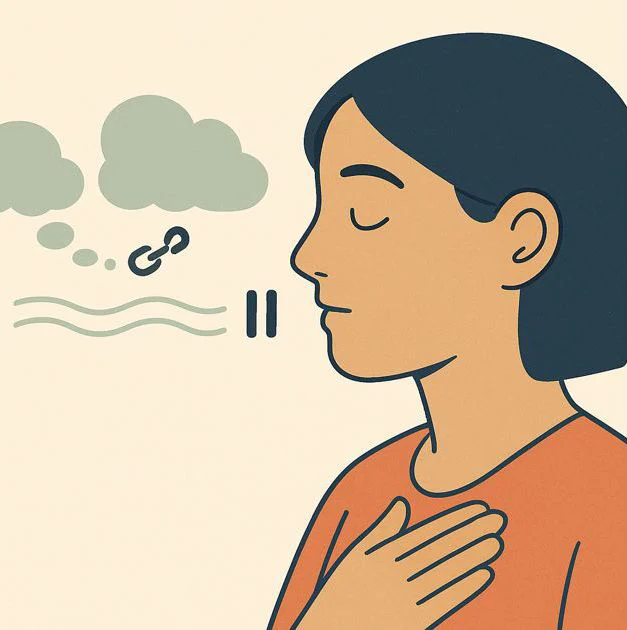
Perhaps you know the feeling: you’re standing at the traffic lights waiting for them to turn green – for a moment, nothing happens. And it’s precisely during this brief pause that your mind suddenly switches to autopilot: thoughts pop into your head, memories, tasks, worries. The brief pause between inhaling and exhaling is precisely the gap that your mind likes to jump into. Without you even noticing, your brain uses these mini-moments to start new cascades of thoughts – often completely automatically.
This is the point at which you can take countermeasures. When you feel the next pause between two breaths, simply say “stop” to yourself and consciously count the next breath. Studies and models of mindfulness explain precisely this interruption as an effective method of stopping automatic thought cascades and creating space for conscious choice. You no longer fill the gap with old worries or to-do lists, but with a clear, small action. Counting during the pause works like a reset button – you give your mind a new task and prevent it from simply jumping back into old patterns.
It sounds simple, but it’s a real game changer. Many people only realise after a few minutes of travelling by train or brushing their teeth that they were completely lost in their thoughts. It is precisely during these short breaks – after exhaling, before you breathe in again – that your mind loves to grab hold of a new topic. If you fill this gap with counting instead, you interrupt this automatic process. Psychologists describe this as actively controlling your inner screen: you decide what’s on, not your autopilot.
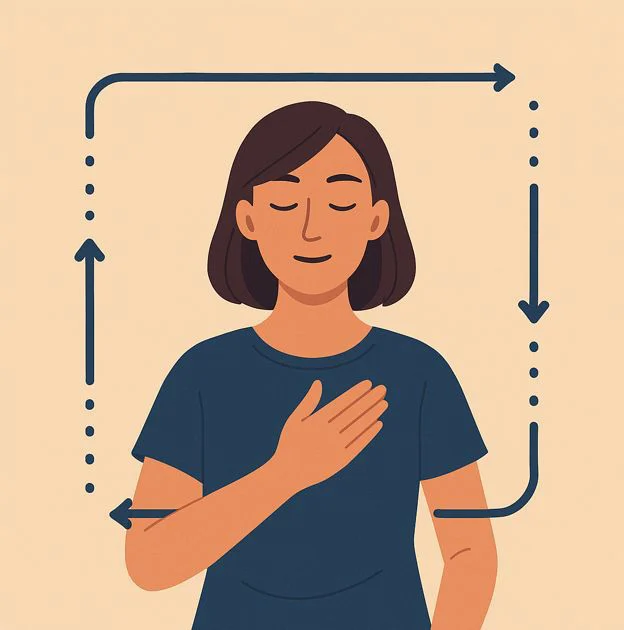
Box breathing stops stress immediately
Most people breathe incorrectly—and that is one of the main reasons why meditation is often difficul…
If you find it difficult to take a break, here’s a quick tip: just focus for a moment on the feeling of air in your nostrils. Feel how cool the air is when you breathe in, how it gets a little warmer when you breathe out. This also fills the gap with something concrete and prevents you from drifting off again immediately.
Those who practise this regularly will quickly notice that their chains of thought become shorter and they brood less often. Many experienced meditators report that consciously filling the pauses between breaths makes it much easier to break out of old patterns. This is invaluable in everyday life – especially when stress, anger or worries come knocking. The more often you do this, the more your brain learns not to immediately react to every impulse. A small gap develops between what happens and your reaction to it.
Next time you catch yourself brooding, try this: pause for a moment, feel the pause, say “stop” to yourself and simply count your next breath. You will notice how this conscious interruption creates a moment of calm – even in the midst of chaos.
And even if you are already practised, try holding the pause after exhaling for a second or two and simply observing, without immediately grasping for the next thought. It will feel unfamiliar at first, but with a little practice, this pause will become your haven of peace – no matter what is happening around you.
The key thing is: it’s not about always staying perfectly in the moment. What’s much more important is how you deal with returning when your mind does drift off again. That’s exactly what we’re going to look at now.
From brooding to helmsman: How gentle returning builds your emotional strength
Sometimes you sit there counting your breaths – one, two, three – and suddenly your mind is somewhere else entirely. Maybe you’re already planning dinner or dwelling on an old argument. Many people immediately think, “Damn, I failed again.” But that’s a mistake. This is exactly where the real training begins. Imagine you’re out jogging, stop briefly because your shoe is pinching, and then continue running. It’s not running without a break that gets you further, but starting again and again. It’s the same with counting your breaths: coming back is the real benefit of the exercise.
A very simple mantra that you can use as a little corrective routine can help here. For example: “Ah – back to my breath.” Say this sentence quietly in your head, without any drama, every time you notice that you have drifted off. It’s not about scolding yourself or stressing yourself out. Research shows that this repeated, non-judgmental returning improves emotional regulation and reduces stress reactions in the long term. Your brain learns not to sound the alarm every time you slip up a little.
It is important to practise in short, regular sessions. Just a few minutes a day is enough to feel the effect. Don’t put pressure on yourself – it’s not about perfection. Over time, returning to the present will become easier and almost second nature. You will develop a kind of inner muscle for patience and self-kindness.
To prevent yourself from slowing down, a quick “no-blame reminder” can help: if you catch yourself drifting off again, simply say to yourself, “No problem, that’s part of it.” This will immediately stop your inner critic. The goal is not to prevent every distraction, but to notice them kindly and then gently return to the task at hand.
-
Anahata Harmony
49,95 € -
Manipura Strength
49,95 € -
Muladhara Balance
49,95 € -
Sahasrara Connect
49,95 €

Studies on mindfulness and meditation show that this routine makes a real difference. Those who practise regularly experience noticeably less stress and react more calmly to anger or worries. This strengthens the regions of the brain responsible for regulating emotions, while the alarm centre – the amygdala – remains calmer. This not only affects your mood, but also makes you more stable in everyday life.
For advanced practitioners: The longer you stick with it, the more returning to your breath will eventually happen almost automatically. Your brain will switch from conscious control to a more efficient mode, and you will need to exert less and less effort to return to your breath. It’s like riding a bike – at first you wobble, but later it happens all by itself.
Just give it a try: sit down for a few minutes every day, count your breaths and use your personal mantra when your mind wanders. Over time, you will notice that you not only become calmer, but also find it easier to take control in everyday life when your thoughts start racing again.
Now let’s take a look at how you can use this technique to specifically pause your mind’s cinema and use your attention as the key to greater inner peace.
The switch – your attention as the key
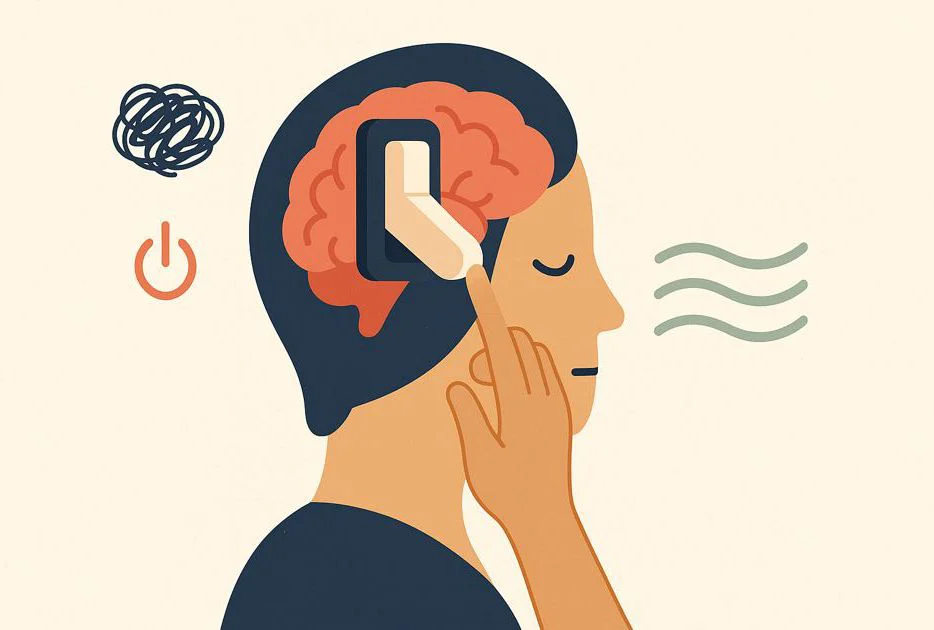
Imagine counting your breaths as a little switch in your head: with every conscious breath, you occupy mental capacity, interrupt the merry-go-round of thoughts precisely during the pause, and train your emotional regulation with every friendly return. These are the three most important effects that give you real control in everyday life.
This technique is simple, practical for everyday use and its mechanisms have been confirmed by research into mindfulness. Try it now: take three conscious breaths and write in the comments whether your thoughts drifted away or not.
If you want more simple, scientifically proven tools, subscribe to the channel. Stay tuned – you’ll see how quickly small routines can have a big impact.
Frequently asked questions about breath counting and mental calmness
How does breath counting work to reduce stress?
Counting your breaths prevents your mind from racing by utilising your working memory and stopping you from ruminating. It acts like a reset button for your mind.
How can I apply breath counting in everyday life?
Count quietly as you breathe in and out. Every time your mind wanders, simply start again at one. This is a quick and easy way to train your focus.
Why does counting your breaths help with rumination and worry?
Conscious counting blocks the default mode network – the part of the brain responsible for rumination. This results in fewer negative thought spirals.
Who is breath counting suitable for?
The method is suitable for beginners and advanced practitioners. It requires no prior knowledge, can be practised anywhere and supports any mindfulness practice.
What are the long-term benefits of regular breath counting?
Regular practice strengthens emotional regulation, increases stress resistance and ensures a more relaxed, present attitude towards life – scientifically proven!

