

Imagine waking up and wearing invisible glasses that filter everything you experience throughout the day. These glasses are made up of your beliefs, your feelings, and all the experiences you have had so far. They influence how you see people, how you assess situations, and even how you perceive yourself. We often don’t even notice that we are looking through these glasses—they are so natural to us that they seem like a part of us.
But what if you could take off those glasses for a moment? How would your view of the world change? That’s exactly what today is about: recognizing how strongly our inner state colors our external reality. Stay tuned and learn a simple breathing exercise for greater clarity.
Inhaltsverzeichnis
Why we don’t see the world as it really is

We often believe that we see the world as it really is. But in fact, we experience it through a filter consisting of our feelings, memories, and beliefs. Our perception is therefore not an objective camera shot, but rather an interpretation that has developed over the course of our lives. Researchers have even found that seven-month-old babies recognize expressions of fear and happiness independently of faces. Our emotional “glasses” begin to form at such an early age, shaping our view of the world later on.
Imagine putting on invisible glasses every morning, whose lenses reflect your experiences, beliefs, and feelings. Everything you perceive during the day is colored by these lenses. On a bad day, when you feel stressed or sad, even bright sunshine seems less friendly and the birdsong outside can seem like noise. Conversely, the same scene can seem completely different on a good day—suddenly, a gray sky seems romantic instead of oppressive. This filtering function usually happens unconsciously and influences how you assess people, situations, and even yourself.
It has been scientifically proven that our emotions alter our perception. Studies show that people who are afraid estimate hills to be about three percent steeper than those who are in a neutral state. If someone is afraid of heights, a balcony suddenly seems much higher and more threatening than it actually is. These effects occur because our brain is put on alert in such moments. The amygdala, an area of the brain, reacts particularly strongly to emotional stimuli such as fear and ensures that we pay attention to potential dangers—even if these dangers only exist in our minds. This means that our emotions influence how we see the world around us even before we consciously think about it.
-

Muladhara Balance
49,95 € -
Swadhisthana Flow
49,95 € -
Manipura Strength
49,95 € -
Anahata Harmony
49,95 €




Our mood also acts as an internal filter. Studies show that a cheerful state of mind makes it easier for us to keep an eye on the big picture, while sadness directs our focus to details. This can even be demonstrated in optical illusions: in the so-called Ebbinghaus illusion, people in a sad mood see the difference in size between circles less clearly than those in a neutral mood. Our feelings therefore determine not only how we feel, but also how we absorb and process information.
Another important point is that not only current emotions but also deeply rooted beliefs influence our perception. For example, if you have the belief that “I am not good enough,” you will often interpret situations in a way that confirms this belief. A colleague who has little time for you may seem dismissive. A failed project is quickly seen as proof of your supposed inadequacy, even if the real reasons lie elsewhere. These patterns work in the background and shape how you perceive yourself and the world.
But these glasses feel so natural that we often forget they even exist. We assume that what we see, hear, or feel is the whole truth. This makes it difficult to realize how much our own inner world colors our external reality. Only when we pause and mindfully observe how we react to certain situations can we recognize this filter. This is the first step toward setting it aside.
Everyday life also shows how much our perception is controlled from within. Perhaps you know the feeling that a problem suddenly seems much smaller after you have calmed down or slept on it. Or that an argument with a loved one seems less dramatic when viewed from a different perspective. These changes show how flexible our perception is—and how much it depends on our inner state.
What is the sacral chakra?
Many people think that chakras are pure fantasy or esotericism. However, studies now show that medit…
It is also fascinating to see how our brain deals with emotions. Feelings constantly provide us with information about how important or urgent something is, and whether it feels good or bad. These signals help us make decisions without always having to think everything through rationally. At the same time, however, this mechanism can also lead us astray if we fail to recognize that our perception is currently clouded.
When you begin to observe these mechanisms within yourself, a new space opens up. You can recognize that what you are currently feeling or perceiving is only one of many possible perspectives. This gives you the opportunity to respond more flexibly to challenges and judge yourself less harshly. It’s like cleaning fogged-up glasses: suddenly you can see details that were previously hidden from you and question old patterns.
The world as you experience it is therefore always a mixture of external impressions and internal evaluations. The more aware you become of this fact, the more scope you have to develop new perspectives and better understand yourself and others. This openness is an important step on the path to greater serenity and inner freedom.
Our perception is therefore not a rigid reflection of reality, but a living process that is constantly changing—depending on your thoughts, feelings, and experiences. Once you recognize this process, you can begin to deal with it more consciously and choose new ways of seeing the world.
How our thoughts and feelings shape our reality

Our thoughts and feelings act like invisible architects who work day after day to shape our reality. Imagine that every thought is a tiny seed that you plant in the field of your perception. From this, your experiences, your moods, and even your reactions to what you encounter will later grow. The power of these seeds becomes particularly apparent when we become aware of how they shape our experiences—often without us even noticing.
Many of these thoughts stem from deeply rooted beliefs. They are often the result of childhood influences, social expectations, or repeated experiences. These beliefs are like the soil in which your thoughts germinate. They determine which thoughts grow easily and which ones hardly get a chance. For example, if you have the belief that you always have to be particularly careful, you will tend to react cautiously in new situations—even if there is actually no danger. These patterns usually run unconsciously and direct your attention to certain aspects of reality, while others disappear from view.
Top-rated products
-
Sahasrara Connect
49,95 € -
Muladhara Balance
49,95 € -
Swadhisthana Flow
49,95 € -
Manipura Strength
49,95 €

A key tool for gaining more influence over this process is the ability to perceive your own feelings in a more differentiated way. Researchers refer to this as “emotional granularity.” According to research by Jennifer Fugate, people with high emotional granularity benefit from less stress and better mental health. This means that if you learn to identify your feelings more precisely—instead of simply saying “I’m in a bad mood,” you might recognize “I’m irritable today because a conversation was unpleasant”—you give your brain clearer direction on how to deal with this emotion. This skill can be trained, for example, by taking a few moments throughout the day to check in with yourself and notice the subtle differences in your feelings.
Our emotions do not arise solely as a direct reaction to external events, but are the result of a complex internal process. In the brain, particularly in the ventromedial prefrontal cortex, feelings are processed on an abstract level—regardless of whether they were triggered by a specific sensory impression or not. This explains why two people can feel completely differently in the same situation. Your previous experiences, memories, and beliefs constantly provide your brain with information on how to evaluate a situation. For example, a harmless glance from a colleague may seem like criticism to you if you are already feeling insecure, while someone else may not even notice this glance.
How can you consciously control this cycle? One way is to start the day with an open mind. Research on embodiment theory shows that if you decide, for example, “Today I am open to whatever comes my way,” your brain actually registers more positive impressions. A ray of sunshine falling warmly on your face is then more likely to be perceived as a small annoyance. This practice is simple but effective—and it reminds you that you can plant new seeds every day.
Of course, there are days when negative thoughts persist. In these cases, it helps to use a technique such as “mindful pausing.” This method is inspired by research on the “affect-as-information” theory and the work of Jennifer Fugate and colleagues. As soon as you notice that you are slipping into a spiral of thoughts, consciously pause. Take a few deep breaths and name the feeling or thought that is present at that moment. Ask yourself: Is this really an irrefutable truth, or is it just
Resilience is the reward for persevering
Did you know that regular meditation changes your brain in a similar way to a software update? Studi…
Over time, you will develop the ability to no longer react automatically to old patterns. You realize that thoughts and feelings come and go—and that you don’t have to blindly follow every inner voice. This is an important step in letting go of old beliefs and making your perception more flexible. It’s like regularly tending to your inner garden: you observe which plants are growing, remove the weeds, and make room for new ones.
Many people underestimate how much their own thoughts and feelings influence their everyday lives. They wonder why they keep finding themselves in similar situations or why they seem unable to overcome certain problems. However, if you take the time to observe your thoughts and deliberately plant new seeds, you can actively influence your experience. This requires practice and patience—but it’s worth it because it brings more freedom and ease into your life.
Sometimes even small changes in your inner attitude are enough to make your day completely different. You begin to notice more positive things, are less susceptible to stress, and can deal with challenges more calmly. It all starts with consciously managing your thoughts and feelings.
But how do you actually notice that your perception is particularly colored at the moment? Often, it is the small signs in everyday life that indicate this—even before you realize that you are looking through a certain filter.
Signs that your perception is currently biased

Sometimes there are days when you notice that even small things throw you off track. Maybe everything seems more stressful, you get irritated more quickly, or you lose track of things easily. These are often the first signs that your perception is currently heavily colored by internal filters. But how can you tell if you are looking through such “glasses”?
A key indicator of this is what is known as cognitive bias. It acts like an invisible puppeteer in the background, influencing how you absorb and process information. Confirmation bias3 ensures that you primarily perceive things that confirm your existing beliefs. For example, if you think a colleague doesn’t like you, you quickly interpret their neutral statements as criticism, even though they may be meant quite harmlessly. Availability heuristics cause you to consider events that are particularly present in your mind at the moment to be more important than they objectively are. After a few bad days, all your experiences seem negative, even if there were also some good moments.
Another example is the so-called anchoring effect. Here, you often base your assessment of a situation on the first piece of information you encounter—regardless of whether it is actually relevant or not. If something annoyed you in the morning, it can act as an anchor and influence the rest of your day. Overconfidence bias, on the other hand, causes you to overestimate your own abilities, which can lead to you overlooking warning signs or judging too quickly. And finally, there is the availability heuristic, where you tend to take whatever comes to mind most readily—often negative or particularly vivid memories—as a measure of reality.
These cognitive biases are particularly prevalent when you are stressed or feeling emotionally agitated. In such moments, they reinforce each other and make it difficult to remain neutral. A classic example from everyday life: Your boss gives you brief feedback on a project. If you are already feeling insecure, you may interpret the comment as criticism, even though it was meant objectively. Your inner insecurity colors your perception and causes you to become defensive or withdrawn. Or you read a short message from a friend and are immediately convinced that they are angry with you—when in fact they may have just been busy.
Conflict situations also show how different perceptions can be. Imagine two colleagues getting into an argument because a comment was misunderstood. For one, it was a harmless remark, for the other, an attack. Individual filters—shaped by experiences, expectations, and current mood—lead to both people experiencing the situation completely differently. Such misunderstandings often arise because everyone sees things through their own “glasses.”
Our perception depends not only on thoughts and feelings, but also on physical conditions. An interesting study by Proffitt showed that people estimated the steepness of a hill to be significantly greater if they had previously exercised on a treadmill. This means that even fatigue or exhaustion can influence how we see the world—our inner state is reflected in our outer perception.
There are other signs that your perception is currently colored. Perhaps you find it difficult to notice positive things—even a nice compliment doesn’t register because you are convinced that it is not meant seriously. Or you overlook small, beautiful moments because your focus is only on what is not working. Another sign is that everything feels laborious: every task seems bigger, every step more exhausting than it actually is. These are clear indications that your inner glasses are currently having a particularly strong effect.
We don’t see things as they are, but as we are.
Imagine waking up and wearing invisible glasses that filter everything you experience throughout the…
Sometimes you notice that you keep getting lost in the same thought loops. You dwell on old mistakes, doubt yourself, or imagine everything that could go wrong. In moments like these, it’s hard to see the here and now clearly. The past or worries about the future then determine how you experience the present. The influence of social media can also distort your perception: algorithms mainly show you content that matches your existing views, thus reinforcing your existing beliefs. This can lead to you finding yourself in a kind of echo chamber – new perspectives are left out.
Another typical pattern: you react excessively emotionally to seemingly minor triggers. A brief comment, a forgotten appointment, or a delayed response throws you off balance. Often, it is not the current situation that is behind this, but old experiences or unresolved feelings that are activated by the trigger. Your body reacts with tension; you may feel pressure in your chest or a lump in your throat. These are indications that your emotional lens is particularly active at the moment.
It is important that you do not view these signs as weakness, but rather as an invitation to take a closer look. Recognizing these patterns is the first step toward gaining distance and responding more flexibly. If you find yourself seeing everything negatively or letting small things influence you greatly, you can begin to question your own reactions. Ask yourself: Am I reacting to the present moment or to past experiences?
With this conscious awareness, you open the door to new possibilities for changing your perception. This creates space for greater clarity and serenity—and allows you to learn to take a step back even in difficult moments.
A simple breathing exercise to briefly take off your ‘glasses’

Sometimes it only takes a moment to break out of ingrained patterns and reorder your perceptions. A very practical method for doing this is conscious breathing. Especially when your thoughts and feelings are racing, a simple technique can help you regain your composure and clarify your view of the world: 4-7-8 breathing.
This breathing exercise is easy to learn and can be done anywhere—whether you’re sitting in the office, waiting in the car, or lying in bed at night. The 4-7-8 breathing technique consists of three steps: First, breathe in through your nose while counting to four in your head. Then hold your breath while counting to seven. In the last step, breathe out slowly and completely through your mouth while counting to eight. The special thing about this technique is the prolonged exhalation, which specifically activates the parasympathetic nervous system. Scientists have found that longer exhalation activates the parasympathetic nervous system and reduces stress levels. This calms your entire system – your heartbeat, muscle tension, and racing thoughts come to rest.
You can do this exercise sitting, lying down, or standing. Make sure your back is as straight as possible so that your breath can flow freely. First, breathe out normally, then begin your first conscious inhalation through your nose for four seconds. Feel the air flowing into your body. Now hold your breath and slowly count to seven. This pause gives your mind a moment to collect itself. Then exhale through your mouth while counting to eight—as slowly and evenly as possible. The exhalation may take a little longer than feels natural at first. Repeat this sequence four times in a row. If you feel restless, pause after each round and tune into your body.
-
Muladhara Balance
49,95 € -
Swadhisthana Flow
49,95 € -
Manipura Strength
49,95 € -
Anahata Harmony
49,95 €
With each round, your body can relax further. After just a few breaths, you may notice your chest expanding and your shoulders relaxing. Your thoughts become quieter, and you can gain a little distance from whatever is on your mind. The prolonged exhalation acts like a gentle breeze that cleans the window through which you view the world. After the exercise, many things feel clearer and easier.
The 4-7-8 breathing technique is particularly useful in moments when you feel your thoughts racing, your emotions boiling over, or you feel tense inside. Use this technique anytime you feel like you are losing control—whether in stressful conversations, after a long day at work, or simply in between when you notice that you are feeling overwhelmed by your emotions. You can also incorporate the exercise into your daily routine, for example, in the morning after waking up or in the evening before going to bed. Just a few minutes are enough to feel a difference.
What makes this breathing technique so effective? It works directly with your nervous system. In stressful situations, our body often switches into what is known as fight-or-flight mode. Breathing becomes shallow, the pulse rises, and muscles tense up. The 4-7-8 breathing technique interrupts this automatic response. The prolonged exhalation signals to your body that it is safe to let go. This lowers your stress level and helps you return to a state of calm and clarity more quickly.
Regular practice has another effect: you train your brain to react less impulsively to stress stimuli. Over time, a new connection develops between your breathing and your mental state. You learn to recognize early on when your inner glasses are having a particularly strong effect and can consciously counteract them. This gives you more freedom in dealing with difficult situations and helps you not to be guided by automatic reactions.

Amethyst – Stone of Spirituality
In this blog post you will get an honest insight into how amethyst is used in meditation – wit…
Research also repeatedly confirms how closely breathing and emotions are linked. Deep, conscious breaths can help strengthen emotional balance and promote the ability to perceive and differentiate feelings more accurately. Especially in moments when perception is distorted, 4-7-8 breathing offers a simple way to pause and refocus.
After the exercise, you will often feel that your head is clearer, your heartbeat is calmer, and your whole body is more relaxed. It’s like cleaning a fogged-up window and seeing the world more clearly again. This little break in your everyday life can help you understand yourself better and deal with your thoughts and feelings more consciously.
Conscious breathing is therefore a first step toward recognizing your own filters and gaining a moment’s distance. It opens the door to a clearer view of what is really happening. But there are other ways to train your perception and experience reality more consciously.
How meditation helps you see reality more clearly
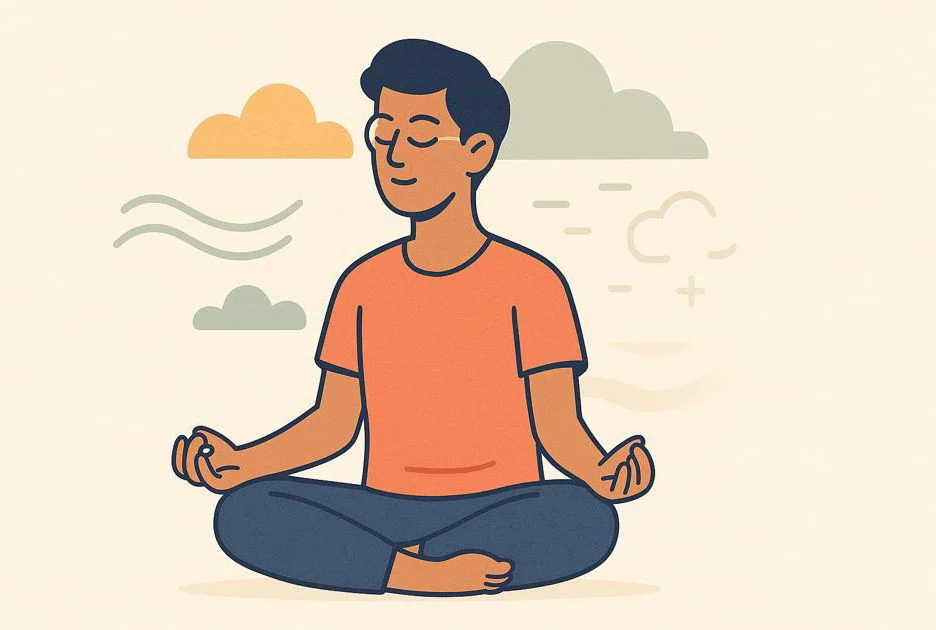
Meditation offers you the opportunity to connect with reality as it truly is—without filters, without distractions, without constant evaluation. Many people imagine that it is about having no thoughts or relaxing completely. In fact, meditation is an active process: you learn to consciously perceive your thoughts, feelings, and bodily sensations without getting carried away by them. The goal is not to block everything out, but to gain a clearer, calmer view of your own experience.
When you meditate, you practice staying in the here and now. Thoughts and feelings arise—that’s perfectly normal. The trick is to notice them without identifying with them or automatically following them. Imagine that thoughts are like clouds in the sky: they pass by, but you don’t have to chase after them. You usually focus on your breath, your body, or sounds in your environment. This creates a small distance between you and what is happening in your head. This moment of distance allows you to react more consciously and no longer just be on autopilot.
In meditation, we detach ourselves from this inner cycle of impression, feeling, thought, and reaction. Normally, this cycle happens automatically: you perceive something, it triggers a feeling, which gives rise to a thought, and then the next reaction follows. Meditation helps you to recognize this process and pause for a moment before you act. This gives you more freedom in dealing with difficult situations and allows you to try new approaches.
Science has also investigated the effect of meditation on our brains. Imaging studies show that meditation calms the amygdala and strengthens the prefrontal cortex. The amygdala is responsible for our emotional alertness—it kicks in especially when we are stressed or anxious. The prefrontal cortex helps us make conscious decisions and control our behavior. People who meditate regularly react more calmly to stress and find it easier to concentrate on what is really important in the moment.
Another advantage: meditation helps you develop a more refined awareness of your own feelings. You learn to tune in to what is going on inside you—whether it is anger, insecurity, joy, or sadness. Over time, you will recognize the subtle differences and be better able to identify where certain emotions come from. This makes it easier to accept difficult feelings without being overwhelmed by them. For example, if you notice that your anger is actually rooted in disappointment, you can respond in a much more targeted way.

Your guide to choosing your perfect crystal
In our fast-paced, digital world, more and more people are longing for a deeper connection to nature…
Meditation also helps you recognize your own thought patterns, which often cause misunderstandings and stress. Many of the thoughts that occupy our minds are not objective truths, but interpretations: perhaps you believe someone means you harm, when in fact they are just stressed. Or you doubt yourself because something doesn’t work out right away. In meditation, you learn to see these thoughts for what they are—stories of your mind, not reality itself. This creates space for more serenity and understanding, both towards yourself and others.
An important aspect of meditation practice is compassion. When you meditate regularly, you develop a kinder relationship with yourself. You learn not to judge yourself for every mistake, but to view your own weaknesses with more patience and forbearance. This compassion also affects your relationships: you react less impulsively, are more understanding, and can empathize with others more easily. Meditation therefore not only strengthens your inner clarity, but also your connection to other people.
In practical terms, this means that when you encounter a difficult situation in everyday life, meditation gives you more opportunities to respond consciously. Let’s say you receive unexpected criticism. In the past, you might have reacted immediately with defensiveness or justification. With some meditation experience, you can pause, feel what this triggers in you, and then decide how you want to respond. You are no longer driven so much by old patterns, but can try out new ways of doing things.
A simple example of a meditation exercise is sitting meditation. Sit comfortably, close your eyes, and focus your attention on your breathing. Feel the air flowing in and out. When thoughts arise, notice them and let them pass without judging them. Stay with your breath for a few minutes. You can incorporate this exercise into your daily routine at any time, for example in the morning after getting up or in the evening before going to bed. Just a few minutes are enough to feel a difference.
Over time, you will notice how meditation helps you see through the illusions and entrenched patterns of your perception. You will realize that much of what burdens you stems from old habits and judgments—not from reality itself. By learning to expose these patterns and view them with more distance, you will gain clarity and inner freedom. Meditation is therefore not a retreat from the world, but an invitation to experience life more consciously and openly.
From my own experience, I can say that when I meditate for a few minutes after getting up in the morning, I start the day feeling much calmer and clearer. It helps me not to immediately fall back into old patterns, but to make more conscious decisions about how I respond to whatever comes my way. This little routine makes a big difference—and it’s suitable for beginners and advanced practitioners alike.
When you start meditating regularly, you will gradually notice how your perception changes. You will see things more clearly, be less dependent on automatic thought patterns, and be able to respond more openly to what life has to offer. This is the first step toward actively shaping your own reality and breaking new ground in your everyday life.
How you can change your perception positively in the long term
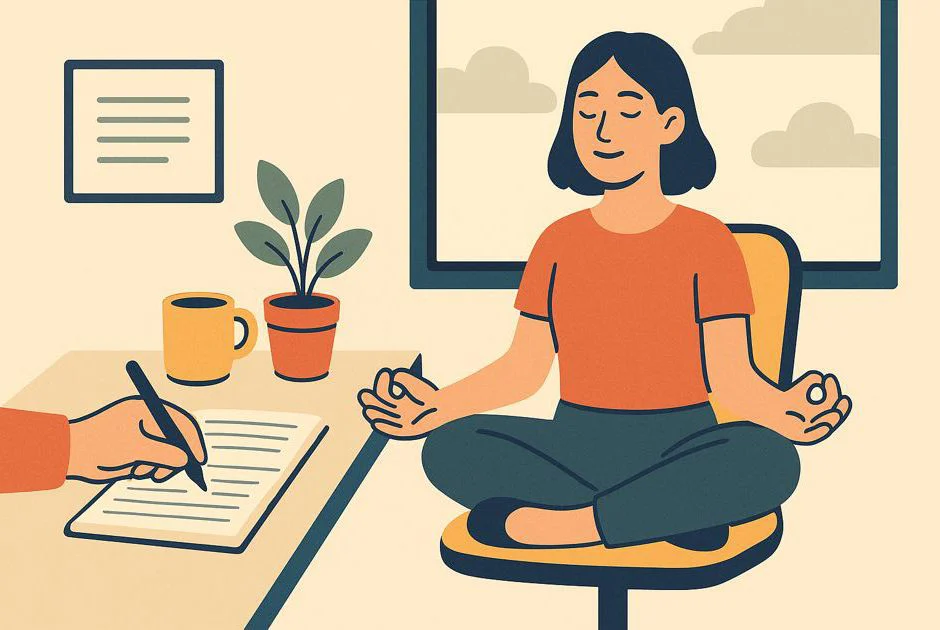
If you are wondering how you can permanently steer your perception in a more positive direction, there are a number of simple methods that you can use in everyday life to help you do this step by step. It’s not about making big changes overnight, but about small habits that add up over time and have a lasting impact on your view of the world.
One of the most effective techniques is keeping a gratitude journal. Every day, write down three things you are grateful for. These can be very simple things: a quiet moment in the morning, a good conversation, or a friendly glance on your way to work. Studies show that daily gratitude permanently lifts your mood. Over time, you train your brain to perceive positive things more consciously. This helps to break negative thought loops and promotes a more balanced view of your life.
In the hustle and bustle of everyday life, it’s easy to lose touch with yourself. Taking 30-second breaks to consciously tune into your body can help. For example, you can pause briefly while waiting at a traffic light or before your next appointment, take a deep breath, and notice how you are feeling right now. These short breaks bring you back to the here and now and give you the opportunity to switch off autopilot.
Top-rated products
-
Sahasrara Connect
49,95 € -
Muladhara Balance
49,95 € -
Swadhisthana Flow
49,95 € -
Manipura Strength
49,95 €
Mirror sessions also strengthen self-acceptance by teaching you to look at your reflection without judgment. To do this, sit in front of a mirror regularly and look into your eyes for one to two minutes without judging yourself. This may feel strange at first, but over time you will notice how you develop a friendlier and more compassionate attitude towards yourself. This exercise helps you to recognize old patterns of self-criticism and gradually let them go.
Visualization and affirmations are other techniques that you can easily incorporate into your daily routine. With visualization, you spend a few minutes imagining yourself confidently overcoming a challenge or feeling satisfied at the end of the day. Affirmations are short, positive statements such as “I am calm and relaxed” or “I can deal with difficulties.” Both methods help you focus on what you want to achieve and strengthen your self-confidence. They act like little nudges that steer your thoughts and actions in a supportive direction.
A growth mindset, as described by Carol Dweck, promotes resilience because challenges are seen as learning opportunities. This means that you believe you can develop and learn new things—regardless of how often you fail or make mistakes. With this attitude, you approach difficult situations in a more relaxed manner and are more willing to try new things. It is worth reminding yourself again and again that growth takes time and that mistakes are part of the process.
Meditation remains an important building block for long-term change. Just a few minutes a day is enough to become more aware of your thoughts and feelings. You don’t need to master any complicated techniques. All you have to do is sit down, close your eyes, and focus on your breathing. Feel the air flowing in and out and observe the thoughts or feelings that arise without judging them. Over time, you will develop more distance from your inner impulses and be able to respond more flexibly to what you encounter in everyday life. Meditation helps you to recognize your constant judgments and automatic reactions and gain a clearer view of the present moment.
What is the root chakra?
Many people talk about grounding, but hardly anyone shows how it can work in everyday life. Especial…
All of these methods are most effective when you apply them regularly and patiently. It is not necessary to implement everything at once. Even small steps can help you progress: perhaps you could start with a gratitude note in the evening or a short break during the day. The key is to stick with it and allow yourself to develop slowly. Change is not a sprint, but a process consisting of many small moments.
Over time, you will notice that your “inner glasses” become more flexible. You react more calmly to stress, perceive beautiful things more consciously, and can find your way back to yourself more easily even in difficult phases. Everyday life becomes easier because you learn not to let every thought or feeling control you. You gain the freedom to actively shape your perspective and to continually choose how you view life.
By integrating these techniques into your daily routine, you will not only strengthen your emotional stability, but also enhance your relationships and well-being. It is beneficial to incorporate small, mindful breaks, try new rituals, and treat yourself with more kindness. In this way, you will gradually develop a more open and clear perspective on the world.
Essentially, it’s about giving you the opportunity to constantly question and realign your perceptions. This takes practice and patience, but every little step counts. It allows you to consciously influence how you experience yourself and your environment—and thus lay the foundation for a more fulfilling life.
The way you perceive the world is therefore not fixed. It can change if you are willing to explore new avenues and consistently allow yourself small moments of mindfulness.
Let’s summarize
The world we see is only one version of reality—shaped by our thoughts, feelings, and memories. But the lens through which we view the world is not fixed. Every conscious change begins with a breath. Try the 4-7-8 breathing exercise to create a moment of clarity. Feel your mind calm down as your breath helps you take off your emotional filter for a moment. Because, as Thich Nhat Hanh said, “Meditation is the way to directly perceive reality.” Use this moment to look consciously—and rediscover your own glasses.
References:
- Ebbinghaus illusion – https://de.wikipedia.org/wiki/Ebbinghaus-T%C3%A4uschung ↩︎
- Effect as information – Affect-as-information model – Wikipedia ↩︎
- Conformitation BIAS – https://de.wikipedia.org/wiki/Best%C3%A4tigungsfehler ↩︎
Frequently asked questions about perception and 4-7-8 breathing
What does “We don’t see things as they are, but as we are” mean?
Our perception is shaped by thoughts, feelings, and experiences. We filter the world through our personal “glasses”—and can consciously change them with mindfulness.
How does 4-7-8 breathing work and what is it good for?
4-7-8 breathing is a breathing technique where you inhale (4 seconds), hold (7 seconds), and exhale (8 seconds). It reduces stress, brings inner peace, and strengthens focus.
Can I really control my perception in everyday life?
Yes, through exercises such as mindfulness, meditation, and 4-7-8 breathing, you can sharpen your perspective, reduce stress, and deal with situations more calmly.
How can I recognize that my perception is “colored”?
Common signs: negative thought spirals, overemphasizing minor problems, emotional reactions, or ignoring positive aspects of life.
What specific tips help to bring more clarity to everyday life?
Use gratitude journals, conscious breathing breaks, short meditations, mirror sessions, and positive affirmations—small, simple rituals for your everyday life.

