

Pause for a moment: Imagine your next meditation session—what image do you see? Many people ignore the power of colors, but research shows that they have amazing effects on mood, stress, and even sleep. Colors are more than just background—they can specifically influence your meditation practice. Today, I’ll show you how to combine colors, crystals, and scents in a way that will help you find noticeably more peace, focus, or energy.
And to get you started right away, here’s a simple 3-minute exercise you can do – my favorite combination, which you can try out right away. Let’s find out together how colors are more than just decoration and what they really do in your practice.
Table of Contents
Seeing colors – more than just decoration?

In everyday life, we usually only perceive colors peripherally—they are part of our environment without us paying much attention to them. But how do colors actually affect our mood when we focus on them specifically? That’s exactly what this is about: seeing colors—more than just decoration?
Perhaps you have experienced how a bright red scarf immediately catches your eye or how a rich blue makes you pause for a moment. But what happens when you consciously engage with a color, for example during meditation? It is worth trying this out: close your eyes and imagine a deep blue. Many people report that this calms their breathing and creates a feeling of relaxation—similar to after a walk by the sea. Such experiences also appear repeatedly in practical reports and some studies. Blue is often associated with calm and serenity, and research on color emotions shows that many people find blue pleasant and relaxing. However, the effects can vary greatly from person to person.
Yellow is also often perceived as particularly positive. When you think of sunny yellow, you sometimes feel a little burst of energy, almost as if the sun were shining on your skin. Some studies and anecdotal evidence suggest that yellow can promote alertness and attention. Experiments have shown that test subjects in rooms lit with yellow light were often more alert and focused. Such results are exciting, but they are not equally pronounced in all people. Research on colors and emotions has shown that while there are certain basic patterns across countries and cultures—blue is often associated with calm, yellow with joy, red with energy—individual experiences and personal context play a major role.
-

Muladhara Balance
49,95 € -
Swadhisthana Flow
49,95 € -
Manipura Strength
49,95 € -
Anahata Harmony
49,95 €


This means that colors do not have the same effect on everyone. While some people feel energized and empowered by red, others find this color too intense or even stressful. Green, on the other hand, is associated by many with balance, nature, and freshness, but there are also people who feel restless when exposed to too much green. The key is to discover the effect of colors for yourself. They are more than just a backdrop—they can influence your inner attitude if you allow them to.
You may have noticed that your mood changes depending on your surroundings. A soft blue in the room can help you calm down, while a strong orange can give you energy. Such color accents can be easily integrated into everyday life: a colored seat cushion, a candle, or a certain lighting mood can serve as an impulse. It becomes even more effective when you consciously visualize colors. This means that you imagine a certain color during meditation and observe how your body and thoughts change. Many practitioners report that this helps them achieve a desired state more quickly—whether it be relaxation, focus, or renewed energy.
Research into color emotions is diverse. There are studies that show universal patterns in the perception of colors, but there is also plenty of evidence that culture, personal experiences, and the current context have a strong influence on their effect. A bright, friendly green is associated with freshness and balance in many cultures, but depending on your life story, this color can evoke very different feelings. That’s why it makes sense to think of colors as personal tools that you can try out and adapt.
If you are just starting out, it is often enough to try out small changes. After your next meditation, take a moment to focus on a specific color. Let a rich green or a soft yellow appear before your inner eye and notice whether your breathing, pulse, or mood changes. There is no right or wrong here—the important thing is to stay curious and test the different possibilities.
Over time, you will develop a sense of which colors are most comfortable for you. You may find that your favorite color changes depending on your mood or the time of day. This is precisely the advantage of mindful practice: you are not fixed, but can use colors flexibly. This is a relaxed approach, especially for beginners—you don’t need expert knowledge, but above all openness and a willingness to listen to your body.
Many people underestimate how strongly colors can affect well-being when you consciously give them space. Even small splashes of color in your environment—a scarf, a candle, or a colored mat—can change your perception. Colors can arouse curiosity, relaxation, or energy and even influence your breathing rhythm. This applies not only to visualizations, but also to the colors that actually surround you—for example, in your meditation space or living room.
Meditation: Why You Should Start NOW
Imagine that your head looks like a laptop that has been running for far too long without a break. E…
Research suggests that conscious color choices can have positive effects on stress, concentration, and even sleep. However, the results are not always clear-cut, and the effect remains individual. No one can tell you which color scheme is best for you. The important thing is to dare to try out different colors and observe how they affect you. The more consciously you approach this, the more you can reap the positive effects for yourself.
In the end, it always comes down to your own experience. There is no universal recipe, but rather many possibilities for using colors in a targeted manner. They are more than just decoration—they can be the key to deeper relaxation, greater clarity, or simply an added zest for life in your practice. Use them like a box of paints from which you can draw new accents again and again.
Which color appeals to you most right now? Imagine if you could test it out right away in a little exercise—stay tuned, because I’m about to show you three simple experiments you can use to find out which color is best for you today.
Which color for which condition? – A practical guide
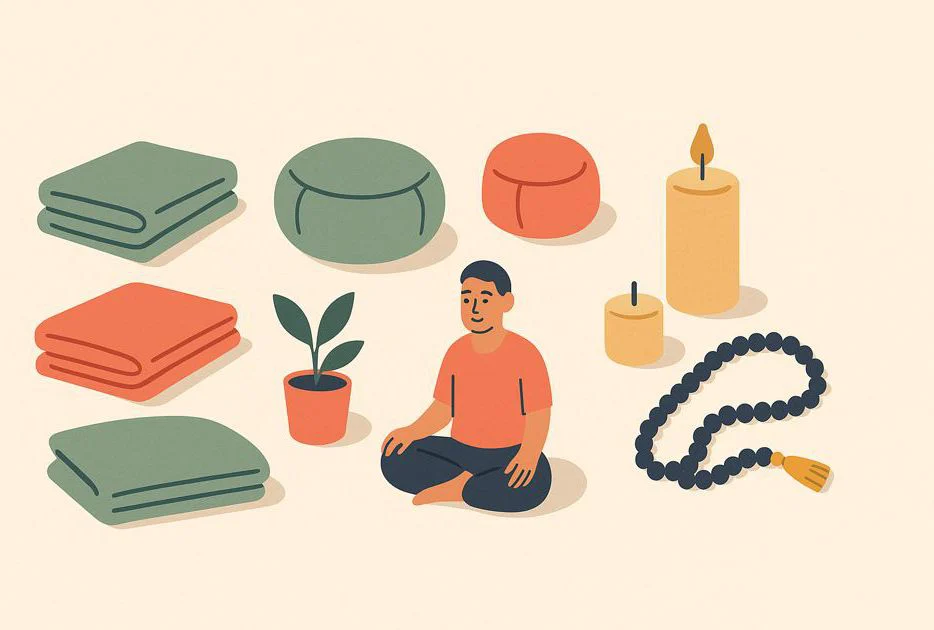
When starting to meditate with colors, many people ask themselves: How can I find out which color suits my current state or goal? The answer is often simpler than you might think—especially if you are willing to listen to your own feelings. Colors not only have a visual effect, but can also influence your inner state. Depending on whether you are looking for relaxation, focus, or more energy, there are colors that can specifically support you.
For example, if you are seeking inner peace, many people intuitively gravitate toward soft, cool tones such as blue or pastel colors—whether in clothing, a meditation cushion, or a light source. According to many testimonials, a calm blue in the room, perhaps as indirect lighting or the color of your yoga mat, can have a relaxing effect. Deep blue is often associated with serenity and inner spaciousness. Green also plays an important role: it stands for balance, is reminiscent of nature, and helps many people to ground themselves and connect with their bodies. Translated with DeepL.com (free version)
If, on the other hand, you are tired, unfocused, or need an energy boost, strong colors such as orange or red can be helpful. Red is often associated with activation and energy. Many people use red accents deliberately—for example, a bright red pillow or item of clothing. Visualizing a strong red color during a breathing exercise can also help you feel more alert and present. For more creativity or inspiration, some people turn to orange, which is considered stimulating and invigorating. Translated with DeepL.com (free version)
It is important to note that these recommendations are guidelines, not hard and fast rules. The effect of colors is individual and can vary depending on your mood on a given day, personal memories, and current needs. What has an invigorating effect on one person may be too intense for someone else. Therefore, trust your perception and try out what works for you.
-
Sahasrara Connect
49,95 € -
Muladhara Balance
49,95 € -
Swadhisthana Flow
49,95 € -
Manipura Strength
49,95 €
To give you a feel for the effect, here is a short 1-minute exercise that you can try anytime. Sit comfortably, close your eyes, and imagine a soft blue color for 30 to 60 seconds. Breathe in and out calmly. Observe how your breathing changes—does it become deeper, calmer, or more even? Then take ten seconds to make a quick note: Do you feel more relaxed? Has your breathing rhythm changed? This little exercise helps you become more aware of your reactions to colors and gives you practical guidance for your next meditation.
Meditation itself has been well researched: it has been proven to improve attention and help regulate stress responses. Colors can serve as a complementary anchor to support your goal—for example, relaxation or focus—in an even more targeted way. Studies and practical experience suggest that bright or specific color accents can influence alertness or relaxation. However, the data varies and the effects differ from person to person. It is therefore worth considering colors as a tool that you can use flexibly.
For example, if you long for more clarity and concentration, try yellow or light green. Yellow is often associated with alertness and lightness. In some studies, participants report feeling more alert and focused in rooms lit with yellow light. Again, the effect is not the same for everyone, but it’s worth a try. Use small objects, a cloth, or simply the image of this color in your meditation.
For more balance and grounding, many people turn to earth tones such as brown, beige, or olive green. These colors convey stability and security. Especially on days when you feel uncertain or stressed, they can help you reconnect with yourself. Some people also find soft shades of pink or purple to be calming and supportive of self-acceptance.
After each meditation, note down which color you chose and how you felt afterwards. Over time, you will develop a sense of which colors are good for you in certain situations. There is no right or wrong—your experience is what counts. Sometimes your choice of color will change depending on your mood, the weather, or the season. This is completely normal and shows that you are mindful of your needs.
If you want to incorporate colors into your practice, you have several options. You can place a colored cloth over your eyes, light a matching candle, or experiment with colored light. Visualization is particularly effective: during meditation, imagine a certain color enveloping or flowing through you like a soft light. Breathe consciously into this color and observe what changes. This technique is simple and can be used by beginners and advanced practitioners alike.
Another tip: there is no such thing as the “wrong” color for a mood. Feel free to try out unusual combinations. Maybe one day a delicate pink is just what you need, or a dark blue gives you a feeling of space and security. A small color diary can help you discover your favorites and experiment with colors more consciously.
Pay attention to your body awareness during each exercise: Does your breathing become calmer with blue? Do you feel more lightness with yellow? Do your muscles relax with green, or do you feel more motivated with red? Also observe how your thoughts change—perhaps the whirlwind of thoughts slows down, or you feel clearer and more focused.
Colors are more than just decoration. They can become a real tool in your meditation practice, which you can use specifically for relaxation, concentration, or new energy. With a little practice, you will find out which colors are particularly helpful for you and how you can flexibly adapt them to your needs.
Keep your practice relaxed and playful. Don’t let yourself be restricted by fixed classifications or tables – they can provide guidance, but your own experience is more important. If you notice that a color is less effective today, try something new. Small changes often bring surprising results.
Over time, you will develop your own personal color palette for meditation. You will become more flexible, get to know yourself better, and be able to respond to your current needs in a targeted manner. Colors make your practice more vibrant and help you to be more mindful of yourself—which often has a positive effect on your everyday life.
Perhaps you have wondered why certain colors appear repeatedly in many meditation guides, for example in connection with the so-called chakras. Behind this lies an exciting connection between tradition and modern practice, which we will take a closer look at in a moment.
The secret of chakra colors – tradition meets modernity
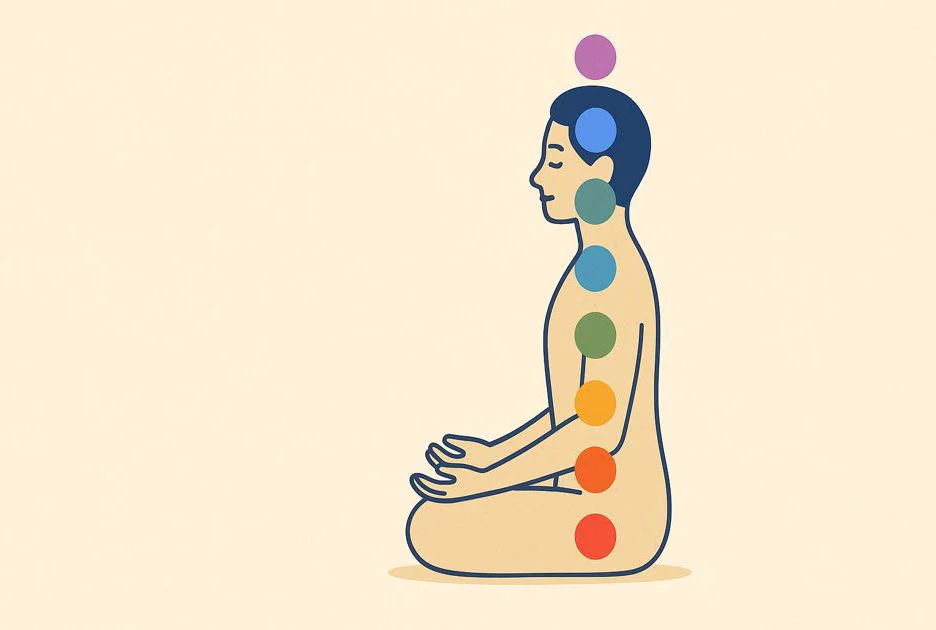
Many people who practice meditation sooner or later encounter the so-called chakra colors. In traditional guides, each of the seven main chakras is assigned a specific color—from the vibrant red of the root chakra to the violet of the crown chakra. This color sequence follows the spectrum of the rainbow and is deeply rooted in ancient Vedic teachings. The chakra teachings originated in India and describe energy centers along the spine that are connected to different areas of life, emotions, and regions of the body. The colors serve as symbols for the respective qualities and help to focus attention on specific topics.
It is important to note that the assignment of colors to chakras stems from a long tradition and is part of a symbolic system. Although modern research has found parallels between color associations and emotional states, it cannot prove a direct physiological map of the chakras in the body. Nevertheless, many practical reports show that targeted color visualization in meditation can support inner processes and change the way you feel your body. Colors thus become a tool that you can consciously use to deepen your practice—regardless of whether you believe in the chakra teachings or not.
Let’s take a quick look at the color symbolism of the chakras: The root chakra stands for grounding and security and is usually associated with a strong red. Orange symbolizes the sacral chakra, which represents creativity and joie de vivre. Yellow is associated with the solar plexus chakra and stands for self-confidence and inner strength. The heart chakra is associated with green—a color that stands for compassion, healing, and connection. The throat chakra is a clear blue for communication and self-expression. Indigo is the color of the brow chakra, which stands for intuition and insight. Finally, violet symbolizes the crown chakra, which is associated with spirituality and expansiveness.
You may be wondering how you can integrate these colors into your practice without getting lost in complicated theory. The point here is not to adopt a rigid system, but to use the colors as stimuli for your own perception. Many people report that consciously visualizing a color gives them access to certain feelings or areas of the body. For example, if you feel you need more grounding, you can visualize a deep red in your lower back during meditation. For more lightness and openness, a soft green in the chest area is suitable. It’s less about the perfect image in your mind and more about the physical sensation triggered by the color.
Resilience is the reward for persevering
Did you know that regular meditation changes your brain in a similar way to a software update? Studi…
From a scientific point of view, the effect of colors and chakra visualizations cannot be clearly measured. However, there is evidence that meditation itself can have a positive effect on brain function and emotional regulation. Colors can support this process by focusing attention and deepening the experience. They are not a substitute for therapeutic treatment, but they can help reduce stress and promote well-being. Especially for beginners, working with chakra colors offers a simple way to structure their practice and work on specific issues.
To help you get started right away, I suggest a little 7-day experiment that you can easily integrate into your everyday life. Sit down in a quiet place for five minutes every day. Choose one of the seven chakra colors each day and concentrate on the corresponding area of the body during meditation. On the first day, visualize a strong red at the base of your pelvis (root chakra), on the second day a warm orange in your lower abdomen (sacral chakra), on the third day a bright yellow in the solar plexus area, on the fourth day a rich green in your chest (heart chakra), on the fifth day a clear blue in the throat (throat chakra), on the sixth day a deep indigo between the eyebrows (forehead chakra), and on the seventh day a delicate violet at the crown of the head (crown chakra). Breathe calmly and imagine how the respective color becomes stronger with each breath and spreads throughout the body.
During and after each meditation, observe how your mood, breathing, and body awareness change. On some days you may feel more calm, on others more energetic or open. You may find certain colors easier to work with, while others remain neutral. Write down your observations without judging them. Over time, you will discover which colors are particularly helpful to you and how they affect different situations in your life.
An important note: Chakra teachings and color visualization are not substitute therapies. They can enrich your meditation and help you become more aware of yourself, but they are not a substitute for medical or psychotherapeutic treatment. If you find that certain issues are overwhelming you or you need support, seek professional help.
Many practitioners report that over time they develop a more refined sense of the connection between body, emotions, and colors. Working with chakra colors is not rigid—you can adjust the order, mix colors, or intuitively choose what feels right for you at the moment. It is particularly helpful to regularly reflect on how your perception changes over time. You may notice that a rich green is particularly calming after a stressful day, while a bright yellow brings new energy on gloomy days.
For advanced practitioners, it can be exciting to combine chakra visualization with other elements—such as breathing techniques, gentle movements, or scents. This creates a practice that can be individually tailored and flexibly integrated into everyday life. Children and teenagers also often benefit from working with colors, as it allows them to approach their feelings and body awareness in a playful way.
When you engage in the experiment with chakra colors, remain open to your own experiences. There is no right or wrong—the important thing is to remain curious and listen to your body. The practice can help you recognize patterns, become more aware of your needs, and have a targeted influence on your well-being. Colors thus become a tool that supports you in your everyday life without you having to adhere to rigid guidelines.
Over time, you will notice which color combinations are good for you and how you can use them flexibly. You may even discover that your favorite colors change with your mood or the seasons. Working with chakra colors is a process that can be adapted again and again.
In addition to colors, there are other ways to deepen your meditation and tailor it to your individual needs. Many people, for example, use crystals as a supplement—they serve as anchors to focus attention or set a specific intention.
Crystals in meditation – myths, benefits, and real experiences
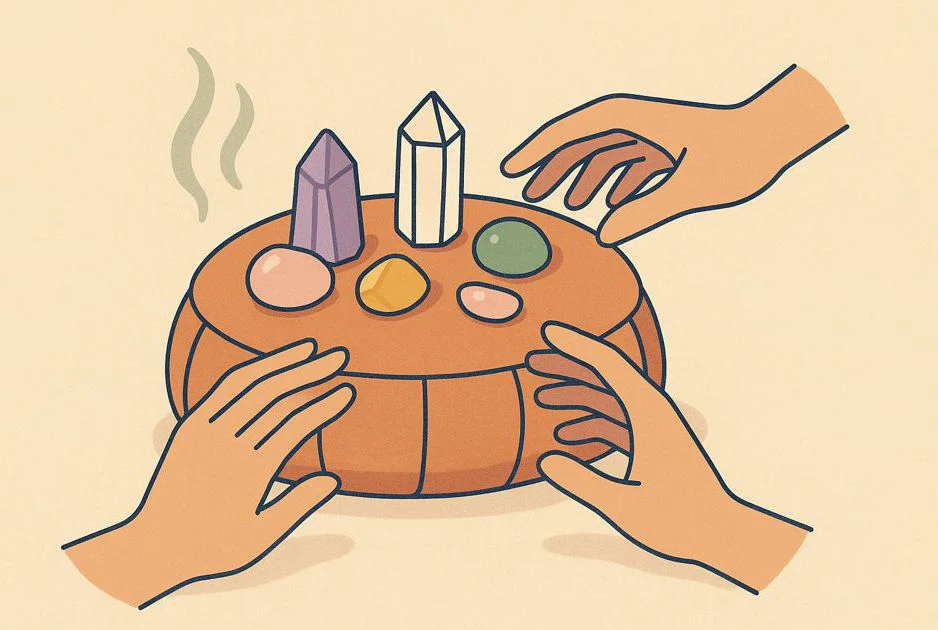
Crystals in meditation are a topic that fascinates many and makes just as many skeptical. Perhaps you have seen pictures of meditators holding small, colorful stones in their hands or placing them on their meditation cushions. The question quickly arises: Is this more than just a pretty accessory? Many report that crystals help them focus better or feel more grounded—others consider this to be pure imagination. Opinions vary widely, which is precisely why it is worth taking a sober look at the benefits, myths, and real experiences.
First of all: crystals are mineral structures that have grown in the earth over a very long period of time. In many traditions, they are symbolically regarded as a connection to the earth – this symbolism can be helpful in meditation, even if there are no reliable experimental studies that prove crystals have physical healing energy. According to current research, the effect is primarily psychological and ritualistic. Scientists emphasize that no objectively measurable energy has yet been found in crystals that directly influences feelings, thoughts, or bodily functions. What many people feel is more likely the result of attention, intention, and ritual—in other words, a classic placebo or context effect.
At first glance, this may sound disappointing, but in mindfulness practice, it is not a disadvantage. Studies show that regular rituals—such as those used in MBSR (Mindfulness-Based Stress Reduction) or other mindfulness programs—can reduce stress and strengthen presence in the moment. Rituals and repetition promote mindfulness because they create a framework in which the mind can more easily find peace. This is where crystals come in: they are visible and tangible anchors that make the ritual tangible. The mere weight of a stone in your hand can bring you back to the here and now, especially when your thoughts wander.
Products on offer
-
Anahata Harmony
49,95 € -
Manipura Strength
49,95 € -
Muladhara Balance
49,95 € -
Sahasrara Connect
49,95 €
Many meditators use crystals as a tactile anchor. This means that they hold a stone in their hand or place it on a specific part of their body during meditation. Conscious perception—how does the stone feel, is it cool or warm, smooth or rough?—directs your attention to your body and helps you stay present. This is a practical aid, especially for beginners: if you notice that you are drifting off, a quick squeeze of the stone with your fingers is often enough to bring you back.
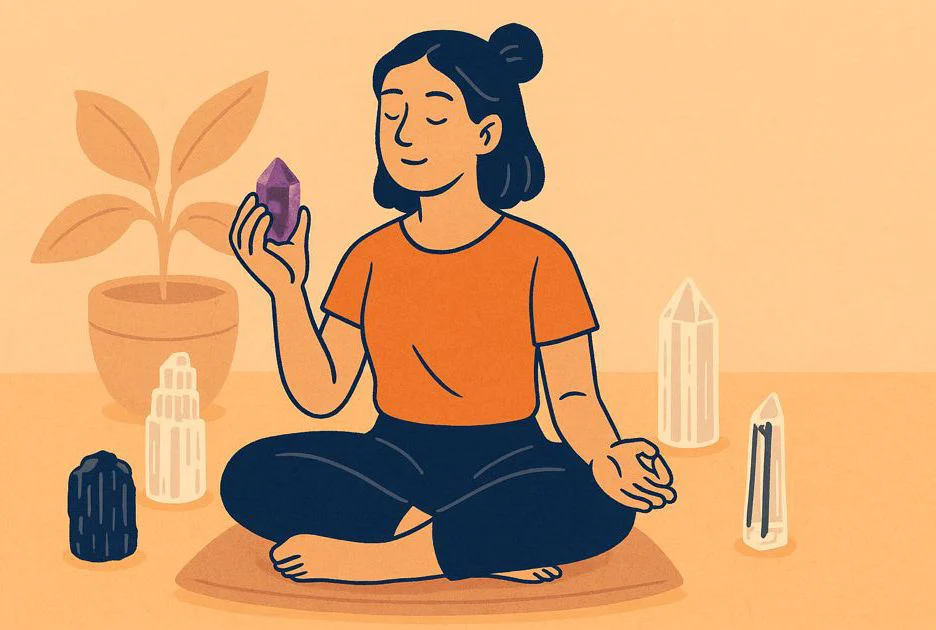
A practical example: Amethyst, a purple crystal, is often associated with clarity and expansiveness. Some people place it on their forehead during meditation to focus on intuition and inner images. Others prefer rose quartz, which traditionally stands for compassion and harmony—it is often held close to the heart. These applications are based on symbolism, not measurable energies. The stones serve as reminders to focus on a particular quality.
A typical ritual looks like this: Before you meditate, choose a crystal that suits your current needs. Close your eyes, hold the stone in your hand, and consciously feel it—is it heavy, light, warm, cool? Then formulate an intention, for example, “I remain calm and grounded” or “I open myself to new clarity.” With each breath, you can imagine how this quality flows into you through the stone. Of course, this is not a magical process, but a conscious connection between sensation and intention. Many people report that this small ritual alone helps them to meditate more regularly and consciously.
It is important to note that crystals are not a substitute for meditation, but rather a supplement. They remind you of your intention and help you not to lose yourself in the process. Those who struggle with stress or restlessness often turn to dark stones such as hematite for grounding or moonstone for emotional balance. Using crystals is easy: you can gently hold a palm stone in your hand, use a mala made of crystal beads, or place the stone on a part of your body that you want to strengthen. The key is to pay attention to your own perceptions: do you feel more calm, clear, or focused? Or do you find that you sometimes prefer to meditate without a stone? Anything goes—there are no hard and fast rules.
Research on rituals shows that recurring sequences such as holding a crystal help to separate everyday life from meditation time. A short introductory ritual—such as consciously touching the stone or taking a moment of silence—signals to the body that a special time is about to begin. This helps you get into the practice more quickly and provides a clear anchor even on stressful days.
There are many myths surrounding crystals. Some attribute magical or even healing powers to them. For a mindful and scientifically oriented practice, it makes sense to view these expectations critically. Crystals are not a miracle cure for physical or emotional ailments and are no substitute for medical or psychotherapeutic treatment. If you have mental health issues or feel overwhelmed, please seek professional help. In meditation, crystals are most helpful when you see them as symbolic tools—little everyday helpers that remind you of your own resources.
If you want to try crystals, it’s best to start with one or two stones that appeal to you visually or haptically. It doesn’t have to be a large collection. During meditation, place a stone in your hand or on a part of your body, close your eyes, and feel how it feels. Some people report a feeling of warmth, others perceive a pleasant tingling sensation or simply a greater sense of presence. You may feel particularly comfortable with one stone, while another leaves you feeling rather cold. This is completely normal—your own perception counts more than any theory.
A small practical tip: When working with crystals, formulate a clear intention in advance. This could be a sentence such as “I allow myself to find peace” or “I strengthen my inner clarity.” Hold the stone during meditation and keep focusing your attention on the sensation in your hand. You can also incorporate a little breathing exercise: breathe in and out calmly while feeling the stone and observe how your body and mind change.
It is particularly helpful for beginners to try out different methods. Perhaps you could use a palm stone, a mala made of crystal beads, or combine crystals with other elements such as colors or scents. It is important not to put yourself under pressure. There is no secret formula for the “right” effect. Always decide anew whether a stone suits your practice today or not. Sometimes it is precisely the small ritual—a stone, a thought, a conscious breath—that makes it easier for you to get started.
Over time, you will notice how crystals can structure and deepen your meditation practice. They are not a magic solution, but they help you to focus and be more mindful of yourself. The key is to remain open and honestly observe what changes within you. If you feel that a stone is helpful, use it. If not, that’s fine too.
The next step raises the question: How do you actually find the crystal that really suits you? The selection is huge, and beginners in particular are often overwhelmed by the sheer variety.
Choosing the right crystal – step by step
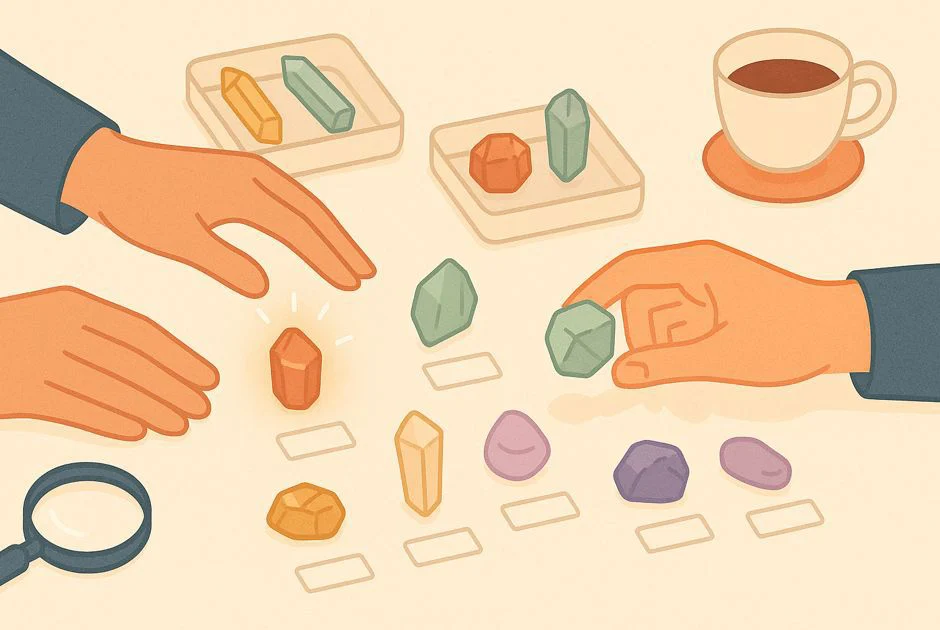
When you’re choosing a crystal for the first time, the variety of shapes, colors, and names can quickly become overwhelming. That’s why it’s helpful to have a clear approach. In this section, I’ll show you step by step how to find the right crystal for your meditation practice—without any pressure and with a dose of curiosity.
First, you need to define your goal for meditation. Ask yourself what quality you want to strengthen right now: Do you want to ground yourself and feel more calm? Are you looking for clarity in your mind, or do you want more compassion and openness in your heart? With a clear focus, the selection becomes much easier because you can specifically search for stones that represent these themes. For grounding, many people choose dark, heavy stones such as black tourmaline or hematite. If you are feeling restless, simply holding the weight of the stone in your hand can often help you feel more stable. For greater balance and inner peace, soft, light-colored stones such as moonstone or howlite are popular – they convey a sense of lightness and help you wind down after a stressful day.
If you long for mental clarity or inspiration, transparent or violet crystals such as amethyst or rock crystal are a good choice. Amethyst is often used for meditation on the forehead chakra and represents expansiveness and intuition. Rock crystal is considered neutral and can support your basic energy, especially when you want to get your thoughts in order or make a decision.
Many people also base their selection on the classic chakra colors. This can be helpful if you already work with color visualization. Red or black stones such as garnet and black tourmaline suit the root chakra, while green stones such as aventurine or rose quartz suit the heart chakra. However, don’t let yourself be too restricted by fixed associations. If a stone appeals to you spontaneously, even if it “actually” stands for something else, give it a try. Your intuition is an important compass.
Crystals in meditation practice
Many people say that meditation with crystals is just esotericism—but recent studies on mindfulness …
To help you keep track of your choices, here is a short checklist that has proven useful in practice: First, define your goal. Second, intuitively choose a stone that appeals to you. Third, do a 7-day test: use the stone regularly in your meditation for a week. Fourth, briefly note down your impressions after each session – for example, whether your breathing has changed, whether you feel calmer, more alert or more balanced. This structure will help you to systematically collect and reflect on your experiences.
A common mistake is to be guided by fancy names or trends. Many stores and online shops advertise certain crystals, often with promises that are not scientifically sound. When buying, pay attention to quality: the stone should not have any sharp edges, should feel comfortable in your hand, and should come from a trustworthy source. Don’t be blinded by expensive offers or spectacular product descriptions—a simple, well-crafted stone is perfectly adequate.
Many beginners wonder if they can make a mistake when choosing. The answer is quite clear: no. There is no “right” or “wrong” as long as you listen to your own feelings. A mindful approach is to place different stones on a neutral surface, sit in front of them, close your eyes, and take a few deep breaths. Then you can run your hand over the stones and feel which one appeals to you in some way. Maybe it’s a slight warmth, a pleasant tingling sensation, or simply a feeling of comfort. Even an inner “yes” is enough to choose a stone.
Many people report feeling small changes in their bodies when they find the right crystal—calmer breathing, a more relaxed pulse, or a spontaneous smile. These signs are subtle but reliable. It doesn’t have to be a spectacular experience. The important thing is not to put pressure on yourself to feel something specific. Let yourself be surprised by what emerges.
If you are unsure, you can slowly move your left hand—often referred to as the “receiving hand”—over the stones and see if you feel a particular attraction to any of them. Repeat this calmly with several stones. Take them in your hand one at a time, feel their surface and weight, and see if you feel calm, joy, or clarity. Your perception is your best guide.
Your decision does not have to be final. You can try a different stone every day, depending on how you feel. Over time, you will notice that you are increasingly drawn to certain stones—this often happens automatically. You may even want to keep a small journal and note how your practice develops with different stones. Studies in mindfulness research show that rituals and recurring routines—such as working regularly with a specific stone—promote the sustainability and depth of your practice. Taking notes reinforces this effect because it allows you to better track your progress and changes.
Another tip: if a crystal no longer appeals to you after a while, swap it for another one. Needs and moods change, and it is completely normal to prefer a different stone at some point. Don’t be afraid to experiment – there is no such thing as “feeling wrong.” Your body and intuition set the direction, not tables or fixed meanings.
So that you can try this out for yourself, I invite you to take part in a little experiment: today, intuitively choose a stone and use it three times for five minutes each time in your meditation or a quiet breathing exercise. Observe how your mood, your breathing, and your body awareness change. Feel free to share your experiences in the comments below—that way, others can benefit from your impressions too.
The most beautiful experiences often arise when you remain playful and open-minded. Many people gradually discover their favorite stones and develop their own small collection, which they use depending on how they feel each day. Over time, your confidence in your perception grows, and it becomes easier and easier to find out which stone supports you at any given moment.
Now the question arises as to how you can use the effects of crystals in an even more targeted way. One exciting possibility is to combine crystals with the conscious visualization of colors. Many people are unaware of how much the two can reinforce each other—and that is precisely what the next section is about.
Combining colors and crystals – your personal ritual
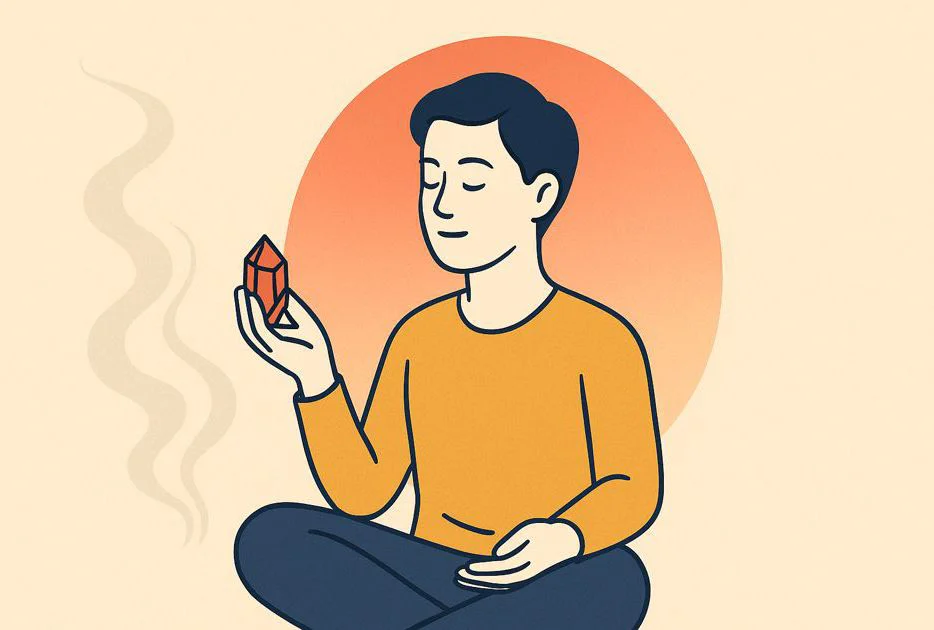
Many people who meditate regularly develop their own little rituals over time. One approach that many find particularly effective is the conscious combination of colors and crystals. This can not only structure your practice, but also deepen it—especially because you are engaging several senses at once. Many practitioners report that this combination enhances focus and makes the experience more intense. The effect is subjective and arises primarily from ritualized attention and the conscious linking of different sensory impressions.
How can you put this into practice? No complicated preparations are necessary. First, choose a crystal that appeals to you today—this could be green aventurine for greater balance or amethyst for clarity, for example. Hold the stone in your hand or place it on a part of your body that you want to strengthen. Then close your eyes and consciously visualize a color that matches your goal. This could be a soft green in your chest if you are seeking compassion and balance, or a bright yellow in your stomach area for more energy. Take 60 to 120 seconds to focus entirely on the interplay of color, the feel of the stone, and your breath. Notice how your perception changes as you engage with this combination.
Important: Do not overwhelm your senses. Always use only one crystal and one color per exercise. If you also work with scents, choose only one scent. Too many simultaneous stimuli can quickly lead to overstimulation and weaken the experience. Especially in the beginning, it is advisable to keep the exercises deliberately simple so that you can clearly feel how individual elements affect you.
Many report that this specific combination helps them enter a meditative state more quickly. This is not so much due to a “mystical” effect, but rather because your brain links different sensory impressions with each other. Touching the stone, visualizing a color, and conscious breathing create a framework that makes it easier to anchor yourself in the here and now. Studies on rituals in meditation show that such multisensory anchors help to calm the mind and focus attention. This creates a personal space where you can feel protected and concentrated.
Meditation cushion
-
Vishuddha Clarity
Select options49,95 € -
Swadhisthana Flow
Select options49,95 € -
Shanti Presence
Select options49,95 € -
Sahasrara Connect
Select options49,95 €


If you like, you can try this combination as a daily or weekly routine. For example, choose a different crystal and matching color every day for a week and observe how your mood, breathing, or thoughts change. Briefly write down your experiences—a few keywords such as “calm,” “clear,” “energetic,” or “balanced” will suffice. Over time, you will recognize patterns: you may notice that certain combinations always put you in a desired mood or that you reach for certain colors more often on stressful days. Writing things down helps you to be more conscious of your practice and promotes the sustainability of your development.
Small variations are also possible. You can hold the crystal in your left hand or your right hand, place it on your heart or on your stomach. Observe whether the effect changes when you visualize the color more intensely or more gently. Perhaps you feel more calm with a strong blue, while a light yellow has a more activating effect. There are no fixed rules—the important thing is to pay attention to your own feelings and not let yourself be restricted by external guidelines.
A compact guide to your personal color crystal ritual: Step one, intuitively choose a crystal. Step two, find a comfortable sitting position and close your eyes. Step three, visualize a color that matches your goal and breathe in and out calmly and consciously. Maintain your focus for 60 to 120 seconds and observe how your body and mind feel. After the exercise, slowly open your eyes and take a moment to reflect. Write down what you experienced—this can help you better perceive your progress and changes in everyday life.
Some people use this technique to work on specific issues. For example, if you need more self-confidence, try combining red jasper with visualizing a warm, red light in your lower abdomen. For more lightness and openness, a rose quartz with a soft pink tone in the heart area is suitable. The selection can be based on how you feel on a given day—some days a strong, clear stone is appropriate, while on others a soft, matte crystal is better. Depending on your mood, you can also vary the colors and find out what supports you the most.
Pay attention to how your breathing changes during the exercise. Many people report that their breathing becomes calmer, deeper, or more even when they concentrate on color and stone at the same time. This is a sign that you are present in the moment and that your body is responding to the ritual. If you don’t feel much at first, be patient—it often takes a few repetitions before the effect becomes apparent. Regularity makes all the difference.
Another tip: if you notice that a combination is overwhelming you or making you feel restless, take a short break and reduce the stimuli. Less is often more—especially with rituals that focus on mindfulness and body awareness. Over time, you will find out which intensity and which elements suit you best.
Many practitioners report that these small rituals not only deepen their meditation, but also make them more relaxed and present in everyday life. The conscious combination of color, crystal, and breath creates a bridge between body and mind that you can flexibly adapt to your needs. It is worthwhile to try out new combinations again and again and to reflect on your own feelings. This creates a lively, personal practice that strengthens you in the long term.
If you give it a try, you will find that just a few minutes a day are enough to experience noticeable changes. Beginners in particular benefit from this because they quickly realize how small rituals can provide structure and security. Advanced practitioners use the technique to deepen their practice in a targeted manner and discover new aspects. The key is to remain open and not let yourself be restricted by expectations or fixed rules.
Sometimes, all it takes is a simple stone and a clear color to find a new way to connect with yourself. On other days, you may want to try out more and combine different elements. The important thing is not to put pressure on yourself. Every day is different—and every meditation can feel new.
In the next step, we will look at how you can enrich your practice with another sensory impression. In addition to colors and crystals, scent also plays an important role in the atmosphere and experience during meditation.
Incense sticks and fragrances – atmosphere and effect
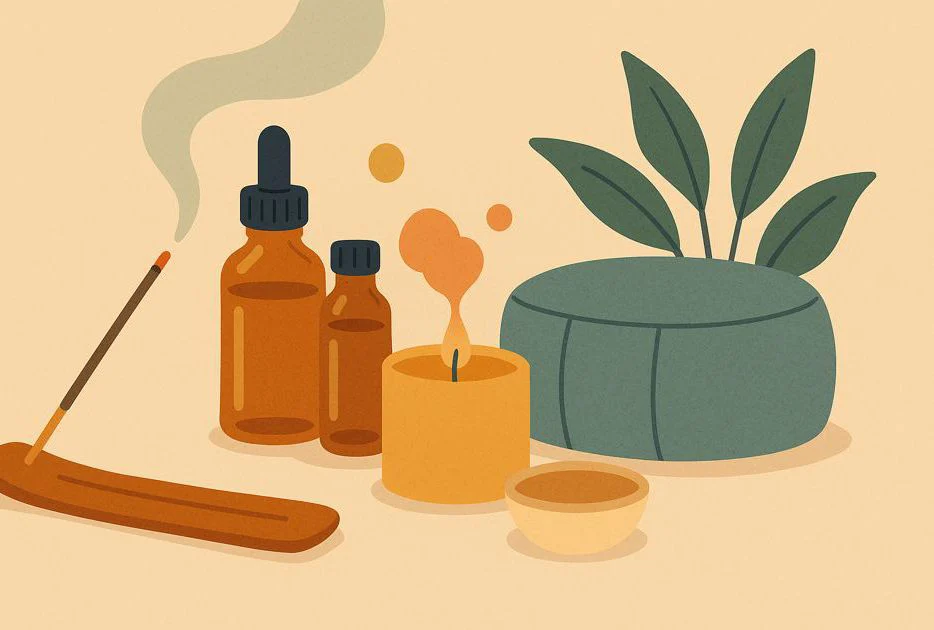
Many people wonder why incense sticks or essential oils are so popular when meditating. For many, the scent is an integral part of the ritual—it signals that a special time is about to begin. As soon as a pleasant scent fills the room, the atmosphere changes. The room feels more protected, everyday life remains outside, and it becomes easier to concentrate on oneself. Especially when the day has been busy or your mind is still racing, a scent can help you switch off more quickly and direct your attention inward.
Popular scents such as sandalwood, lavender, and palo santo have a long tradition in meditation. Sandalwood has been used for centuries to ground and promote concentration. Lavender is known for calming the nervous system and relieving tension. Palo Santo, known as “holy wood,” is often used to clear the atmosphere and mark a new beginning. These scents are not only culturally rooted, but also valued for their effects on the body and mind.
How exactly do scents work during meditation? Smells can trigger emotions and relaxation responses very quickly because the sense of smell is directly connected to structures in the limbic system—the areas of the brain responsible for emotions, memories, and stress regulation. Studies suggest that natural scents such as lavender or sandalwood can have a relaxing effect. They support the parasympathetic nervous system, which promotes calm and regeneration. Many people report that when they inhale a familiar scent, their breathing becomes calmer and their mind settles after just a few seconds.
The effect goes beyond simply “smelling good.” For example, when you light an incense stick or use an essential oil, you often feel your breathing deepen and your body soften with the very first breath. The scent acts as a signal: now your meditation time begins. Researchers suspect that this powerful effect is due to the fact that smells reach the brain directly and without detours. That is why many mindfulness and meditation courses specifically use scents to ease the transition from everyday life to practice.
This is how meditation becomes a habit
The real moment when motivation arises Do you know that great feeling you get right after exercising…
However, not every fragrance is equally suitable. Cheap incense sticks and synthetic fragrance oils often contain additives that pollute the air and can cause headaches or allergies in sensitive people. Anyone who works with fragrances on a regular basis should look for natural products with few ingredients. Pure woods, resins, herbs, or high-quality essential oils are best suited. Those who are prone to allergies or respiratory problems should be particularly careful and opt for gentle alternatives such as a diffuser or a fragrance stone. Always make sure that the room remains well ventilated and that you feel comfortable with the fragrance.
There are various practical applications that you can try out depending on your preferences and daily routine. The classic method is to light an incense stick. It slowly releases its scent and creates a warm, calm atmosphere. Important: Ventilate the room well after meditation so that smoke and any residues do not accumulate in the room. If you don’t like smoke or are sensitive to it, you can use a diffuser with a few drops of essential oil. The fine mist distributes the scent evenly and is easy to dose – often just one drop of lavender or lemon is enough. Another simple option is a fragrance stone or a handkerchief on which you place a drop of oil. This allows you to enjoy the scent without filling the entire room with aroma. Each method has its advantages: incense sticks create a ritualistic atmosphere, diffusers are particularly gentle, and a fragrance stone is practical for on the go or in the office.
When you start using scents, it’s best to begin with a single note. Take a moment to consciously smell it and observe how your body reacts to it. Lavender is particularly suitable for beginners because many people find it pleasant and calming. Citrus notes such as lemon or grapefruit, on the other hand, have an invigorating and refreshing effect – ideal if you meditate in the morning or need an energy boost. Cedarwood or patchouli are more grounding and help if you want to stabilize yourself. It is important to keep the dosage low. A subtle scent is enough to create a pleasant atmosphere and not overwhelm the senses.
Many experienced meditators deliberately combine scents with other elements such as colors or crystals. For example, if you are focusing on your heart chakra, you can choose a rose scent and place a rose quartz crystal on your chest at the same time. For grounding, a woody scent such as vetiver combined with a dark stone is suitable. These multisensory rituals can deepen the experience because they appeal to several senses at once and focus attention. However, there are no musts: you can also choose a single scent and consciously connect it with your breath.
A practical tip: Try a short scent ritual for one minute today. Choose lavender or lemon, depending on whether you want to relax or invigorate yourself. Breathe in and out consciously and observe how your breathing and mood change. Feel free to write in the comments below which scent calmed you down or energized you the most today. This way, you can not only record your own experience, but also inspire others.
If you meditate regularly with the same scent, over time it will become a reliable signal for your meditation mode. The brain associates the scent with a state of relaxation or focus. The more often you use the same scent in your ritual, the easier it will be for you to get into the desired mood. This is especially helpful if you want to switch off quickly after a long day or if you find it difficult to get started with meditation.
Always pay attention to how your body reacts to different scents. Not every scent has the same effect on everyone. Some people find sandalwood calming, while others find it too heavy. Citrus notes can be invigorating for some, but too intense for others. Test different aromas on quiet days and observe how your mood, breathing, and body awareness change. Feel free to write down your observations to identify patterns and find your favorite scent.
Remember: less is often more. A subtle scent is enough to create a pleasant atmosphere. Avoid mixing different scents so that you can clearly feel how each one affects you. If you work with crystals or colors, you can use scent as a third sensory impression. This creates a holistic ritual that leads you deeper into meditation and enriches your everyday life.
With these simple tips, you can incorporate scents into your practice in a targeted manner and gradually find out what helps you most personally. In the next part, you will learn how to find the right scent for you and what you should pay particular attention to when selecting and using it.
Finding your fragrance – selection and application
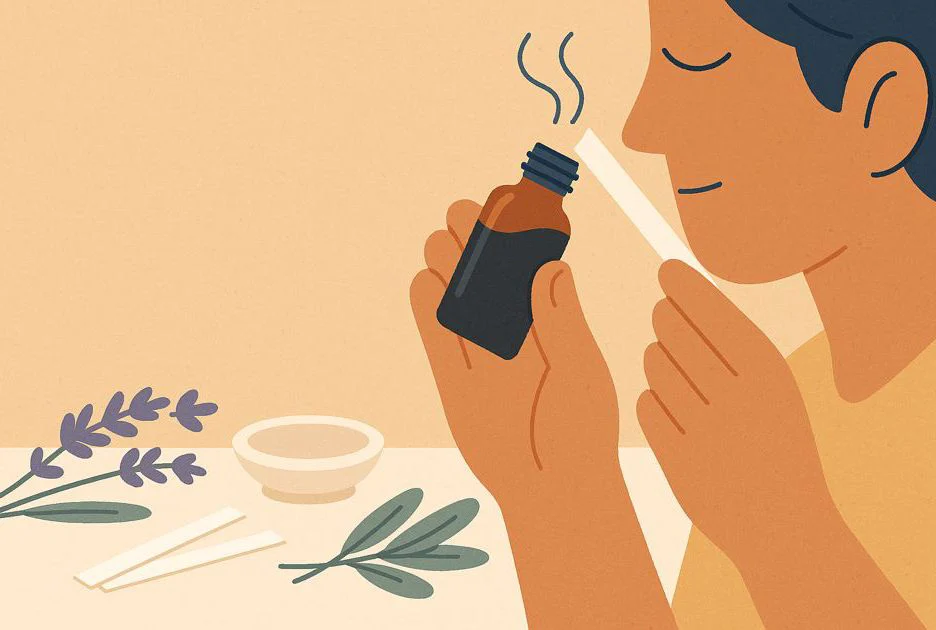
When choosing a scent for your meditation, it’s less about finding the “perfect” smell and more about how a particular aroma makes you feel. Everyone reacts differently—it depends on your life story, your current state of mind, and even the weather. Some people find lavender calming, while others prefer citrus notes for a clear, fresh start. The effect of a scent is therefore variable and can also change depending on how you feel on a given day. That’s why it’s worth consciously trying out different scents and documenting your reactions.
A simple test sequence will help you find your personal favorite scent and avoid feeling overwhelmed. First, choose a single scent that appeals to you—this could be an essential oil, incense stick, or natural scent stone. Only add 1–2 drops to the diffuser, as even a small amount is usually sufficient. Always start with a very low dosage, test the fragrance briefly, and only increase it gradually if you feel that the intensity is not yet sufficient. This minimizes the risk of irritation and makes it easier to find out how your body reacts to the respective fragrance.
Then sit down comfortably and close your eyes for a moment. Consciously breathe in through your nose two or three times and concentrate specifically on the aroma during these short breaths. Then observe how your body and mood react for one to two minutes. Are you becoming calmer? Do you feel a little boost of energy? Perhaps your breathing changes, or you simply feel more comfortable in the room. Notice these impressions without judging them. Then briefly note down how you feel—a keyword or a sentence is enough.
Repeat this test on three to seven consecutive days, using the same or a different scent each time. This will help you identify any patterns: perhaps lavender helps you relax in the evening, while lemon energizes you in the morning. It may also be that a scent is pleasant on one day but too intense the next. These observations will help you develop your own scent profile. It’s not about always using the same scent, but about responding flexibly to your needs. Your notes will make it easier to identify your favorites and tailor your practice accordingly.
A common mistake is to combine too many scents at once or to choose an intensity that is too high. Especially with essential oils and incense sticks, less is more. A subtle scent is enough to create a new atmosphere. Using several aromas at the same time can quickly lead to sensory overload, making it difficult to distinguish the effects of the individual components. Therefore, stick to one fragrance per meditation and give your body time to get used to the aroma.
If you are very sensitive to smells or prone to headaches, hold the fragrance under your nose for a few seconds before diffusing it into the room. This will allow you to determine early on whether you tolerate the scent well. If an aroma is too strong or bothers you, ventilate the room well and avoid using it next time. It is completely normal that not every fragrance suits you. Over time, you will find out which aromas support you and which you prefer to avoid.
Many people use an electric diffuser to gently and evenly distribute essential oils throughout the room. This has the advantage that you can easily control the intensity and do not need an open flame. This is a practical solution, especially for people with allergies or households with children and pets. One drop of lavender or lemon is usually enough to create a pleasant atmosphere. Observe how the scent changes after a few minutes and whether it blends harmoniously into the room.
After each meditation, make a note of which scent you chose and how you felt afterwards. After just a few days, you will recognize which aromas are good for you and which are not. This little record will help you discover patterns and gradually optimize your practice. You may find that on stressful days you prefer woody or earthy scents, while in the morning you prefer fresh, invigorating notes. Allow yourself to remain flexible and to change your mind again and again.
A practical exercise for everyday life: Start a little fragrance challenge. Try a different fragrance each morning for three consecutive days—for example, lavender, lemon, and sandalwood. Each time, carry out the short test sequence: Choose a fragrance, inhale it consciously two or three times, observe your reaction for one to two minutes, and note down the result. Then share in the comments which fragrance helped you start your day best. This will motivate you and inspire others to try it for themselves.
You can also combine scents with colors and crystals in a targeted manner. For example, if you are focusing on the heart chakra, use a hint of rose scent, hold a green aventurine in your hand, and visualize a soft green light in your chest area. Patchouli or sandalwood combined with black tourmaline and a warm red color visualization are suitable for grounding. This combination enhances your body awareness and helps you dive deeper into meditation. Don’t overwhelm yourself—start with one thing and gradually expand your ritual.
If you’re wondering how to best incorporate the scent into your ritual: light an incense stick, add a drop of oil to the diffuser, or have a scent stone ready. Start each meditation with a few conscious breaths while you take in the scent. Then focus your attention on the interplay of smell, breath, and body awareness. Over time, the chosen fragrance will become a reliable anchor that brings you back to your meditation mode again and again.
With the right scent, you can create a small safe space that helps you let go and collect yourself. Especially on days when you find it difficult to get into meditation, a familiar scent can make it easier to get started. Consciously choosing and using a scent is therefore more than just a little extra—it helps you stay present and mindful in your practice.
Now that you know how to find and use your fragrance, you can combine all the elements—color, crystal, and fragrance—in a targeted way. This creates a ritual that adapts to your everyday life and supports you day after day.
Designing your meditation ritual – from theory to practice

It is often not so easy to bridge the gap between theory and real-life practice. You may have read or heard a lot about colors, crystals, and scents—but how do you actually get started so that your meditation routine really becomes part of your everyday life? This is exactly where we come in: designing your meditation ritual—from theory to practice.
Many people resolve to meditate regularly, but after a few days, everyday life creeps back in. Motivation wanes as soon as the ritual feels unfamiliar or sounds too much like a chore. This is completely normal. The mind needs structure to feel safe and at home. Studies on MBSR and other mindfulness programs show that those who practice regularly and with a clear, recurring routine benefit more often from lasting effects such as greater serenity, better stress reduction, and greater clarity. Rituals help you stick with it and lower the threshold between everyday life and meditation time. Translated with DeepL.com (free version)
To help you get started right away, I would like to introduce you to a simple routine that you can adapt to suit your everyday life. It consists of five clear steps that make your practice tangible and accessible—without any need for perfectionism. First: Set up your space. All you need is a fixed location, a cushion, or a small corner that you consciously choose. Second: Choose a color that appeals to you today – this can be a colored cloth or simply the idea of a certain color. Third: Choose a crystal that matches your mood and place it in your hand or in front of you. Fourth: Set a subtle scent – for example, an incense stick, a drop of essential oil in a diffuser, or a scented stone. Fifth: Take three minutes for a simple breathing exercise. Close your eyes, breathe in and out calmly, and consciously focus your attention on the interplay of color, crystal, and scent. Let thoughts come and go without judging them. Stay completely centered. Translated with DeepL.com (free version)

5 reasons why your meditation is failing
Why do so many people give up their meditation practice after just a few weeks—even though they know…
This minimal configuration is ideal for beginners. It takes away the pressure of having to do everything “right” and ensures that you get used to your practice in small steps. Perfection is not necessary—small, daily rituals add up and make a difference in the long run. It’s completely normal that not every day will be the same or that you may feel less motivated at times. The important thing is to stick with it and allow yourself to start over again and again. Translated with DeepL.com (free version)
To motivate you and really experience the effect, I invite you to take part in a seven-day challenge: try the ritual for seven days in a row, either in the morning or in the evening, and take three to ten minutes to do so. After each session, briefly note down how you feel—a keyword is enough. This will allow you to observe how your mood, body awareness, or focus changes over the course of the week. This 7-day experiment will help you develop routines and overcome barriers such as time pressure or distraction.
After just a few days, you may notice that certain colors or scents are particularly beneficial for you. Use these insights to further refine your practice. Adapt the elements flexibly to your needs: on one day, you may need more energy and choose a bright yellow with an invigorating citrus scent, while on another day you may need more calm and opt for a soft blue and lavender. The combination of fixed routines and spontaneous adaptation makes your ritual lively and suitable for everyday use.
Even if it doesn’t work out or you skip a session, stay kind to yourself. It’s not about creating a perfect series, but about engaging with yourself again and again. Even small, regular rituals help to reduce stress and strengthen body awareness. Over time, your meditation space will become a familiar anchor point that gives you security and orientation—no matter how turbulent your day has been.
If you like, you can record your experiences in a small journal. Note down which color, which crystal, and which scent accompanied you, and how you felt before and after the meditation. It doesn’t have to be a detailed diary—a few keywords are enough. After a week, you will already have an overview of which combinations support you the most. Many people find that they gradually develop a keen sense of their needs and become more intuitive in choosing what is right for them at any given moment.
You can expand or simplify your ritual at any time. After a while, you may want to integrate other elements: a short visualization, a gentle movement, or a breathing exercise such as the 4-7-8 method. It is important not to overdo it. Stick with what feels right for you and allow yourself to try new things when you feel ready. The practice can change—it is a living process, not a rigid concept.
If you find that fixed times help you, consciously plan your meditation—for example, in the morning after getting up or in the evening before going to bed. A fixed time makes it easier to turn the practice into a habit. It doesn’t have to be the same time every day—what’s more important is that you create space for yourself to focus on yourself. Even three minutes can make a difference.
Some people incorporate small elements of the ritual into their everyday lives: a stone in their pocket, a subtle fragrance on their wrist, or a colorful accessory at work. Such micro-rituals help you to pause briefly and refocus your attention even outside of formal meditation. This can be very helpful, especially in stressful moments.
Remember: there is no right or wrong. Your practice is as individual as you are. Don’t be discouraged if things don’t go as planned. Every day offers the chance to start afresh. Research confirms that regular, structured practice brings the greatest benefits—not the perfect single session. Rituals increase the likelihood that you will stick with it and really feel your progress.
Over time, you will notice how your meditation routine feels more and more natural. The threshold to even begin will lower, and the positive effects on your well-being will become more noticeable. Stay curious, try different combinations, and allow yourself the freedom to vary your practice again and again. This way, your practice will grow with you—day by day.
In the end, it’s not how elaborate or special your ritual is that counts, but whether you can relate to it and whether it sustains you. Every small step toward mindfulness makes a difference. And that’s exactly what matters when you consciously shape your meditation practice and focus on what has a noticeable effect on you.
In summary, it can be said that…
Whether you work with colors, crystals, or scents, what matters most is what you actually perceive in the moment. Many people find that trying out and adapting their own practice brings new inspiration. There are no fixed rules, but many ways to tailor meditation to your individual needs. Stay open to small experiments and use this knowledge as an invitation to flexibly adapt your practice to your needs.
Once you’ve done a quick experiment, write in the comments below which color, crystal, or scent you chose and how it made you feel. Feel free to subscribe to the channel if you want more practical routines and tips for your mindfulness practice.
Frequently asked questions about meditation with colors, crystals, and scents
How do colors affect meditation?
Colors have been proven to influence mood and relaxation. Blue promotes calmness, while yellow brings clarity and energy. Try out different colors to support your meditation.
Which crystals are most helpful for meditation?
Amethyst promotes clarity, rose quartz opens the heart, hematite grounds you. Choose a crystal intuitively and discover through use which one supports you the most.
Are scents such as incense sticks useful for meditation?
Yes, natural scents such as lavender or sandalwood increase focus and relaxation. Pay attention to pure quality and subtle application to create the perfect atmosphere.
Can I combine colors, crystals, and scents?
The combination is particularly effective: choose a color, a matching crystal, and a scent that suits your intention. This creates variety and deepens your meditation experience.
Do I have to be religious or spiritual to be able to use colors, crystals, or scents effectively?
No—mindful meditation rituals work for everyone. The key is your openness and willingness to try new things. The effects are suitable for everyday use and scientifically verifiable.

