

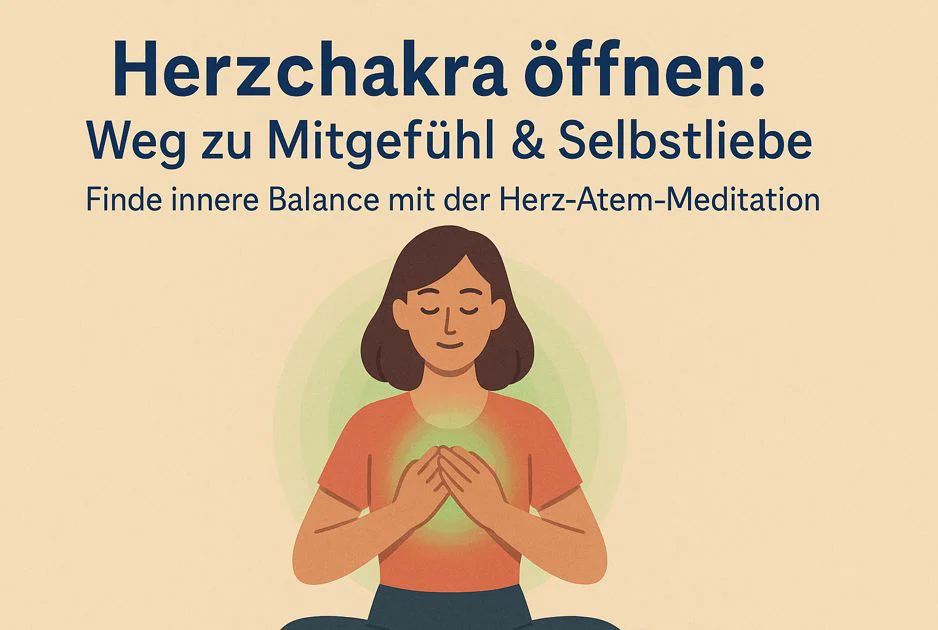
Many people talk about the heart chakra, but hardly anyone knows how it really feels in their everyday life when this area is open or blocked. Would you have thought that mindful breathing could specifically change your ability to feel compassion and self-love?
And this can be measured: studies show that even short, regular mindfulness or breathing exercises can reduce stress and anxiety and improve attention and sleep. In one study, for example, feelings of loneliness decreased by 22 percent after just a few days of practice. The heart chakra is therefore not only a spiritual symbol, but a real starting point for greater inner balance.
You are about to learn a 3-minute exercise that you can try out right away—no prior knowledge required. But before we get down to practice, let’s take a look at why our hearts often remain closed in everyday life and what this has to do with stress.
Table of contents
Why we often close our hearts—and what that has to do with stress
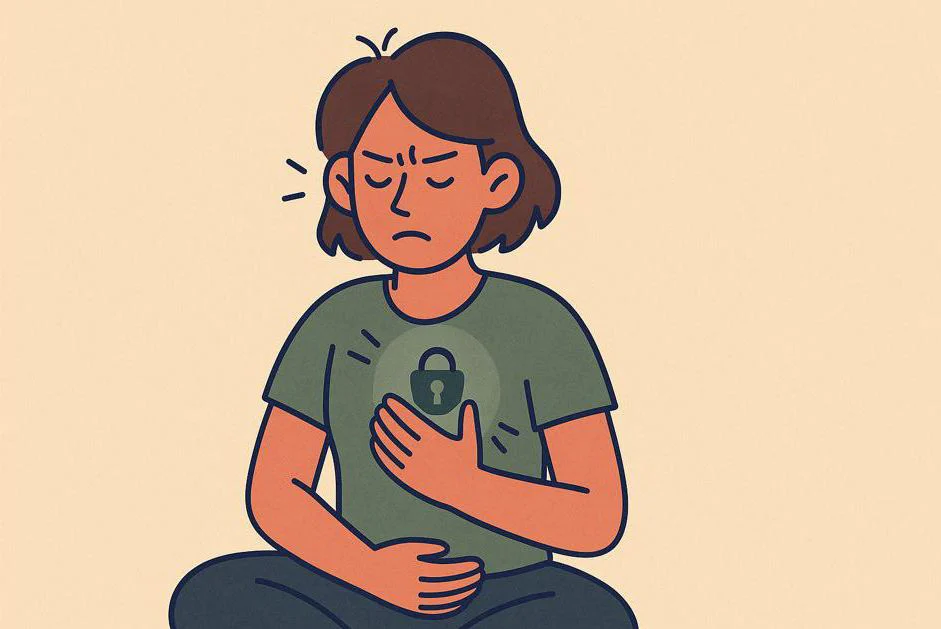
Many people notice typical signs in everyday life that their heart space is no longer completely open: their breathing often remains shallow, a feeling of tightness or tension spreads in their chest, and in relationships they sometimes lack patience or withdraw inwardly. These small warning signs show how strongly stress affects our bodies and our emotions. In the short term, the body responds with the so-called “fight-or-flight” reaction: breathing quickens, the heart beats faster, and muscles tense up. This helps us to overcome challenges – but if this state lasts too long, our well-being suffers and our ability to feel compassion diminishes.
Research shows that chronic stress can weaken positive emotions and social connectedness—and that mindfulness exercises can mitigate this tendency and increase social contact again (by about 22% in one study). This means that taking regular short breaks for yourself can prevent feelings of inner coldness and isolation. Meditation and targeted breathing exercises have been proven to help reduce stress reactions, lower blood pressure, and strengthen inner balance. The heart chakra is therefore not just a spiritual concept, but a starting point for greater joy and connection – even from a scientific perspective.
Most popular products
-

Sahasrara Connect
49,95 € -
Muladhara Balance
49,95 € -
Swadhisthana Flow
49,95 € -
Manipura Strength
49,95 €




Many people try to control or push away unpleasant feelings. This often leads to us feeling less—not only pain, but also joy and genuine closeness. This emotional numbness is a protective mechanism that helps in the short term, but in the long term it exhausts and isolates us. Relationships become more superficial because openness and vulnerability seem exhausting. Perhaps you are familiar with this: in moments that could actually be beautiful, you still feel a kind of inner distance, as if your heart is on “pause.” This is not a sign of weakness, but a completely normal reaction to prolonged stress.
A closed heart space is also noticeable physically: some people feel pressure in their chest, others feel like they can’t breathe properly. These symptoms are serious indications that the body needs support. Regular mindfulness or breathing exercises can help you recognize these warning signs early on and take countermeasures. At the same time, it is important to know that if strong negative feelings arise during or after an exercise, you should stop and seek support. This rarely happens, but it is an important reminder to be mindful of yourself.
The symbolism is also interesting: the color green traditionally stands for healing and hope and is associated with the heart chakra. Many people report feeling fresher and more open after a walk in nature or after meditating with a focus on the heart area. Such small changes in everyday life make a noticeable difference.
Especially in stressful times, it is worthwhile to incorporate short moments of mindfulness—for example, through conscious breathing or a short meditation. This helps to strengthen your connection to yourself and slowly open your heart again. Those who regularly nurture their heart space often discover more lightness and compassion, both for themselves and for others.
You will soon learn how the heart chakra works in detail and why it is much more than just a spiritual concept. We will look at how the body, emotions, and breath interact here—in a practical way that is easy to understand, even for beginners.
Demystifying the heart chakra – from theory to tangible practice
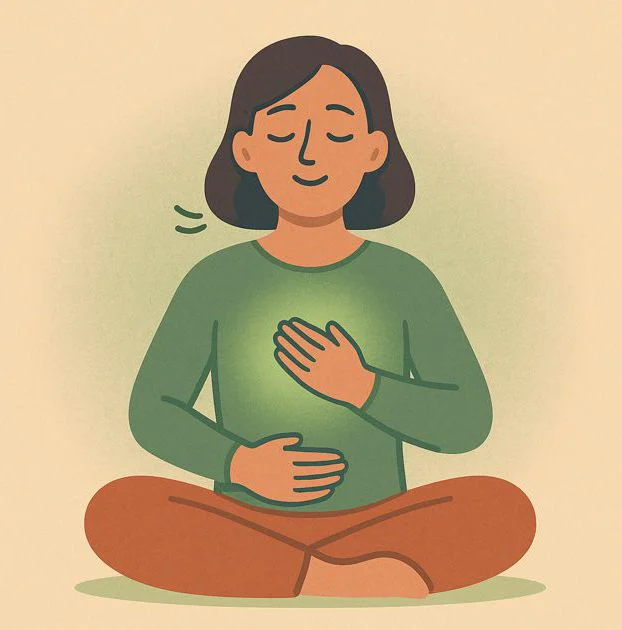
Many people are familiar with the word “chakra” from yoga or spiritual stories, but what is really behind the heart chakra – and why is it worth paying attention to it in everyday life? It is often considered something abstract, but the chakra teaching describes the heart chakra – or Anahata – as a very specific area in your chest that plays a central role both physically and emotionally. In tradition, the heart chakra serves as a mediator between the lower, physically oriented chakras and the upper, more spiritual levels. It is the bridge that brings body and mind, intellect and emotion into balance. Especially when stress or hecticness prevail, this connection can easily be lost.
In yoga and chakra teachings, the heart chakra is often activated with the syllable “Yam.” Traditionally, long, calm humming or chanting is considered a way to bring vibration to the chest area and release energetic blockages. Modern research shows that humming, chanting, and conscious breathing in the chest area do indeed have a relaxing effect and support emotional regulation. Neuroscientific studies and reviews show that meditation and targeted mindfulness practices can change brain activity and improve the ability to regulate emotions. This explains why even simple breathing exercises or humming a mantra in everyday life can have a noticeable effect.
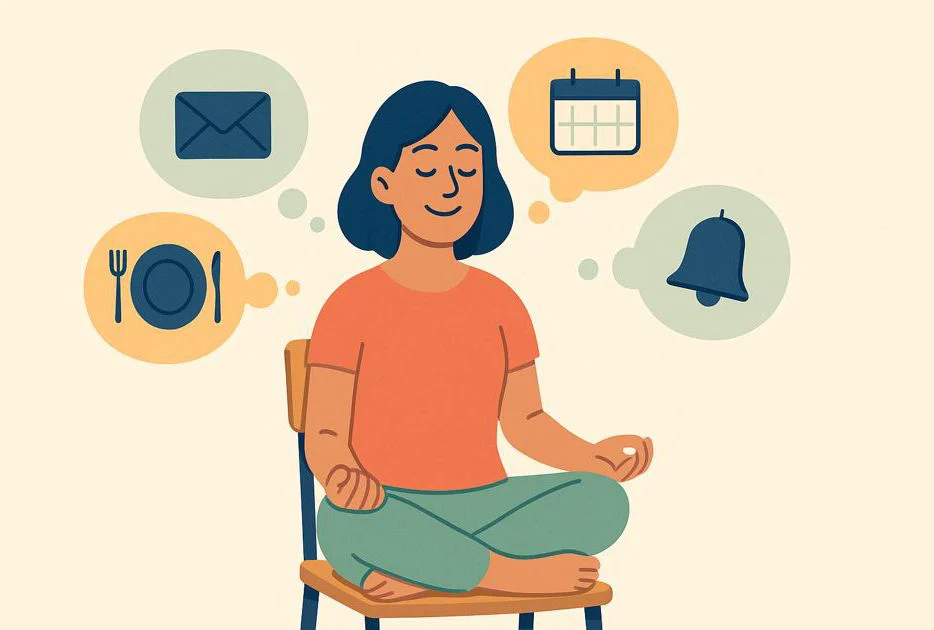
Meditating is like brushing your teeth
How can it be that we know the motto for exercise: three times a week is enough, more is a…
The color green also traditionally plays a role in connection with the heart chakra. In chakra teachings, it stands for healing, hope, and new beginnings. Many people report feeling more relaxed and open after a walk in nature or looking at green images. It is difficult to separate whether it is actually the color itself or the experience of nature that is responsible for the effect—but visualizing green is very well suited as an anchor in practice. It creates easy access to a feeling of spaciousness and relaxation in the chest area.
From a scientific perspective, studies show that just a few minutes of daily mindfulness or breathing exercises can help reduce stress, lower blood pressure, and improve sleep quality. People who meditate regularly or breathe consciously have been shown to strengthen their attention and ability to deal with their own feelings more consciously. The heart chakra is therefore not only a spiritual concept, but also a practical starting point for bringing more compassion, peace, and joy into your life—regardless of whether you believe in chakras or not.
Many people report feeling more alive, more inner peace, and a new openness to small, positive moments in everyday life after doing specific exercises for the heart chakra. This feeling of connection often arises after just a few minutes. It doesn’t take years of training: a brief moment of silence, a conscious breath, a walk in nature, or a gentle “Yam” are enough to activate the heart space. Visualizing green light in the chest area can also help to release blockages and promote lightness.
What’s more, researchers have found that even brief meditation practice improves attention and emotional regulation—which explains why simple visualizations and breathing exercises have such a rapid effect. Both beginners and advanced practitioners are often surprised at how immediately noticeable these techniques are. It’s not about perfection, but about incorporating small reminders into your everyday life that reconnect you with yourself.
In the next step, I will show you a simple heart breathing meditation that you can try right away—no matter how much time you have or how much experience you have.
Opening your heart in everyday life: The 3-minute heart breathing meditation to try
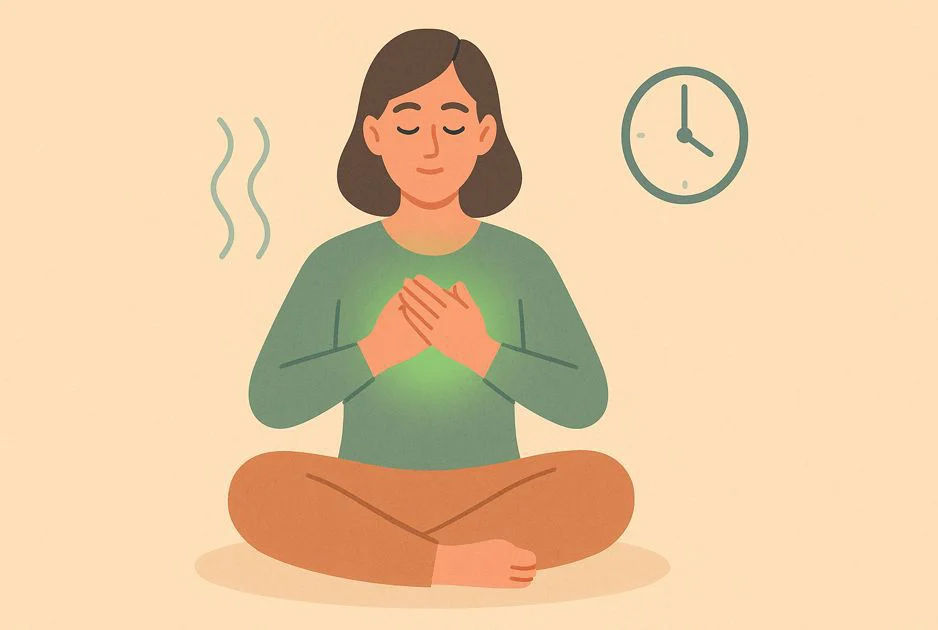
In everyday life, there is often no time for long breaks, but sometimes even a brief moment is enough to feel more connected to yourself again. The 3-minute heart-breath meditation is designed for just that: it fits into any lunch break, works on the go, and requires no prior knowledge. Small, regular practices are effective—studies show that even short daily exercises have noticeable effects on attention, mood, and sleep, often starting at just 8 to 13 minutes per day. Here, it’s even more compact.
We divide the exercise into three simple sections. Start with 30 to 45 seconds to settle in: sit or stand comfortably with your feet on the floor. Gently close your eyes if you like. Place one or both hands on the center of your chest. Feel your breath coming and going without changing anything. Keep your shoulders loose and relax your face. Notice how your chest rises and falls with each breath.
Top-rated products
-
Sahasrara Connect
49,95 € -
Muladhara Balance
49,95 € -
Swadhisthana Flow
49,95 € -
Manipura Strength
49,95 €
Now comes the core of the exercise, which lasts about 90 seconds: Focus your attention on your breathing. Breathe in slowly, deeply, and consciously—feel the breath flowing into your abdomen and the center of your chest. As you inhale, imagine gentle green light flowing into your chest. Green represents lightness, hope, and renewal. With each exhalation, let go of tension and heaviness, as if the green light were leaving everything clear and fresh in your chest. If your thoughts wander, notice them and gently bring your attention back to your heart area. There is no right or wrong – just feel what is there.
If you like, accompany your breath with the syllable “Yam.” Say it quietly in your mind or hum it gently as you exhale. This creates a gentle vibration in your chest and can enhance the feeling of spaciousness and calm. Try out what feels right for you. If strong feelings arise during the exercise, just keep breathing. If it becomes too much, interrupt the exercise and take some time out—this is completely normal and a sign of mindfulness towards yourself.
Finally, for the last 30 to 60 seconds: let your breath flow freely again. Notice how your chest feels now. Slowly open your eyes, take in your surroundings again, and gently move your hands and arms. You may feel more calm, warmth, or a slight tingling sensation—or perhaps just a moment of silence. That’s all right.
This little exercise can easily be incorporated into your daily routine—at the office, during a short break, on the go, or in the evening before going to bed. Do it with me now—three minutes just for you. If you like, try the heart-breath meditation every day this week and observe how your breathing and mood change.
Opening your heart is not a distant goal, but begins with small steps like these in everyday life.
Opening your heart is a journey—and it always begins in everyday life.
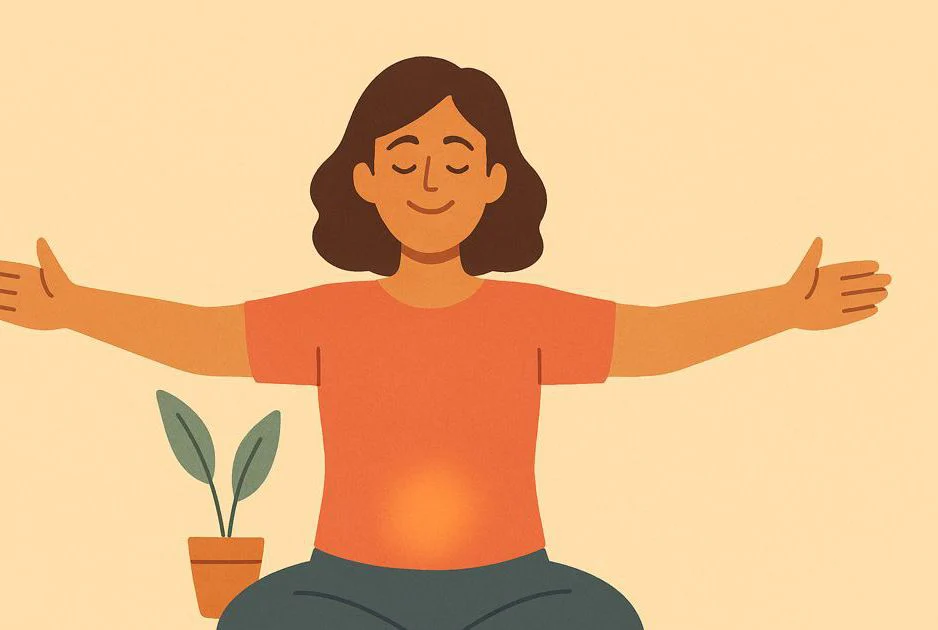
Three things are important when it comes to opening your heart in everyday life: First, it is a practical way to achieve greater compassion, inner peace, and joy—without any prior knowledge. Second, even short breaks such as the 3-minute heart breathing meditation can have a noticeable effect and help to release emotional blockages. Third, pay attention to yourself: if strong emotional reactions occur during the exercise, stop and seek support, for example from a coach or therapist. This is completely normal and treatable.
If you found this helpful, try the 3-minute break now and write in the comments how it felt for you. Subscribe to the channel if you would like more practical mindfulness exercises for everyday life.
Frequently asked questions about the heart chakra & emotional balance
What is the heart chakra and what role does it play?
The heart chakra (Anahata) is the energy center for compassion, love, and connection. It is the bridge between the physical and spiritual chakras and is central to emotional balance.
How can I recognize signs of a blocked heart chakra?
Typical signs include shallow breathing, tightness in the chest, lack of patience, emotional withdrawal, distance in relationships, or chronic stress.
Which exercises help to open the heart chakra?
A 3-minute heart-breath meditation focusing on the chest area, visualizing green light, and gently humming “Yam” can help.
Is there scientific evidence for the effectiveness of heart chakra work?
Studies show that mindfulness and breathing exercises can reduce stress, increase social connectedness, and improve emotional regulation, which corresponds to the effects of heart chakra work.
How can I strengthen compassion and self-love in my everyday life?
Regular short mindfulness breaks, conscious breathing exercises, and practicing heart-breath meditation promote compassion, self-love, and inner peace.

