

Many people talk about grounding, but hardly anyone shows how it can work in everyday life. Especially today, we often find it difficult to find peace or concentrate – perhaps your body is sending you a signal that you cannot interpret correctly.
This video gives you a practical introduction: we will do a 30-second breathing exercise together that you can try out right away. I will also introduce you to a method that combines breathing exercises, nutrition and small moments in nature – you can try it out for a week and see what changes.
In the chakra tradition, the root chakra, also known as Muladhara, is the energy centre for grounding and security – something that can be experienced in practice, but should not be understood as a medical diagnosis. I will show you a method for recognising typical signals and testing them with simple exercises.
Perhaps you have also wondered why you simply cannot get going in the morning despite getting enough sleep.
Table of Contents
Your body speaks – can you recognise the warning signs?

Sometimes we don’t really notice the subtle signals our body sends us. But your body is constantly communicating with you – through small impulses and subtle warning signs that are easy to overlook. Today’s topic: Can you recognise the warning signs that could indicate an imbalance in your root chakra?
In the chakra tradition, the root chakra, also known as Muladhara, is considered the central energy centre for a feeling of security and stability. It is located in the area between the anus and genitals and is associated with the colour red. Many people report experiencing certain symptoms when there is an imbalance in this area. These include persistent fatigue that does not improve even with plenty of sleep, a diffuse inner restlessness or a subliminal feeling of insecurity. Physical complaints such as tension in the lower back or digestive problems also occur frequently. In traditional chakra teaching, these sensations are described as indications of an imbalance in the Muladhara chakra – however, they are subjective and can also have other causes. These symptoms are often dismissed too quickly as everyday stress. But the difference lies in the details: if you notice that sleep, holidays or distractions do not bring any real relief, it is worth taking a closer look. It is not about making medical diagnoses, but about becoming more aware of the subtle messages your body is sending you. Persistent exhaustion, unexplained fears or recurring tension can alert you to the fact that your inner foundation is out of balance – at least according to chakra tradition.
Best-selling products
-

Muladhara Balance
49,95 € -
Swadhisthana Flow
49,95 € -
Manipura Strength
49,95 € -
Anahata Harmony
49,95 €




There is currently no clear scientific evidence that blockages in the root chakra directly lead to specific physical complaints. Research institutions such as the NCCIH emphasise that the connection between chakras and health has not yet been conclusively clarified. Nevertheless, many people report experiencing noticeable improvements through targeted exercises and mindful routines. There is solid evidence that short mindfulness and breathing exercises can reduce stress and improve sleep quality. For example, a study with students showed that just six minutes of mindfulness practice before bedtime significantly improved sleep behaviour and feelings of relaxation (Frontiers 2018). That’s why it’s worth trying out small, regular practices – they are a pragmatic and safe first step.
So if you notice that fatigue, inner restlessness or tension in your lower back keep recurring, take these signs seriously. They don’t necessarily mean anything dramatic, but they can help you to be more mindful of yourself. This awareness is the first step towards feeling more stable and energetic again.
But how can you take concrete steps to counteract this? Many people think of elaborate rituals or complicated techniques when they think of grounding. However, there are simple ways to bring your body and mind back into balance – and that is exactly what the next step is all about.
Feeling grounded: breathing, nutrition and nature as sources of strength

Grounding is not a distant goal, but something you can incorporate into your everyday life with small, concrete steps. There are three key areas to focus on: breathing, nutrition and conscious contact with nature. Traditionally and from experience, many people turn to these elements to stabilise themselves. At the same time, studies show that even short mindfulness and breathing exercises can reduce stress and improve sleep quality – so they are a practical approach to get started right away.
A good place to start is abdominal breathing, also known as diaphragmatic breathing. Sit upright in the morning, place one hand on your stomach and breathe in slowly through your nose so that your stomach bulges outwards. As you breathe out through your mouth or nose, you will feel your stomach gently sink back down. Do this for one minute, consciously focusing on the movement of your hand. This little exercise takes hardly any time and helps you to establish a feeling of security and calm right after waking up. Research confirms that even a single, approximately six-minute guided mindfulness session before bedtime can significantly improve sleep patterns and inner restlessness – as shown, for example, by a study with athletes (Frontiers 2018). That’s why, to start with, just one minute in the morning is often enough to feel a difference. Ideally, repeat this breathing exercise every day – it will quickly become part of your routine.

Amethyst – Stone of Spirituality
In this blog post you will get an honest insight into how amethyst is used in meditation – wit…
It is also worth taking a conscious look at nutrition. In the chakra tradition, root vegetables such as beetroot, carrots and parsnips are particularly recommended for the Muladhara chakra. They are considered grounding and are said to promote a feeling of stability. There is no clear scientific evidence for this connection, but you can try for yourself whether consciously eating root vegetables – for example, roasted in the oven or in a salad – helps you feel more grounded. It is important to chew and taste mindfully: take the time to really notice how the consistency and taste feel. This turns eating into a small mindfulness exercise that brings you back from your head to the moment.
Direct contact with nature is another key factor. If possible, walk barefoot on grass, soil or even your balcony for a few minutes every day. Connecting your feet with the ground can have a calming effect and helps many people to clear their minds. Just one or two minutes is enough to feel the difference. Allow yourself to consciously enjoy this little break – this is especially helpful when everyday life gets hectic. Here, too, studies show that regular visits to nature and short mindfulness exercises have measurable effects on stress, sleep and concentration, even if not all effects have been researched in detail (NCCIH, systematic reviews).
Small grounding rituals can be integrated flexibly: perhaps you hold a red jasper in your hand when you want to collect yourself, or allow yourself a moment of silence before an important conversation. The key is to allow yourself to repeat these routines regularly – that’s when they take effect. Research shows that short, repeatable practices are particularly effective and suitable for everyday use. You don’t need a lot of time, but you do need to stick with it.
There is currently no direct evidence of a connection between chakras and medical diagnoses. However, the methods traditionally recommended for the root chakra – breathing exercises, mindfulness, contact with nature – have been proven in many studies to be helpful for reducing stress, improving sleep and increasing well-being. So, with very little effort, you can test for yourself how these small steps feel for you.
Over time, you will notice whether anything has changed – sometimes it is very subtle differences that only become apparent gradually.
What does true balance feel like? Signs of a stable foundation

Perhaps you have already asked yourself how true balance manifests itself in everyday life. Signs of a stable foundation are often unspectacular and develop slowly. Many people report that they first notice small changes that indicate something is shifting: a morning when you are a little more alert than usual, a moment when you remain unexpectedly calm in a stressful situation, or a night when you sleep more deeply than usual. Such observations are valuable indications that your practice is beginning to take effect.
To become more aware of these changes, it helps to pay attention to specific, verifiable signals. Over the next week, pay particular attention to three small moments: First, whether there is a morning when you feel a little more energetic. Second, whether you react more calmly than usual in a tense situation. Third, whether you sleep a little deeper or more relaxed at least one night. This little checklist makes it easier to recognise progress – and you can repeat it for yourself at any time.
Relationships, especially with yourself, can also change through regular grounding routines. Many people report a gradual increase in confidence and inner stability. This can be seen, for example, in the fact that you are less likely to feel insecure in difficult moments or that you set clearer boundaries with others. This development rarely happens overnight, but grows with each repeated practice. It is not about expecting big leaps right away, but about noticing the small signs of greater serenity and inner peace in everyday life.
Products on offer
-
Anahata Harmony
49,95 € -
Manipura Strength
49,95 € -
Muladhara Balance
49,95 € -
Sahasrara Connect
49,95 €

In my courses, I often encounter scepticism about whether such exercises really have any effect. Especially at the beginning, you may be looking for clear proof and become unsure whether you are just imagining changes. Here it helps to pay attention to your body: you may notice that your sleep becomes more restful, tension in your lower back eases, or you get going more quickly in the morning. These physical changes are often the first noticeable effects when you incorporate small grounding routines on a regular basis.
Systematic reviews and NCCIH materials show that mindfulness, meditation, and breathing exercises can reduce stress and improve sleep and mood. Results depend on individual practice, but the evidence suggests trying simple, repeatable routines. Although not every change can be scientifically attributed to these practices, many people confirm that they experience greater stability and well-being as a result of such exercises.
A helpful tool is a brief evening check-in: every evening, write down in one or two sentences a moment when you felt calm, secure or connected today. This little journaling habit makes progress visible and helps you to become more aware of changes. You can see it as a small, voluntary observation exercise – just try it out tonight and see if you can find such a moment.
What meditation can teach us (6 surprising effects)
Six surprising effects – but which one have you been missing out on completely? Most people want les…
If you like, feel free to share your three small signals or your experiences in the comments. This will not only help you, but also inspire others to stick with it and recognise their progress.
With these simple strategies, you can build a foundation that will support you even in hectic times. Even small, conscious changes make a difference – and they happen exactly where you implement them in your everyday life.
Conclusion & invitation to practice
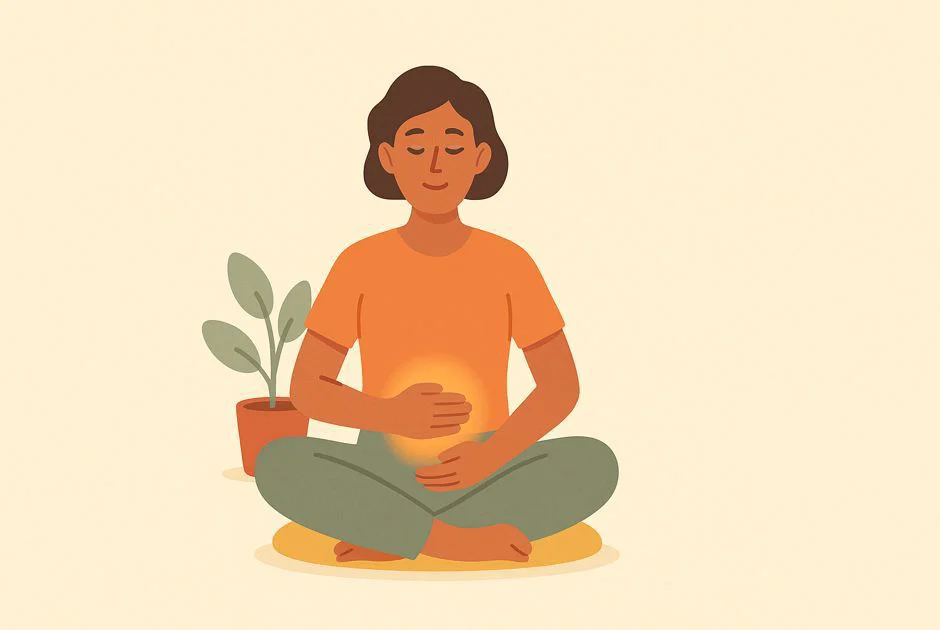
If you want to do something for yourself right now, try abdominal breathing for 30 to 60 seconds – sit comfortably, place one hand on your stomach and breathe in and out consciously. This is an easy way to get started that can have an immediate effect.
If you try out the exercises from the article for a week, observe what changes. In the evening, briefly write down how you feel and share a word in the comments that has changed for you – for example, “energy”, “sleep” or “nothing”.
If you would like more practical guidance for everyday life, please subscribe to the channel. Studies and reviews show that short mindfulness and breathing exercises can reduce stress and improve sleep – a sensible, safe first step. If you have severe or persistent symptoms, please consult a doctor. These routines can support you, but they are no substitute for professional help when it is needed.
Frequently asked questions about the root chakra & your grounding
What is the root chakra and why is it important?
The root chakra (Muladhara) is the energy centre for grounding, security and stability. A balanced root chakra helps you feel secure and connected in everyday life.
Wie äußert sich ein Ungleichgewicht im Wurzelchakra?
Symptoms may include persistent fatigue, inner restlessness, insecurity, tension in the lower back or digestive problems.
What simple exercises help to strengthen the root chakra?
Practical exercises include abdominal breathing, consciously eating root vegetables and regular contact with nature, e.g. walking barefoot.
Is there scientific evidence for the effectiveness of chakra work?
There is no direct evidence for chakra blockages, but the recommended methods, such as mindfulness and breathing exercises, are scientifically proven to reduce stress and promote well-being.
How can I tell if my grounding exercises are working?
Pay attention to small changes such as more energy in the morning, calmer reactions in stressful situations or better sleep. A journal can help to make progress visible.

