

Many people immediately associate the third eye with magic or mysticism – but meditation and mindfulness practices such as breath awareness, body scan or metta are clearly linked in current studies to less stress, better sleep and measurable changes in the brain. Researchers have found that those who meditate regularly strengthen areas of the brain associated with attention and emotional balance – and this can have a noticeable effect on everyday life.
Nevertheless, many beginners find it difficult to maintain their practice in the long term. Everyday life, lack of routine or lack of support often mean that the desired effect is not achieved. In this video, I will show you a small, scientifically based practice that you can try out today – and what you can really expect after three months, one year and three years.
But what is actually behind the forehead chakra – and why is it considered so mysterious by many?
Table of contents
The third eye chakra – more than just a myth?
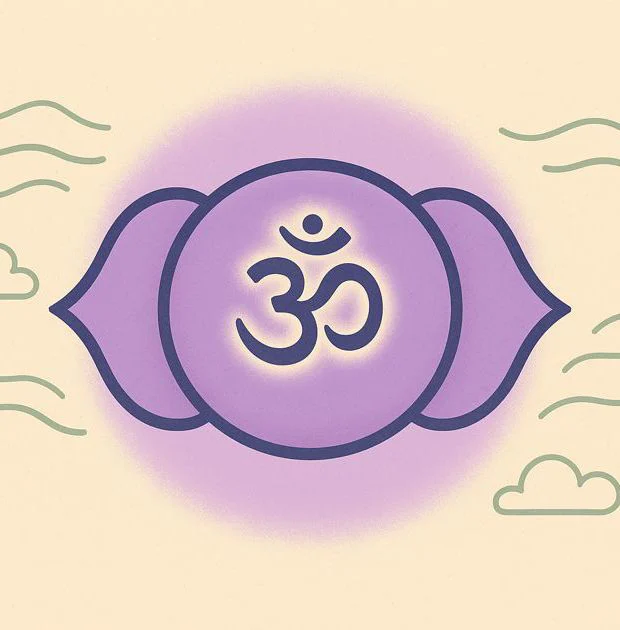
The forehead chakra, also known as the Ajna Chakra, is central to many traditions for perception, intuition and inner clarity. It is located between the eyebrows and is often associated with the colour violet. In yogic teachings, it is considered the seat of the “sixth sense” – the ability to see beyond the obvious and understand oneself better. For many, this may sound mystical at first, but there is also a practical dimension to it that you can use in your everyday life.
Imagine the Ajna Chakra as a kind of inner magnifying glass that helps you to observe your thoughts and feelings more consciously. When this magnifying glass is clear, you perceive connections more easily, feel your intuition and react more calmly. If, on the other hand, it is ‘dusty’, you quickly lose touch with yourself and your perception becomes clouded. This often happens gradually – many people do not even notice that they are listening less and less to their inner voice in everyday life or losing themselves in brooding thoughts.
Top-rated products
-

Vishuddha Clarity
49,95 € -
Shanti Presence
49,95 € -
Sahasrara Connect
49,95 € -
Muladhara Balance
49,95 €




This is where meditation comes in. Most traditional exercises associated with the forehead chakra – such as mindful breathing, body scanning or open awareness – have been linked in scientific studies to reduced stress, better sleep and changes in brain activity. Research shows that regular meditation can reduce stress response, improve sleep quality and reveal changes in areas of the brain responsible for attention and emotion regulation in brain scans. Multiple studies also suggest that repeated attention training – i.e. consciously directing your perception – promotes neuroplastic changes in the brain. This means that your brain adapts and helps you to be more focused and balanced.
The symbol of the forehead chakra is the lotus flower with two petals or the AUM sign – a reference to the connection to deeper consciousness. In practice, the Ajna is often understood as the opening to the soul: this is where clarity, imagination and what many experience as intuition arise. Those who meditate regularly often notice how their own thinking becomes more organised and decisions become easier to make. An open forehead chakra manifests itself in everyday life, for example, in the fact that you remain calm in stressful situations or intuitively sense what you need at any given moment.
Of course, meditation is not always pleasant. For a few people, unpleasant experiences can also occur, such as when old emotions resurface or inner turmoil arises. If you notice intense negative feelings during your practice, it is a good idea to seek support – for example, from an experienced teacher or a counselling centre.
The real challenge, however, lies in not losing access to this inner clarity again. Many people feel in their everyday lives that they intend to be more mindful or meditate regularly, but something keeps holding them back. Let’s take a look at why this is and how you can recognise typical blockages.
Recognising blockages – and finally overcoming them

What really prevents us from strengthening our connection to the forehead chakra and thus to greater clarity and intuition? Research on mindfulness programmes such as MBSR shows that there are three main factors that repeatedly slow us down. Firstly, there is often a lack of a fixed routine – everyday life is busy, time slots are lost, and without a clear place in the daily schedule, the practice falls by the wayside. Secondly, external circumstances such as stress, changes at work or family commitments can throw mindfulness practice off balance. Thirdly, a certain complacency sometimes sets in: we believe we have done enough and let our regular practice slide. These observations are supported by recent studies, which show that lack of time, lack of routine, major life events and the feeling of ‘having done enough’ are among the most common stumbling blocks.
These blockages are often difficult to recognise in everyday life. Many people report tension between their eyebrows or a feeling of mental fogginess – these are subjective signals that can indicate a lack of presence. Sometimes it only becomes noticeable when you are standing at the checkout in the supermarket or drifting off during a meeting and realise that your head is full of thoughts and there is little peace and quiet. It is precisely when your thoughts are spinning or you feel inner turmoil that it becomes apparent that your forehead chakra is not really responsive.
What is the root chakra?
Many people talk about grounding, but hardly anyone shows how it can work in everyday life. Especial…
Another obstacle is that we often automatically fall back on old habits during stressful periods: quickly reaching for our mobile phones, multitasking, taking few breaks. These patterns prevent us from pausing and sharpening our own perception. The more we search externally, the further we distance ourselves from our inner clarity.
How can you overcome these blockages in practical terms? Three simple measures have proven particularly effective in research and practice. First: establish a small, fixed mini-routine in your everyday life – for example, three to five minutes of breath awareness in the morning right after getting up. For many, this is the most accessible and effective method for becoming present and starting the day consciously. Second: integrate a short body scan in the evening. Even a short version can help reduce stress and reconnect you with your body. Thirdly, seek out interaction with others – whether in a mindfulness group, with friends or through regular peer check-ins. Studies show that group support is a strong motivator, especially in the beginning, and helps you to really stick with the practice.
Do the exercise now: Take ten seconds and ask yourself – where is your attention right now? Are you in your thoughts, in the past or future, or truly in the here and now? Mini-checks like this help you recognise your own patterns and keep coming back to the present moment.
If you integrate these simple steps into your everyday life, you will noticeably come closer to an open forehead chakra and clear perception. It is not about doing everything perfectly, but about persevering and constantly realigning yourself. The journey to greater awareness and inner peace begins right here – with small, regular steps that can be easily implemented in everyday life.
But how does this change actually develop over time? And what is the difference between those who give up after a few weeks and those who really stick with it?
The journey to open Ajna – practice, routine and real change
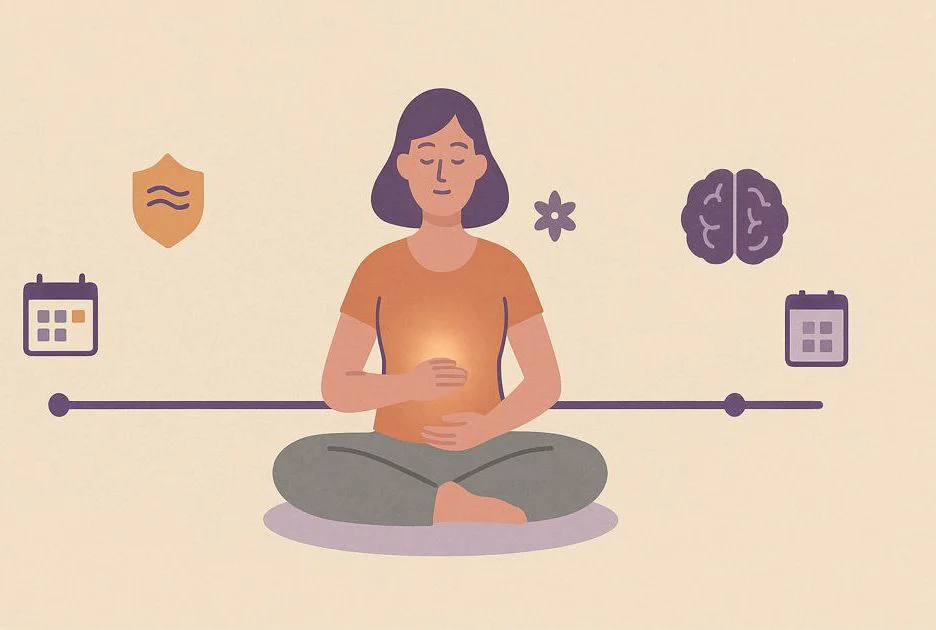
When you embark on the journey to open Ajna, you will quickly realise that it is about more than just a single meditation session or a quick course. Developing genuine, lasting change takes time and patience – this has been confirmed by numerous studies and interviews with participants in mindfulness programmes such as MBSR. Three typical phases repeatedly emerge that many people experience: the first three months, the first year and finally the period of three years and beyond. These phases are not rigid rules, but reflect experiences that have been observed in research and in the everyday lives of many people.
In the first three months, many report a noticeable reduction in stress, better sleep and increased mindfulness. You may notice that you recognise more quickly when you are lost in rumination and that you are more conscious of your breathing or your thoughts. Simple routines such as five minutes of breath awareness in the morning, where you sit quietly and observe your breath in the area between your eyebrows, can make a big difference. This practice interrupts old autopilot patterns and helps to calm the body and mind. Many people feel tension in their forehead release or their head feel clearer. Even a short body scan in the evening can help you reduce stress and sharpen your awareness. In this initial phase, the focus is on establishing new habits and noticing the first changes in your everyday life.
Products on offer
-
Anahata Harmony
49,95 € -
Manipura Strength
49,95 € -
Muladhara Balance
49,95 € -
Sahasrara Connect
49,95 €


After about a year, these effects deepen. Studies show that many people then develop a deeper sense of calm, form relationships more consciously and find better strategies for dealing with stress. The practice becomes more natural, and the forehead chakra – or the clarity associated with it – is often more noticeable. Decisions become easier, intuition grows, and inner conflicts seem less stressful. In this phase, it can be helpful to integrate compassion exercises such as metta meditation. Just a few minutes a day of treating yourself or others with kindness can strengthen emotional regulation and increase your own well-being. Many people also incorporate small micro-exercises into their daily routine: taking a conscious breath before a conversation, a brief moment of silence before falling asleep, or consciously perceiving their surroundings. According to research, such mini-habits – often lasting only 10 to 60 seconds – are often more sustainable than long but infrequent meditations.
Over a period of three years or more, many practitioners report that mindfulness and meditation have become an integral part of their lives. Research shows that although daily formal practice time often decreases (from an average of about 27 minutes after three months to around 9 minutes after three years), integration into everyday life increases. This means that mindfulness flows into many small moments – while eating, talking, working or walking. In the long term, studies have even observed changes in brain structure and EEG patterns, such as an increase in theta and alpha activity and adjustments in the prefrontal cortex. These changes support better emotion regulation, greater clarity and a deeper sense of compassion – both for yourself and for others.
It is important to note that lasting change rarely begins spectacularly, but rather builds up step by step. It does not require sudden enlightenment, but rather the willingness to persevere and engage in small, regular steps. Micro-habits that you incorporate several times a day for a few seconds are often more effective than sporadic marathon sessions. This is precisely where the power of practice lies: it grows with you, adapts to your life and makes real change possible.
Over time, this leads to a clearer view of one’s inner self – and thus a basis for greater stability, compassion and joie de vivre.
Your clear view inward
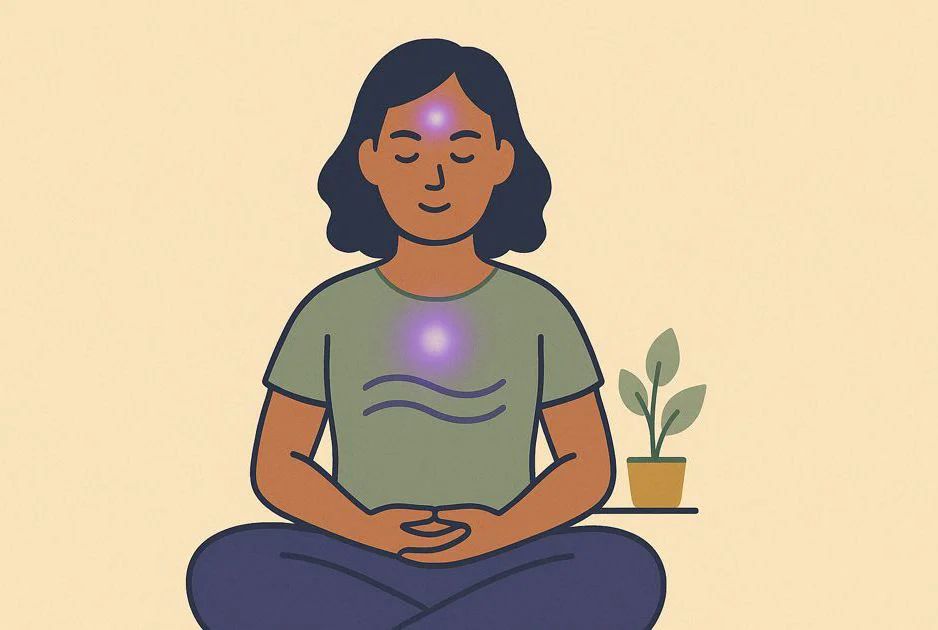
Your clear inner vision means making a difference with small, everyday steps. One simple practice is the 3–5-minute Ajna Breath Awareness: sit comfortably, breathe in and out calmly, and gently focus your attention on the point between your eyebrows. Feel the movement of your breath there, count your breaths or simply observe the sensation. In the evening, you can also do a short brow body scan: consciously relax your forehead and eye area, scan this area for a few minutes and breathe deliberately into any areas of tension.
Studies show that short exercises such as breath awareness and body scans are associated with less stress and better sleep. If you notice strong unpleasant feelings during practice, such as anxiety or distressing memories, seek support from a teacher, group or therapist.
Try out the 3-minute Ajna exercise for yourself, write in the comments how you got on with it, and if you would like more practical guidance, feel free to subscribe to the channel.
Frequently asked questions about the brow chakra & inner clarity
What is the forehead chakra (Ajna) and what does it represent?
The forehead chakra (Ajna) represents intuition, inner clarity and perception. It is also known as the “third eye” and helps us to see beyond the obvious and understand ourselves better.
What are the effects of blockages in the forehead chakra?
Blockages can manifest themselves as tension between the eyebrows, mental wandering, brooding, inner restlessness or a lack of intuition.
Which exercises help to open and strengthen the brow chakra?
Scientifically supported practices such as breath awareness, body scan and metta meditation, as well as regular short mindfulness routines in everyday life, are effective.
Is there scientific evidence for the effectiveness of forehead chakra work?
Studies show that meditation and mindfulness can reduce stress, improve sleep and positively change brain activity in areas related to attention and emotion regulation.
How do I develop a sustainable practice for my third eye chakra?
Establish small, fixed routines (e.g. 3-5 minutes of breath awareness), integrate short body scans and seek out exchanges with others to stay on track and develop clarity in the long term.

