

I know this fear of holding back my own thoughts in conversations – out of concern that I will be misunderstood or unable to find the right words. For a long time, this was a real obstacle for me. But this is exactly where the throat chakra comes in. It influences how we express ourselves, whether we speak our truth and whether we feel heard.
In this text, I will show you in simple steps what the throat chakra means, how to recognise typical blockages, and introduce you to a practice that you can try out right away. Stay with me for 60 seconds – we are about to do a 1-minute exercise that you can use immediately.
Perhaps you have also experienced that you find it difficult to express your opinion in a conversation, even though you know exactly what you want to say.
Table of contents
The throat chakra – your gateway to truth
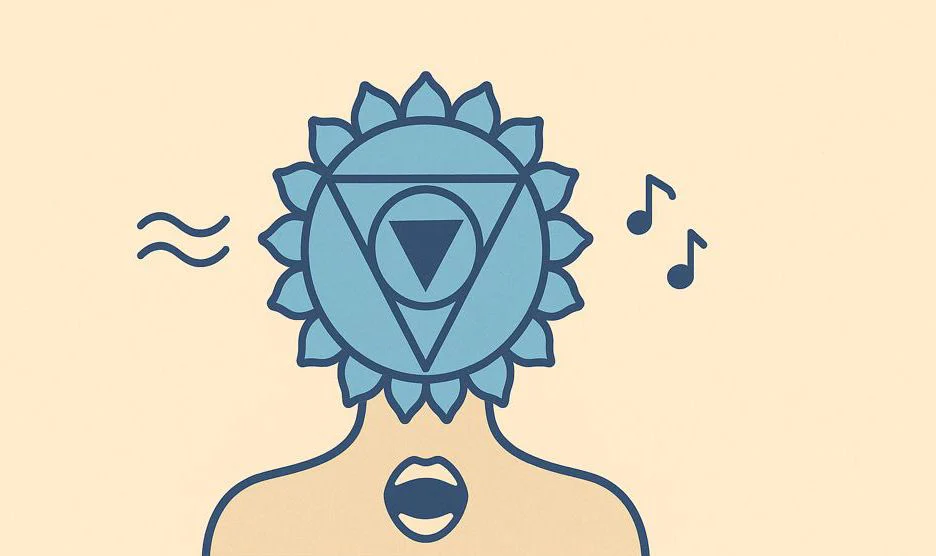
This brings us straight to the actual topic: the throat chakra – your gateway to truth. In the yoga system, this energy centre is called Vishuddha, which means ‘purity’. It is located at the level of the larynx, roughly in the middle of your throat. The throat chakra forms the bridge between your inner experience and what you express to the outside world. This is where it is decided whether you can express your thoughts and feelings authentically – whether through speech, gestures or facial expressions.
The throat chakra is considered the centre for speaking, listening and authentic self-expression. It is the place where your inner truth finds a voice. Whether you are communicating, really listening to others or simply being quietly present – the energy of this chakra influences how clear and open you are. Perhaps you are familiar with situations in which you suddenly find yourself at a loss for words or feel that your voice is not quite cooperating. These are often indications that the energy in the throat chakra is not flowing freely.
Top-rated products
-

Sahasrara Connect
49,95 € -
Muladhara Balance
49,95 € -
Swadhisthana Flow
49,95 € -
Manipura Strength
49,95 €




The colour associated with the throat chakra is a soft light blue. In yoga, this colour represents clarity, expansiveness and openness – like a wide sky that invites you to breathe freely and express yourself. Connected to the element of ether, the throat chakra also symbolises space and connection. It’s not just about words, but everything you bring into the world: your posture, your tone of voice, even small gestures. While the lower chakras are more closely related to physical needs, this chakra opens up access to thoughts, intuition and the interplay between heart and mind.
An essential aspect is the connection to your inner self. The throat chakra not only helps you to communicate, but also to perceive yourself. Those who are mindful of themselves are quicker to notice what really needs to be said – often a glance or a quiet word is enough. Studies suggest that mindful practice and meditation not only reduce stress but also strengthen social bonds. This in turn supports the ability to both listen and express oneself clearly.
People with a balanced throat chakra usually come across as authentic and present. Their voice sounds calm and convincing, they can express their opinion without raising their voice, and they set clear boundaries without having to justify themselves. They radiate a natural connection between their head, heart and voice. This makes it easier for them to stay true to themselves and communicate honestly, even in difficult situations.
When you begin to engage with your throat chakra, you open up a new space for conscious communication. You discover old patterns, can question them and change them step by step. This brings more ease to conversations and helps you feel understood – even when things get difficult.
How can you tell if this energy is blocked in you? That is exactly what we are going to look at now.
When your voice falters – recognising and understanding blockages

Sometimes you may feel that your voice falters at crucial moments or that you hold back even though something is on your mind. It can feel as if the words are stuck in your throat or you are hiding behind phrases that are not entirely honest. This rarely has anything to do with shyness – often the causes lie deeper and are related to your throat chakra. Such blockages arise especially in conversations that are important to you, during arguments, at work or when you want to stand up for yourself. But there is also the other extreme: some people talk a lot to cover up their insecurities, avoid silence and evade the actual topic. In both cases, one’s own truth often remains unspoken.
Blockages in the throat chakra manifest themselves in various ways. Emotionally, this can mean that you feel insecure, are afraid of criticism or constantly fear hurting others with your words. Perhaps you feel that your opinion doesn’t count, or you are often misunderstood. You may also find it difficult to speak in groups or find yourself constantly adapting to avoid conflict. Constantly thinking about how to phrase something takes a lot of energy and causes your voice to become quieter and quieter.
Anyone can meditate – no prior knowledge required
Do you think meditation means “thinking nothing” and sitting completely still? Wrong! In…
Physical symptoms are also typical: recurring sore throats, a hoarse or brittle voice, a lump in the throat or tension in the neck and shoulders can be indications. Some people quickly become hoarse when stressed or develop thyroid problems. Complaints affecting the teeth or jaw may also occur. Important: If you have recurring physical complaints such as persistent hoarseness, sore throat or thyroid problems, seek medical advice – energy work is no substitute for a medical diagnosis.
The roots of such blockages often lie in the past. Perhaps as a child you experienced that your opinion was not valued, you were laughed at or your feelings were not taken seriously. Strict upbringing, bullying or constant correction can make it difficult for you to speak openly today. Social expectations also play a role: in many situations, it seems easier to conform than to say honestly what you think. As a result, many people censor themselves and put their needs on the back burner.
A practical approach to identifying blockages is mindfulness in everyday life. This week, observe three situations in which you remain silent or hold back – briefly note down what happened. This little self-check will help you recognise patterns that you may have overlooked before. You will notice that there are often certain triggers or people that make it particularly difficult for you to speak. Awareness of this is the first step towards initiating change.
It is worth taking these signals seriously and supporting yourself in strengthening your expression step by step. You don’t have to change everything at once – small impulses and regular practice already make a difference. In the next part, you will learn how to open your throat chakra with simple methods and bring your voice back into your everyday life.
Finding your voice – practical ways to open your throat chakra
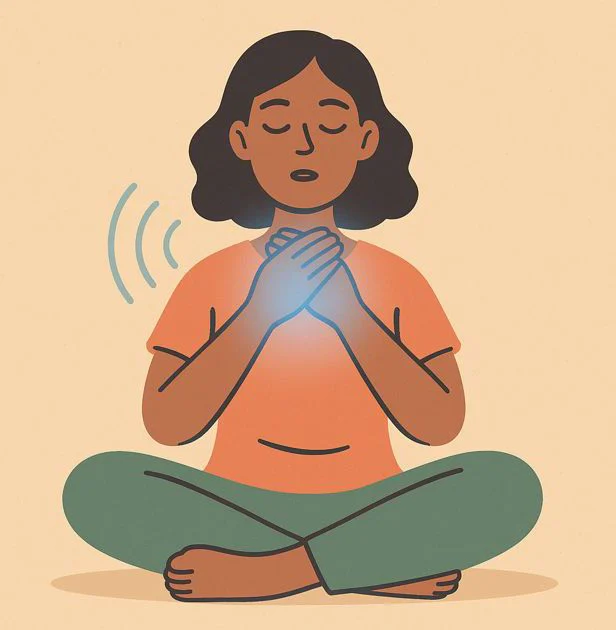
Many people only realise in everyday life how difficult it is for them to really use their voice. This makes it all the more important to know practical ways to open your throat chakra and strengthen your expressiveness. It’s not about changing everything at once – even small steps can make a difference.
Let’s get started right away: one of the most effective methods is working with sound. Try a short exercise right now: sit comfortably, take three deep breaths in and out through your nose. Then take another deep breath and, as you exhale, let the mantra ‘HAM’ sound long and relaxed – repeat this for about a minute. Consciously feel how the vibration reaches your throat. This mindful chanting may feel unfamiliar at first, but it is a good indicator that blockages are slowly dissolving. After just a few days, many people report that their voice sounds clearer and speaking is easier.
Breathing exercises are also key. Sit upright, close your eyes for a moment and take five deep breaths into your stomach. As you breathe out, you can make a soft ‘H’ or ‘Haa’ sound. Place one hand on your throat to feel the vibration. You can repeat this exercise three to five times. Short studies show that even brief episodes of mindfulness have measurable effects, such as a reduction in inner tension. This technique is a quick remedy, especially before or after stressful conversations.
Best-selling products
-
Muladhara Balance
49,95 € -
Swadhisthana Flow
49,95 € -
Manipura Strength
49,95 € -
Anahata Harmony
49,95 €

In addition to sound and breathing exercises, affirmations help to establish new inner patterns. Repeat sentences such as ‘I speak my truth with ease’ or ‘I listen with an open heart’ quietly or aloud. Write these sentences on small pieces of paper and place them where you will see them often in your daily life – for example, on the bathroom mirror or at your workplace. This will remind you to express yourself honestly, even when old patterns arise.
Physical exercises from yoga can be a useful addition to working on the throat chakra. If you are familiar with yoga, try the camel pose (Ustrasana) or the shoulder stand (Sarvangasana) – but only after warming up and with mindfulness. Gentle neck mobilisation exercises, such as slow circles or conscious stretching of the neck, are suitable for beginners. Always pay attention to your well-being and only go as far as is comfortable. Dos: practise briefly, regularly and with body awareness. Don’ts: do not stretch too much if you are experiencing acute physical pain or uncertainty – if in doubt, ask an experienced teacher.
Practical rituals help to integrate self-expression into your everyday life. For example, wear light blue clothing or jewellery that reminds you of lightness. Journaling – writing down your thoughts without filtering them – can help you recognise inner blockages and find new ways of expressing yourself. Singing, whether in the shower or on your way to work, also playfully exercises your throat and lifts your mood. Studies show that even very short, guided mindfulness exercises, lasting around five to six minutes, before bedtime reduce arousal and promote well-being.
Try out different methods and find out what works best for you. It doesn’t have to be complicated: just a few minutes a day is enough to feel the difference. Over time, you will notice how you express yourself more clearly and your voice gains strength.
Stay tuned and observe how your self-expression and perception slowly change in everyday life.
Your voice is your power

Your voice is more than just a tool – it is an expression of your power and authenticity. The throat chakra helps you to perceive yourself more clearly and connect with others. With small, daily steps such as HAM tones, five conscious breaths with a soft ‘H’ sound and short journaling notes, you can strengthen your communication skills without pressure and without perfection.
Do the 60-second HAM exercise now and write in the comments how your voice feels afterwards. If you are interested in mindfulness and self-expression, feel free to subscribe to the channel. And remember: if symptoms persist, seek medical advice.
Frequently asked questions about the throat chakra & authentic communication
What is the throat chakra and why is it important?
The throat chakra (Vishuddha) is the energy centre for self-expression and communication. It helps you to speak your inner truth authentically and feel heard.
How do blockages manifest themselves in the throat chakra?
Emotional blockages manifest themselves as fear of criticism, insecurity when speaking or constant restraint. Physical symptoms can include sore throat, hoarseness or neck tension.
Which exercises help to open the throat chakra?
Effective exercises include chanting the HAM mantra, conscious breathing exercises, positive affirmations, gentle neck mobilisation and journaling.
Is there scientific evidence for the effectiveness of throat chakra work?
Studies show that mindful practice and meditation reduce stress and strengthen social connectedness, which supports the ability to communicate clearly.
How can I strengthen my authentic voice in everyday life?
Integrate small, regular practices such as HAM toning, conscious breathing and journaling. Observe situations in which you hold back in order to recognise and change patterns.

