

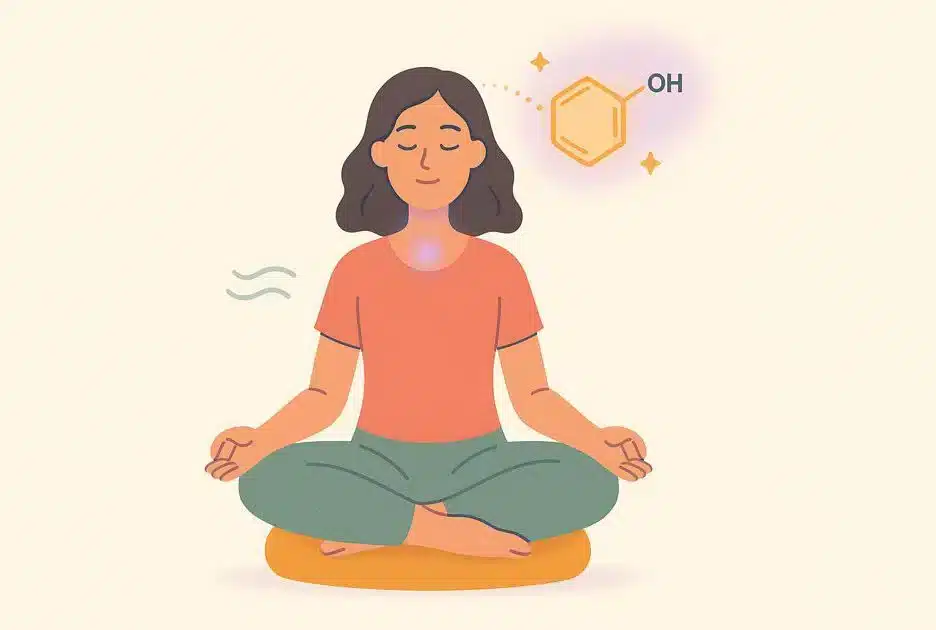
The real moment when motivation arises
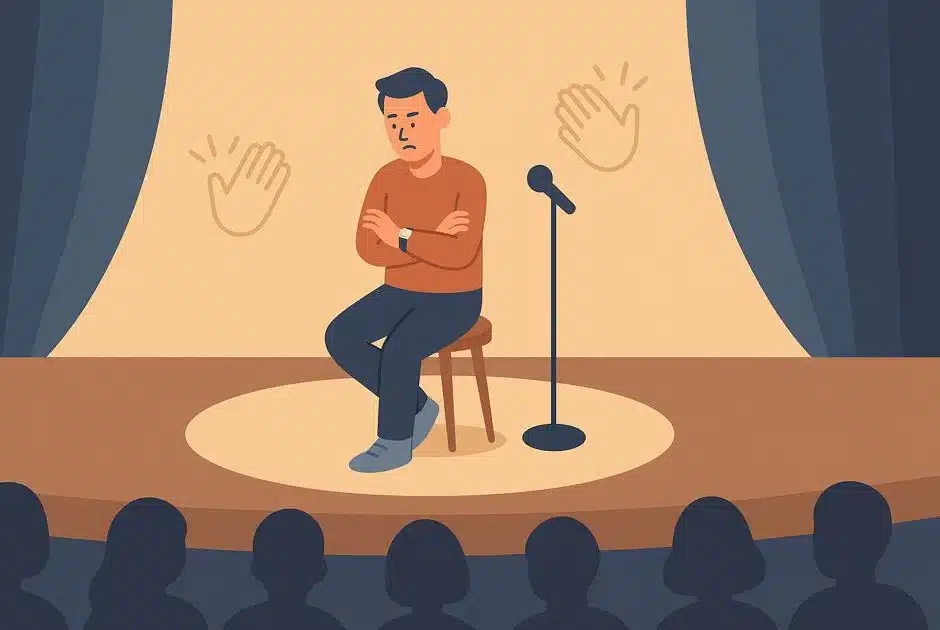
Do you know that great feeling you get right after exercising? Or after meditating – that brief feeling of “Yes, that did me good”? That’s exactly what today is about. That’s the moment when motivation really arises. Many people wait for it before they start – but that’s like waiting for applause before you even go on stage. This quote sums it up perfectly: “Waiting for motivation is like waiting for applause before there’s a reason for it.” Motivation is not a starting signal. It only arises after you’ve done something. This is due to processes in the brain – especially dopamine, the so-called reward neurotransmitter. Today, we’ll look at what really happens, why your brain rewards you afterwards, and how you can use this to make meditation a stable habit without any internal pressure.
Inhaltsverzeichnis
Why motivation doesn’t come when you wait for it
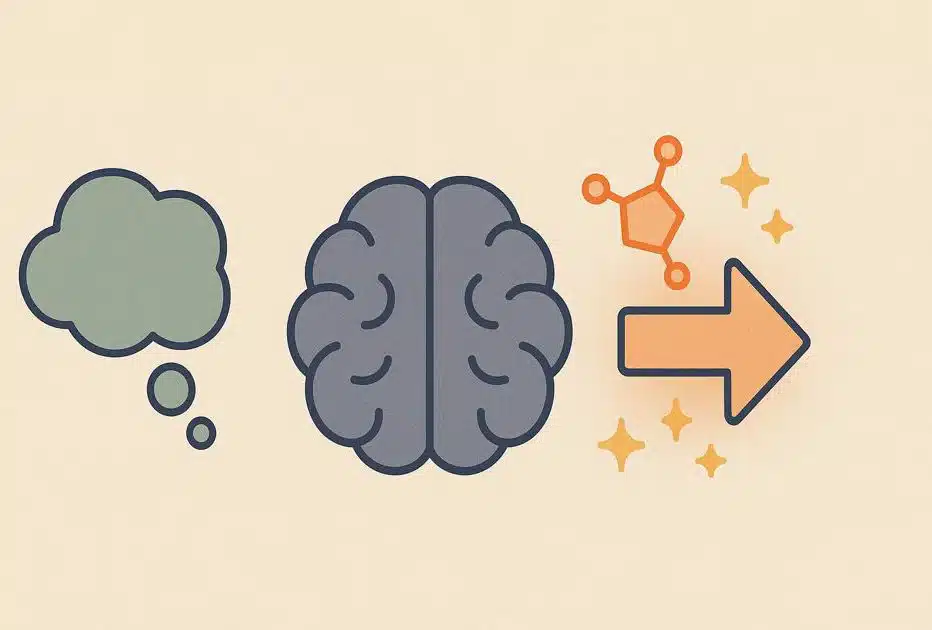
Many people believe that motivation must come first – before they get started. But that is one of the biggest mistakes you can make when trying to establish a new routine. Whether it’s meditation, exercise or nutrition – we wait until we “feel like it”. The problem is that the brain works exactly the opposite way. It responds to actions, not intentions. Your reward system only activates after you have done something. It then releases dopamine – the chemical signal for “That was worth it, do it again”.
It’s like a dog that only gets a reward when it has done something right. So if you just think about meditating, your brain remains passive. But as soon as you sit down, breathe and are truly present for two minutes, your brain says, “Ah, that was good.” That’s when dopamine is released. This feeling is the starting signal for motivation. So you don’t become active through motivation – you get motivation because you were active.
Popular products
-

Räucherbündel Palo Santo Lavendel Citrin
16,00 € -
Palo Santo mit Lavendel & Aventurin
15,00 € -
Lotus Schale Howlith
28,00 € -
Meditations Set “Chakra & Balance”
Ursprünglicher Preis war: 71,00 €56,80 €Aktueller Preis ist: 56,80 €.


This is precisely why affirmations or mere intentions usually have little effect. They do not activate a genuine dopamine signal. You can tell yourself ten times, “I will meditate today,” but as long as you do not do so, your system remains idle. What really matters is the moment of action. Only then does your brain begin to store the memory: “This feels good.”
It is interesting to note that even positive habits lose their appeal over time. Even if you meditate regularly, the feeling wears off. Your brain is constantly searching for genuine, new stimuli. That is why good routines change – they become “watered down”. You may still sit down, but inside you may already be thinking about breakfast or the day’s to-do list.
And that’s exactly where old habits creep in – like picking up your mobile phone as soon as the alarm clock rings in the morning. Your brain automatically chooses what promises the greatest short-term reward. If meditation seems boring, the dopamine rush from scrolling almost always wins. So the key is not to wait for motivation, but to create real signals for action again – small impulses that activate the reward system. Because if motivation isn’t a starting signal, what is?
The real trigger: action before emotion
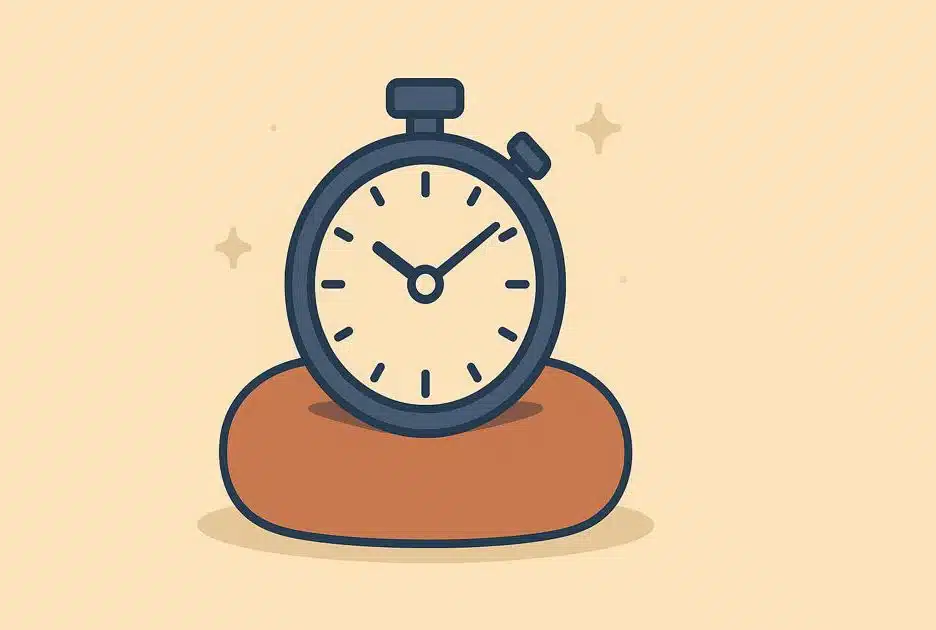
The most important point is this: you have to start before you feel ready. Your brain doesn’t wait for you to be in a good mood or for the perfect environment – it responds to movement. The feeling always comes after the action. So if you wait for motivation, you’re waiting for something that can only arise later, biologically speaking. And the paradox is that once you start, your inner state changes immediately. Your thinking switches from planning to doing.
It’s like exercise. No one jumps out of bed excitedly, puts on their running shoes and thinks, “Wow, I can’t wait to run my first few kilometres!” Most people only feel motivated once they’re already on their way, when their body is warming up and their blood is circulating. The same thing happens with meditation: the desire to do it often only arises once you’re already sitting and breathing. So it’s the action that’s the spark – not the result.

Your guide to choosing your perfect crystal
In our fast-paced, digital world, more and more people are longing for a deeper connection to nature…
A simple technique can help you put this into practice: the 2-minute rule. Don’t say to yourself, “I have to meditate for 20 minutes today.” Say to yourself, “I’ll just start for two minutes.” Put your cushion down, sit down, take a conscious breath – and see what happens. In 90 per cent of cases, you’ll stay seated longer because the initial energy flips the inner switch. Those two minutes trigger exactly what your reward system needs: action leads to dopamine, dopamine creates a pleasant feeling, and then your mind calls it motivation.
From a scientific point of view, this has to do with neuroplasticity. Your brain learns through repetition. Every time you sit down, a certain neural pathway is reinforced: action = good feeling. Over time, this makes it easier to get started because the system realises, “This is worthwhile.” It’s training, not magic. Small, regularly repeated actions literally change the structure of your brain.
I once went through a phase where I wanted to meditate every morning, but I always picked up my mobile phone first. It felt easier to quickly check my messages. When I started by just putting my cushion down before I even thought about it, everything changed. That small initial step was enough to flip my system. After a few days, the action rewarded itself – simply because the feeling afterwards was always more pleasant than before.
Even if it feels empty or mechanical at first, that’s exactly when the magic happens. Your brain releases dopamine, not because you intend to meditate, but because you have done so. And the more often you repeat this cycle, the stronger the connection becomes: “I do something – afterwards I feel good.”
Procrastination is actually a trick of the brain. It whispers to you that you should wait until you are ready. But ‘readiness’ is not a feeling that comes beforehand – it is a result of your actions. If you think you ‘don’t have time’ right now, it is often just a disguised escape reflex of the mind. Even two minutes are enough to start training this neural loop. As soon as you start, the system kicks in.
So the starting point is the switch. Movement creates feeling, not the other way around. And once you internalise that, procrastination no longer stands a chance. Because now you know that every small action is proof that you are in control of your state – it’s not your mood that decides, but you. And that’s where real motivation begins.
The 2-minute rule for starting meditation
ungefäher 2 Minuten
lower the barrier
Reduce the start to 120 seconds: Don’t plan to meditate for 20 minutes. Your goal is just to sit for two minutes. This makes the start so easy that your brain doesn’t build up resistance.
Create fixed anchor points
Define your trigger: Prepare your meditation cushion the night before or firmly connect the 2 minutes to an existing routine (e.g. “After brushing my teeth, I sit down for 2 minutes”).
Focus on the plot
Start immediately: as soon as the trigger is there (e.g. you see the cushion), sit down. Concentrate only on the action of sitting down and breathing consciously. The rest is optional.
Consciously boosting dopamine
Feel the mini reward: don’t get up immediately after the 2 minutes are up. Pause for another 5 seconds and consciously take in the feeling of calm, success or clarity. This reinforces the dopamine signal and strengthens the neural loop.
Consistency over time
Repeat it daily: it is more important to meditate for 2 minutes every day than for 30 minutes once a week. Consistency trains your brain and makes the action an automatic habit.
Materialien: Meditationskissen
Discipline as a promise to yourself

Now we come to the part that is often underestimated: discipline. Many people hear the word and immediately think of coercion or pressure. But true discipline is the opposite of that. It is an act of self-respect – a kind of silent promise to yourself: “I will keep my word, even if it is inconvenient at the moment.” It is not about being hard on yourself, but about being consistent.
Motivation is like the weather. It changes constantly. Discipline, on the other hand, is your compass. If you wait for motivation, you will act differently every time – depending on your mood, disposition or external circumstances. Discipline ensures that you act even when your head is looking for excuses. And it is precisely this action that will be rewarded in the end. The brain loves clear patterns. When you repeat your behaviour, a fixed cycle is created: action → reward → repetition → habit.
Meditation cushion
-
Blaues Meditationskissen
Ausführung wählen41,00 € – 49,00 € -

Gelbes Meditationskissen
Ausführung wählen41,00 € – 49,00 € -
Grünes Meditationskissen
Ausführung wählen41,00 € – 49,00 € -
Lila Meditationskissen
Ausführung wählen41,00 € – 49,00 €


Let’s look at meditation as an example. When you sit down every morning, even if only for a few minutes, your brain begins to associate this behaviour with a certain inner state – calmness, clarity, slight contentment. The reward system releases dopamine, and eventually just sitting down or seeing the meditation cushion is enough to trigger a small dopamine signal. This is called anticipatory reward. It shows that your brain expects the good feeling even before it is there – that is the real trick of habit.
But be careful: this system works both ways. Negative habits also become stable in this way. If you reach for your mobile phone first thing in the morning, you get the same loop – only with a short-term reward. That’s why such routines creep in so easily. And what used to be a healthy habit – such as meditating briefly before the day starts – can become diluted over time. This happens to almost everyone. The routine remains the same on the outside, but on the inside it becomes empty. This is because the emotional connection is missing. The dopamine signal is weaker, so the brain searches for new stimuli.
That’s not a bad thing, but rather a sign that you can breathe new life into your routine. A simple method: mini rewards after meditation. Not as a treat, but as a way of raising awareness. After sitting, pause for a few seconds, savour the calm feeling or thank yourself inwardly. This little afterglow is incredibly important because it reinforces the dopamine signal. Your brain registers: “That was worth it.” This is how you actively maintain the loop.
Discipline does not mean forcing yourself every day, but rather providing yourself with a framework in which motivation can arise. If you adhere to this rule – action first, feeling afterwards – you will notice that it becomes easier each time. This is because discipline builds confidence in yourself.
I went through a phase where I let my meditation practice slip. Instead, I reached for my laptop first thing every morning because I thought I had to be productive. It felt powerful, but in reality it was pure distraction. At some point, even scrolling felt empty. When I started doing short meditations again, not because I felt like it, but because I had promised myself I would, my motivation returned – this time more genuinely. It followed my discipline, not the other way around.
Once you understand this, a lot changes. You are no longer a victim of your inner state. You control it. Discipline is no longer an oppressive concept, but rather freedom in action. It separates you from the whims of your brain and connects you with your intention. Motivation is a whim. Discipline is an attitude. And it is precisely this attitude that keeps you stable even in difficult times.
So create small, reliable signals that support your brain. A fixed place, a fixed time, a ritual that marks the transition – these are anchor points for your nervous system. And if, after a few days, you notice that you automatically sit down without thinking, then that’s no coincidence. You’ve trained your reward system. Your brain is now working with you.
This brings us full circle back to the beginning: motivation was never what got you started. It is the echo of your actions. And discipline ensures that this echo does not fade away, but grows stronger – every time you keep your promise to yourself.
Your brain works for you, not against you
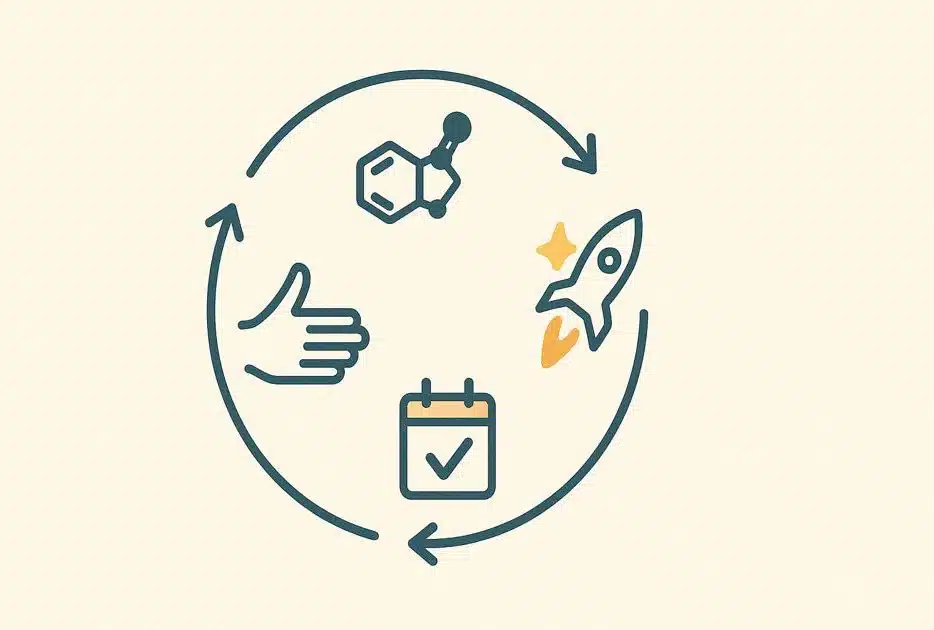
If you take one thing away from this text, let it be this: motivation always comes afterwards. Your brain only rewards you once you take action. Waiting is pointless – because the system responds to actions, not intentions.
Meditation demonstrates this perfectly. You feel calm and clear because you did it, not because you felt like doing it beforehand. Your brain is not working against you – it is following its rules. And you can use these rules to your advantage.

Warum deine Glaubenssätze dich stressen (und wie du sie loswirst)
Es ist kurz vor 22 Uhr, du stehst vor dem Spiegel im Bad, und der Tag war lang und voll….
So start small. Two minutes. One breath, one moment of calm. That’s enough to start the loop: action → dopamine → motivation. And if you repeat this regularly, it becomes a habit – not through force, but through trust in yourself.
Keep at it. Feel the good feeling afterwards. Let it become your new reward signal.
If you want to learn more about how mindfulness and the brain work together, check out the next article and subscribe to the newsletter for more practice instead of theory. Your brain will do the rest.
Frequently asked questions: Motivation, dopamine and starting a meditation routine
Why do I often feel unmotivated before meditating?
From a biological perspective, motivation is the result of an action, not the starting point. Your brain only releases dopamine (the reward neurotransmitter) after you have meditated in order to store the behaviour. Do not wait for the feeling, but start with the action.
How does the 2-minute rule help with meditation?
The 2-minute rule (or micro-meditation) lowers the barrier to entry considerably. It provides the brain with a quick, simple impulse to act, which activates the reward system. In most cases, you will remain seated for longer, but even 120 seconds is sufficient to establish the habit.
What is the difference between motivation and discipline?
Motivation is a mood that changes constantly. Discipline is an attitude and a promise to yourself to carry out the action even when motivation is lacking. Discipline generates action, which in turn leads to motivation (dopamine reward).
Can my brain “forget” positive habits again?
Yes. Positive routines can become diluted over time, as the brain is constantly searching for new, stronger stimuli (e.g. scrolling through your mobile phone). It is important to actively maintain the routine with mini rewards (mindful reflection) in order to strengthen the dopamine signal.
How can I use dopamine to consolidate my meditation routine?
Focus on the moment after meditation. Pause and consciously feel the sense of calm and clarity. This conscious afterglow reinforces the dopamine signal and helps your brain to store the action as rewarding.
Warum deine Glaubenssätze dich stressen (und wie du sie loswirst)
Es ist kurz vor 22 Uhr, du stehst vor dem Spiegel im Bad, und der Tag war lang und voll….

Meditation ist keine Wellness – aber auch keine Esoterik
Meditation ist kein Spa-Besuch, sondern eher Zähneputzen für den Kopf. Sie ist auch keine Esoterik, …
