

Six surprising effects – but which one have you been missing out on completely? Most people want less stress, better sleep and more focus. What many don’t know is that even small changes can be enough to make you feel more comfortable in your own mind. Studies show that meditation not only reduces stress, but also helps you to be more present in everyday life and strengthen your attention.
In the video, you will learn step by step how to challenge yourself in a targeted manner – without perfectionism, with small, reliable steps. First, we will look at what changes in the short term, then what effects remain in the long term. At the end, I will show you a 2-minute breathing exercise that you can try out right away.
And now let’s get started: How do you manage to deal with your feelings as if you were in control of the rollercoaster in your head?
Table of contents
Dealing with emotions like a pro – instead of a rollercoaster in your head

Meditation can help you learn to manage your emotions like a pro – instead of constantly being at their mercy. Think of it as training for your brain: you go to the ’emotional gym’ regularly and build up more composure. This means fewer automatic reactions and more leeway in how you respond to stress or anger. Studies show evidence that regular practice changes structures and connections in brain networks, for example in areas for attention and emotion control such as the anterior cingulate cortex and the insula. This makes you more resilient in the long term and ensures that you are no longer thrown off track so quickly.
Popular meditation cushions
-

Blaues Meditationskissen
41,00 € – 49,00 € -

Gelbes Meditationskissen
41,00 € – 49,00 € -
Grünes Meditationskissen
41,00 € – 49,00 € -
Lila Meditationskissen
41,00 € – 49,00 €


One simple exercise you can try right away is the body scan. Two minutes is enough: slowly move your mind from your head to your shoulders, chest, stomach and legs – just notice what is there without changing anything. This helps you to notice early on when anger or anxiety is building up, before it overwhelms you. Important: If you have a history of trauma and the exercise becomes uncomfortable, please refrain from doing it or seek out a guided, trauma-sensitive session.
It’s worth sticking with it – because the more often you do it, the clearer your mind will become and the easier it will be for you to keep a cool head even in difficult moments. And sometimes this little break is enough to break through a deadlocked mood.
Reassessing difficult times – from tunnel vision to perspective
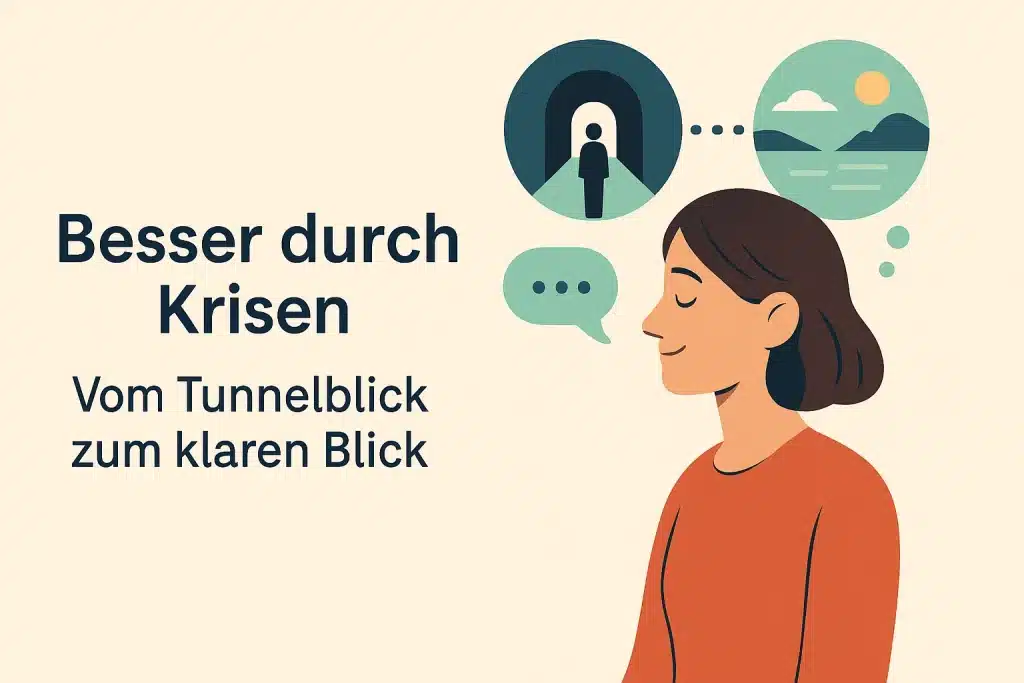
Sometimes life feels like a tunnel – you only see the problems and everything else fades into the background. This is exactly where meditation comes in: it helps you to notice the autopilot in your mind and consciously switch it off. Studies show that mindfulness programmes reduce symptoms of anxiety and depression compared to no treatment and, in some analyses, are as effective as established therapies. This is not an esoteric promise, but has been demonstrated in clinical studies.
With meditation, you suddenly find yourself sitting in the director’s chair of your own film. You observe your thoughts and worries instead of getting directly involved in the drama. One simple technique is to “observe your thoughts”: when a thought arises, say to yourself, “There is worry,” and return your attention to your breathing. This will help you notice more quickly when a cycle of thoughts is starting and allow you to consciously counteract it.
Why meditation is not a miracle cure – but still works
Be honest: have you ever noticed how quickly stress raises your pulse? That’s exactly where me…
Many people report that they process negative phases more quickly and cope better with setbacks. The whole thing is like training for greater serenity – and each time, your ability to keep a clear head even in difficult moments grows.
And now let’s take it one step further: how are your body and mind actually connected – and how can you use your inner navigation system to figure this out?
Get to know your body and mind better – switch on your inner navigation system

We often rush through the day as if we had blinders on – the main thing is to get there somehow. Meditation is like a software update for your personal satnav: suddenly you see turnings that you missed before. You feel your body and mind working together. For example, you notice when your shoulders tense up because your mind is already spinning with thoughts again. This often goes unnoticed until restlessness or tension sets in.
A practical tip: try a mini body scan. Close your eyes for a moment and spend 20 seconds focusing your attention on your head, then 20 seconds on your shoulders, then another 20 seconds on your stomach. Simply notice what is there – without changing anything. Researchers call this interoception – the ability to perceive internal signals such as breathing, heartbeat or muscle tension. Mindfulness can sharpen this perception. It’s like a built-in early warning system: you can recognise where stress is located more quickly and react in time.
Best-selling products
-
Palo Santo, Lavendel & Bergkristall
16,00 € -
Räucherbündel Palo Santo Lavendel Citrin
16,00 € -
Palo Santo mit Lavendel & Aventurin
15,00 € -
Lotus Schale Howlith
28,00 €


A little everyday tip: when you wake up in the morning, scan your body for 30 to 60 seconds – that’s enough to start the day more consciously. And importantly, if body awareness becomes uncomfortable, reduce the intensity or find a guided, trauma-sensitive exercise.
This will make your inner navigation system more and more accurate. And the better you feel yourself, the easier it will be to get back on track even in stressful times.
Actively tackling stress – instead of just waiting for things to get better

Sometimes stress feels like a long-distance run with no finish line – your head is full, your pulse is racing, and relaxation seems miles away. Many people hope that the stress will eventually subside on its own, but our everyday lives are rarely that forgiving. The good news is that you can take action instead of just waiting. Meditation gives you simple tools, especially breathing exercises. Just a few conscious breaths can help slow down the whirlwind of thoughts and signal to your body that it’s time for a break. Your nervous system receives the signal to shut down the stress response – it’s biology, not magic.
Meta-analyses suggest that mindfulness practices can reduce inflammation markers (the results are somewhat mixed) and that regular practice is associated with moderate reductions in blood pressure. So if you practise regularly, you will benefit not only mentally but also physically. To get started, simply focus entirely on your breathing for a moment: breathe in through your nose for four seconds, then breathe out slowly for eight seconds. It’s like a pit stop for your nervous system.
What do colors have to do with meditation?
Pause for a moment: Imagine your next meditation session—what image do you see? Many people ignore t…
If you notice your pulse rising at work, take six deep breaths through your nose with longer exhalations – this usually helps immediately. For advanced practitioners: play with the ratio, lengthening the exhalation until you feel the pressure easing. But please note: meditation is no substitute for medical treatment. If you have a serious heart condition or high blood pressure, please consult your doctor first.
These little breaks allow you to actively combat stress – and you will notice how, bit by bit, you regain control over your reactions. Sometimes, this brief interruption is all it takes to clear your head.
Shut down the chaos in your mind – stop the merry-go-round in your head
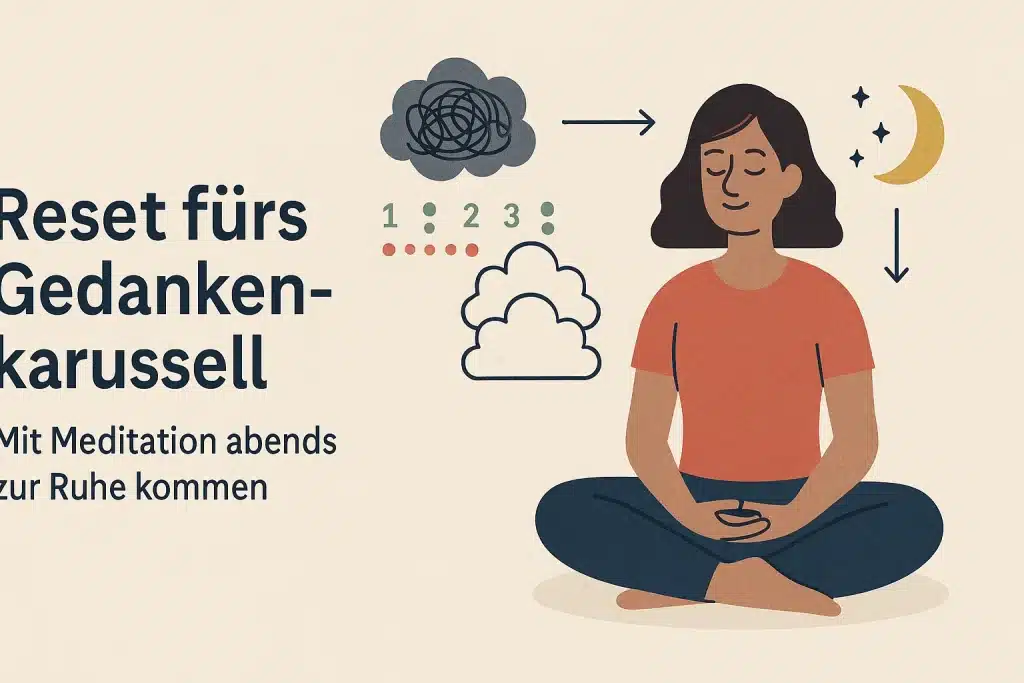
When your mind starts racing in the evening – the shopping list calls, old worries resurface, the next meeting is already haunting you – everything quickly feels like too much. Meditation is like a reset button for your brain. You train yourself to first notice your thoughts and then deliberately let them go, instead of being overwhelmed by them.
Try a mini exercise right now: count four breaths, inhale deeply with each one and exhale twice as long. Repeat this four times. As you do so, observe what pops into your head – briefly name what is on your mind (“worry”, “to-do”, “reminder”), then let the thought drift away like a cloud in the sky. It sounds simple, but it’s a real game changer because it allows you to distance yourself from the chaos of your thoughts.
Crystals & Gemstones
-
Amethyst Ohrstecker Rohstein
23,30 € -
Lotus Schale Amethyst
26,00 € -

Meditations Set
12,00 € – 98,00 € -
Lotus Schale Citrine
28,00 €


Imaging studies show changes in attention networks and less activity in areas of the brain associated with mind wandering. Mindfulness exercises can help calm the evening whirlwind of thoughts, improving sleep onset and sleep quality. Those who practise regularly often find that they ruminate less and their minds remain clearer.
This is how you create space in your head – not only for less chaos, but also for the small, beautiful moments that otherwise easily get lost in everyday life.
More in the moment – feel life again instead of missing it

Perhaps you have experienced this before: you are out for a walk, but your thoughts are already on your next appointment. Or you are eating, glance at your mobile phone – and suddenly your plate is empty, without you remembering what it tasted like. This is exactly what the topic ‘More in the moment – feeling life again instead of missing it’ is all about. Meditation helps you to focus your attention on the present moment, like a spotlight. You suddenly notice again how your muesli tastes, how the birds sound or how the fresh air feels.
This can be practised – and it’s really easy. Try the following: take a bite, look at it, smell it, chew slowly and concentrate only on the taste. Five seconds is enough to start with – no need to be a perfectionist. This is mindful eating, and it helps you to be truly present. Studies show that metta and mindful eating can strengthen positive emotions and relationships and reduce impulsive or unconscious eating.
If you want to try something else, give metta meditation a go: send yourself or someone else a friendly wish in your mind. People who regularly incorporate moments like this often find that their mood improves and life becomes more colourful again. Suddenly, you are the protagonist again, rather than just a spectator.
It’s worth persevering – every small step brings you closer to greater clarity and satisfaction in your everyday life.
Meditation as a game changer for your everyday life

Meditation is not a magic trick, but rather like regularly oiling a squeaky bicycle – suddenly everything in your head runs more smoothly again. It’s not about perfection or hours-long sessions, but about small, achievable steps. Studies show that small, regular exercises have positive effects – not overnight, but steadily.

Warum Klangmeditation dein Nervensystem rettet
Es ist sechs Uhr morgens, und in deinem Kopf steht schon die erste Aufgabe. Du öffnest die Augen und…
If you like, try it right after watching the video: three minutes, eyes closed, counting your breaths. If it feels strange or uncomfortable, just pause or look for trauma-sensitive guidance. Feel free to write in the comments how it was for you – this will motivate others too.
If you want more short, tried-and-tested exercises like this, subscribe to the channel – we’ll stick to simple steps.
Frequently asked questions about meditation and its effects in everyday life
How does meditation help combat everyday stress?
Meditation directly reduces stress levels by calming your thoughts and relaxing your nervous system. This makes you more relaxed in everyday life.
Can meditation improve my concentration?
Yes, regular meditation practice strengthens your focus and helps you to be less distracted. Just a few minutes a day can have a noticeable effect.
How do I start meditating as a beginner?
Start with simple breathing exercises and short body scans. Just 2–5 minutes a day is enough to experience the first positive effects.
Does meditation help you fall asleep?
Breathing meditation and mental letting go help to stop the evening mind-racing and improve sleep quality.
What are the physical benefits of meditation?
Studies show that meditation can lower blood pressure, strengthen the immune system and even reduce inflammation levels.
Warum Klangmeditation dein Nervensystem rettet
Es ist sechs Uhr morgens, und in deinem Kopf steht schon die erste Aufgabe. Du öffnest die Augen und…

Geführte vs. Stille Meditation: Was passiert wirklich in deinem Gehirn?
Ich saß in einem Raum mit dreißig Menschen, und eine Stimme führte uns durch den Atem. Zum ersten Ma…
