

Why do we say, ‘Take a deep breath’ when we’re stressed? Many people think it brings immediate relaxation and new energy. But what if breathing more slowly and less frequently is actually much more effective? At the end, I’ll show you a 2–5-minute exercise that you can use right away to become calmer and clearer.
I’ll briefly tell you how I experienced this myself – and how you can directly test the opposite of ‘more is better’. Perhaps you’ve also wondered why deep breathing sometimes makes you feel tired or even nervous. That’s exactly where we’ll start today.
Table of contents
Why breathing more is not automatically better
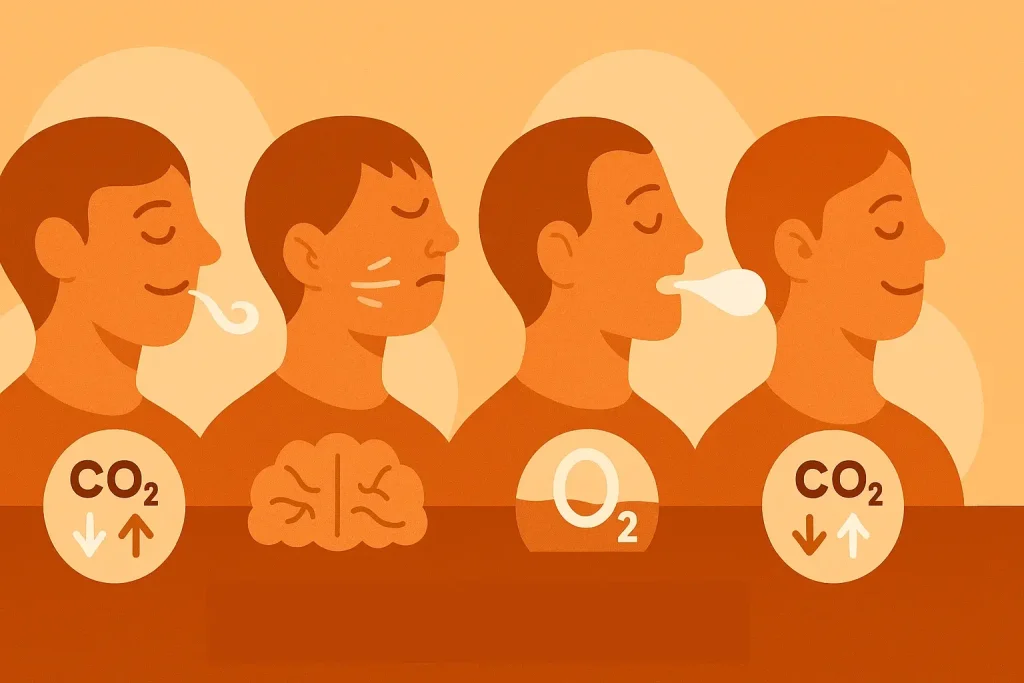
Many of us have been taught to ‘take a deep breath and everything will be better.’ At first glance, this seems logical – more air, more relaxation, more energy. But in reality, this is not always the right approach. Especially in moments of stress or exhaustion, many instinctively take deep breaths in the hope of quickly regenerating. But often, the hoped-for feeling of freshness fails to materialise. Perhaps you are familiar with this from situations such as just before an important conversation or in a traffic jam: you take a deep breath, your shoulders tense up, but instead of feeling relaxed, you continue to feel tense.
It’s worth taking a closer look here, because when it comes to breathing, more isn’t necessarily better. Breathing is like a sponge – if you wring it out too much, there will be hardly anything left. Breathing too much or too deeply, also known as ‘overbreathing’, upsets the delicate balance in the body instead of helping it. What is often overlooked is that with every breath we take, our body regulates not only oxygen but also, and more importantly, carbon dioxide (CO₂). Overbreathing means breathing faster or deeper than necessary, which causes more CO₂ to be exhaled than is actually beneficial.
Mindful sitting
-

Blaues Meditationskissen
41,00 € – 49,00 € -

Gelbes Meditationskissen
41,00 € – 49,00 € -
Grünes Meditationskissen
41,00 € – 49,00 € -
Lila Meditationskissen
41,00 € – 49,00 €


This happens more often in everyday life than many people think – especially in stressful situations. Our autonomic nervous system often switches to alarm mode and changes our breathing pattern: breathing becomes shallower, faster or very deep, sometimes even through the mouth. The idea behind this is usually that more air means better performance. But our body has a different goal. It wants to maintain internal balance, not only in terms of oxygen, but especially in terms of CO₂.
Why is this so important? CO₂ is not just a waste product; it plays a central role in how oxygen reaches our cells. When CO₂ levels in the blood drop, oxygen is not released as easily from haemoglobin to the cells (resulting in less energy). This means that even though you are breathing deeply and have enough oxygen in your blood, it is not reaching your tissues efficiently. This results in many typical symptoms such as dizziness, light-headedness or nervousness – even though there is actually too much air in the system. Some people experience dizziness or nervousness – symptoms that seem paradoxical because there is actually too much air in the system, not too little.
I often encounter this in mindful breathing courses: participants report that after several deep breaths, they tend to feel a drop in performance or pressure in their head rather than real relaxation. This is because overbreathing causes CO₂ levels to drop too low. This can create a vicious circle: you feel restless, breathe even more deeply, lose more CO₂ – and the symptoms intensify. Studies show that many people unconsciously overbreathe in everyday life, especially in stressful situations. Most don’t even notice because their breathing pattern adapts so quickly.
Many symptoms that we dismiss as stress, exhaustion or nervousness are actually signs that our CO₂ balance is out of kilter – not necessarily a lack of oxygen. It feels as if you are not getting enough air, even though there is still enough oxygen in your blood. However, excessive breathing causes so much CO₂ to be lost that the oxygen can no longer be used effectively. This explains why taking more deep breaths often causes even more restlessness instead of calming us down.
Mindfulness and meditation therefore take a different approach: they teach us to observe our breathing and give it more space and time, instead of reflexively gasping for more air. It is not about controlling our breathing, but about rediscovering our natural breathing rhythm. Those who learn to breathe more slowly and consciously gradually increase their CO₂ tolerance – i.e. their ability to remain calm and productive even with a slightly higher CO₂ content in their blood.
At first, this may feel unfamiliar or even counterintuitive. But the power of breathing lies not in constantly “refuelling”, but in maintaining inner balance. Calm, uncomplicated breathing forms the foundation on which body and mind can regenerate – and you have control over this yourself.
In short: it’s less about more oxygen and more about the right ratio of O₂ to CO₂ – I’ll explain that now.
The invisible balance: oxygen and CO₂ in the body
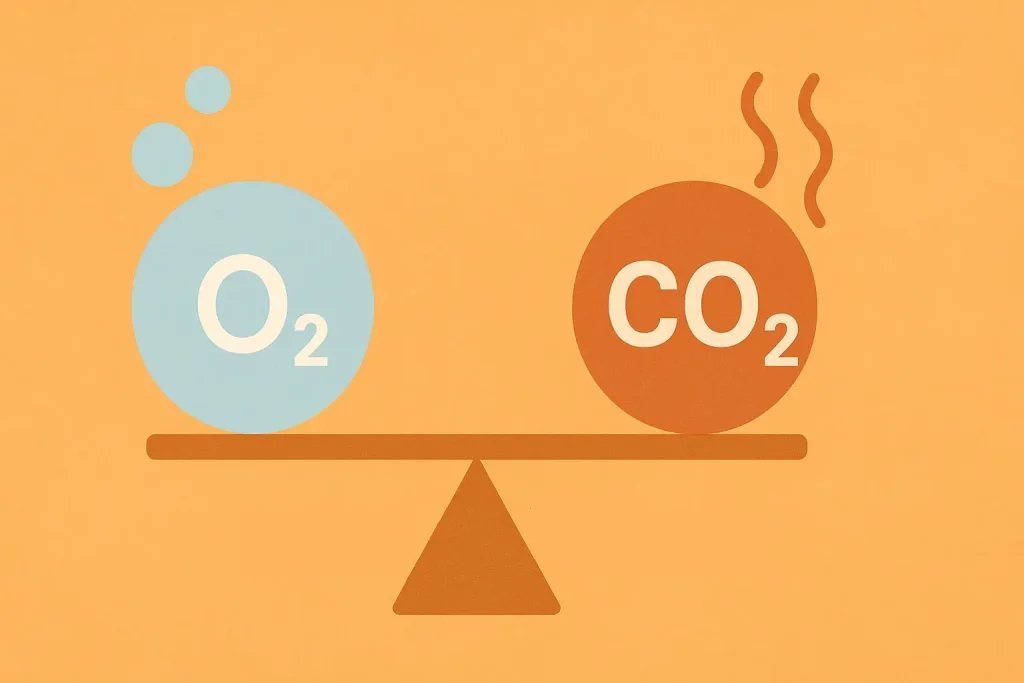
When you breathe, a fascinating interaction takes place inside your body that goes far beyond simply inhaling and exhaling. Two gases are at the centre of this process: oxygen (O₂) and carbon dioxide (CO₂). When it comes to breathing, many people focus almost exclusively on oxygen – after all, we need it to live. But the actual balance is only achieved through the interaction with CO₂, which is often underestimated.
The atmosphere contains only around 0.04% CO₂ – however, our blood works with significantly higher CO₂ concentrations; this higher level is important for oxygen to pass from the blood into the cells. In short, less CO₂ changes the binding of oxygen to haemoglobin, making it harder for oxygen to be delivered to the cells. O₂ may be present in the blood, but it does not reach the cells. This is why the CO₂ balance is so important. Researchers investigating breathing methods therefore emphasise the role of CO₂ and not just the supply of oxygen.
If you breathe faster or deeper than necessary – for example, when you are stressed or anxious – the CO₂ level in your blood drops. You don’t feel this directly, but the consequences often manifest themselves in the form of fatigue, concentration problems or a feeling of inner restlessness. The oxygen remains bound in the blood because the CO₂ that acts as a door opener is missing. The result: your muscles, your brain and your entire nervous system receive less energy, even though there is actually enough oxygen available. Many people then experience the paradoxical feeling that deep breathing does not really make them feel awake or relaxed, but rather has the opposite effect.
Waarom je gedachten je saboteren – en hoe je ze kunt stoppen
Hoe vaak heb je wel niet de gedachte: “Dat heeft toch geen zin”? Dat is precies het moment waarop je…
CO₂ is much more than just a waste product. It controls vasodilation, ensures a balanced pH value in the blood and influences how well oxygen is delivered from the red blood cells to the cells. If the CO₂ level drops, the blood vessels constrict – especially in the brain, this can lead to headaches, dizziness or concentration problems. The autonomic nervous system is also sensitive: a lack of CO₂ can lead to inner restlessness, palpitations or even feelings of anxiety. The symptoms are often subtle and easily confused with other causes.
In everyday life, it is easy to unconsciously breathe too much in stressful situations. Perhaps after receiving an email, in a traffic jam or when feeling nervous before a conversation. Your breathing becomes faster, sometimes shallower, sometimes deeper – and CO₂ escapes without you noticing. Precisely because the symptoms are so subtle, the actual problem often goes unrecognised. Many people try to counteract this by breathing even more, but this only exacerbates the imbalance.
Mindful breathing starts right here: it helps you restore the balance between O₂ and CO₂. It’s not about breathing particularly deeply or emphatically, but rather allowing yourself to breathe calmly, quietly, and relaxed. Those who learn to remain calm with a slightly higher CO₂ level in their blood can make better use of the available oxygen—and feel clearer, more alert, and more relaxed. The goal is to observe your breathing throughout the day without controlling it obsessively. This trains your CO₂ tolerance and strengthens your inner balance. Translated with DeepL.com (free version)
You can try this right now: Take a moment, close your eyes, and observe your breathing without changing it. Feel how your chest and abdomen move, and let your breathing slow down naturally. Often, after just a few minutes, you will feel a sense of calm and clarity. This is a sign that your body is regaining its balance.
Many people underestimate how much this delicate interplay affects their everyday lives. Fatigue after stress, a foggy feeling in the head, or a constant need for more air are signs that the balance is disturbed. You can counteract this with conscious, calm breathing—and thus improve your energy level, concentration, and well-being.
But why do we often only notice late that our breathing has become unbalanced? And how does hyperventilation really manifest itself in everyday life? That’s exactly what I’m going to discuss now.
How hyperventilation tricks your body

In everyday life, many things happen automatically—including our breathing. We often don’t even notice when unhealthy patterns creep in. Overbreathing, i.e., breathing too quickly or too deeply, tricks our body because the symptoms are subtle and inconspicuous. Typical signs such as fatigue at your desk, concentration problems, tense shoulders, or a queasy feeling in your head seem harmless and are quickly attributed to stress, lack of sleep, or too little exercise. But often, an unbalanced breathing pattern is behind it.
Many people underestimate how strongly the breath reacts to small everyday stimuli. A hectic morning, unpleasant news, too many tasks at once—all of these things can unconsciously change the pace of breathing. Breathing becomes faster, shallower, shifts to the chest, or even moves to the mouth. Especially in moments of tension or hecticness, but also during physical activity, this pattern often persists without us noticing. Over days and weeks, this can lead to a permanently low CO₂ level, which puts our nervous system into a subliminal state of alarm. The result: pulse and blood pressure rise, muscle tension remains elevated, and it becomes difficult to switch off.
Popular products
-
Lotus Schale Amethyst
26,00 € -
Holz Armband Set
22,00 € -
Oranges Meditationskissen
41,00 € – 49,00 € -
7 Chakra Talisman
30,00 € – 35,00 €


How to recognize hyperventilation in everyday life: faster breathing, mouth breathing, feeling tense, slight dizziness. If you often feel exhausted during the day or have trouble falling asleep at night, it is worth checking your breathing rate by pausing briefly. Often, a short break is enough to determine whether your breathing is calm and relaxed or shallow and hectic.
What happens in the body when hyperventilation becomes a habit? The autonomic nervous system registers the drop in CO₂ as a warning signal and switches to a mode that is actually intended for flight or fight. The result is inner restlessness, tension, and sometimes even a feeling of agitation—even though there is no objective danger. Many people only realize late that they are stuck in this state because the symptoms seem so commonplace. Fatigue despite rest, tense muscles, a dull head, or constant sighing are common companions.
Another typical pattern is mouth breathing. It often occurs unconsciously, especially during stress or physical exertion. Mouth breathing usually leads to faster, shallower breathing and increases CO₂ loss. Nasal breathing, on the other hand, has measurable advantages: it supplies nitric oxide (NO), humidifies and tempers the air – which supports blood flow and oxygen utilization. Therefore, in most cases, it is recommended to breathe through the nose whenever possible, especially during periods of rest.
The type of breathing also plays a role: people who breathe mainly into their chest hardly use their diaphragm and tense up more quickly. Abdominal breathing—the gentle rising and falling of the abdominal wall—activates the diaphragm and ensures calmer, deeper breathing. This in turn helps to maintain CO₂ levels at a healthy level and calm the nervous system.
Mindful breathing techniques address precisely this issue. They assist you in recognizing hyperventilation early on and counteracting it. Even small changes, such as conscious breathing through the nose and engaging the abdominal wall, can make a noticeable difference. If you pause regularly and observe your own breathing, you will quickly notice how patterns change—and can take specific countermeasures before fatigue or nervousness set in.
A practical tip: The next time you feel inner turmoil or exhaustion, pause for a moment. Breathe in slowly through your nose, gently expand your abdominal wall, and breathe out calmly. Repeat this for a few breaths. Often, this short break is enough to calm the nervous system and stabilize CO₂ levels.
Over time, you will develop a keener sense of how your breathing responds to stress, thoughts, or external stimuli. This is the first step toward greater body awareness and inner balance. Now you can learn what healthy, relaxed breathing actually looks like and why nasal breathing plays such an important role in it.
Calm, conscious breathing as the key – and how to practise it
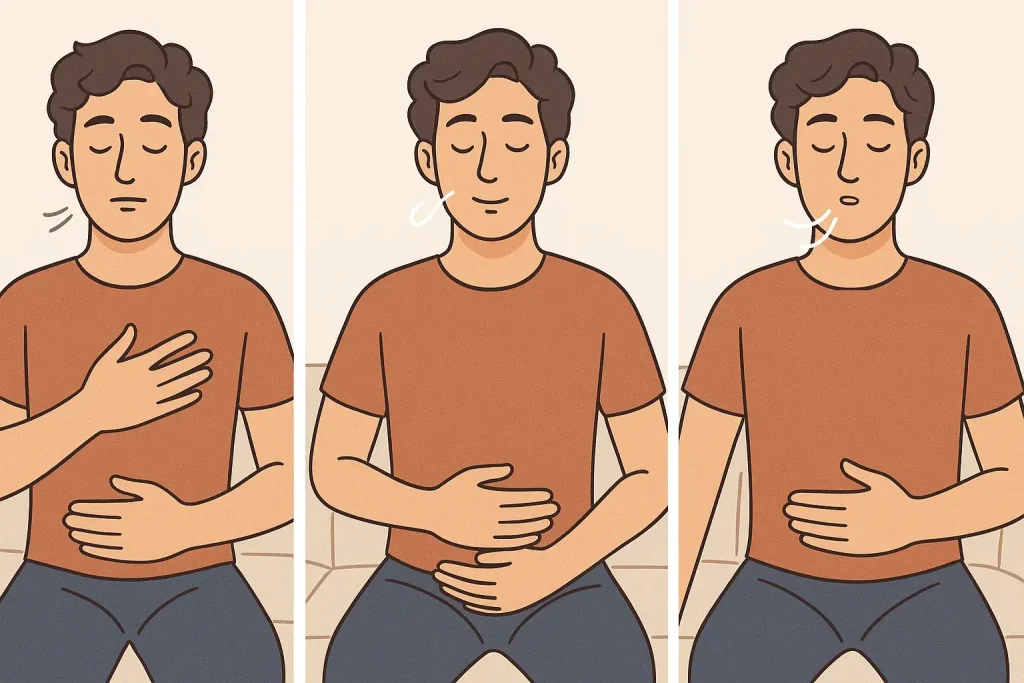
Conscious awareness of each individual breath is central to stable and relaxed breathing. Many people underestimate how much influence the way we breathe has on our body and mind. A calm, steady breathing rhythm signals to the nervous system that it is safe to relax. Breathing through the nose is particularly important in this regard. It filters and moistens the air, protects the airways, and ensures that the inhaled air is optimally prepared. Nasal breathing also supplies nitric oxide, which helps blood vessels dilate and improves oxygen utilization. All of this not only supports physical health, but also helps you feel more balanced overall.
In everyday life, we quickly fall into a pattern of breathing more shallowly, more quickly, and often unconsciously through the mouth—especially when stress, hecticness, or tension are involved. This leads to less CO₂ remaining in the body and the nervous system remaining on alert. The result: the body finds it difficult to relax, thoughts race faster, and true rest eludes us. Studies on slow, pulsed breathing show that 4–6 breaths per minute improve vagal activity and HRV – in other words, they strengthen the parasympathetic system. This means that conscious, slow breathing directly helps to reduce stress and promote inner balance.
Why meditation is not a miracle cure – but still works
Be honest: have you ever noticed how quickly stress raises your pulse? That’s exactly where me…
To find out whether you are already breathing in a relaxed and balanced way, you can do a simple test: Sit upright and place one hand loosely on your stomach. Can you feel your abdominal wall rising gently as you inhale and lowering again as you exhale? This is a sign of healthy diaphragmatic breathing. If your chest moves more or your breathing is barely noticeable, it is worth training your diaphragm specifically. The diaphragm is the main muscle involved in breathing and ensures that your body is efficiently supplied with oxygen and CO₂.
A particularly practical and easy-to-implement technique is known as A52 breathing. It is based on current findings on slow, nasal, and diaphragmatic breathing. The A52 method is a research-informed suggestion for practice—it is derived from existing findings on slow, nasal breathing, but has not yet been comprehensively tested in large RCTs. The principle is simple: you breathe in through your nose for five seconds, then breathe out for five seconds and pause for two seconds at the end of the exhalation before starting the next breath. You repeat this sequence for a few minutes. Just two to five minutes is often enough to experience a noticeable change.
Before trying this technique: If you feel dizzy or weak while practicing, stop and continue breathing normally; consult your doctor beforehand if you have severe nasal congestion or certain heart/lung conditions. It is important to listen to your body and not overexert yourself.
Regular use of A52 breathing can help your body maintain a better balance between oxygen and CO₂. The goal is to gradually increase CO₂ tolerance—that is, the ability to remain calm even when CO₂ levels rise slightly. This approach aims to reduce reflexive overbreathing and improve autonomic balance. Many people report that this practice makes them feel more balanced, helps them sleep better, and makes them less susceptible to stress. The benefits are often noticeable after just a few days: your pulse slows down, your muscles relax more easily, and your thoughts become clearer.
The beauty of A52 breathing is that you can do it anywhere—in the morning after waking up, on the go, before important appointments, or in the evening to help you fall asleep. You don’t need any special equipment or prior knowledge. The more often you incorporate this form of breathing into your daily routine, the more noticeable the positive effects will be. Over time, you will develop a keener awareness of your breathing and be able to counteract unfavorable patterns more quickly when they creep back in.
Regular practice of calm, conscious breathing is a simple but effective key to greater serenity, energy, and clarity in everyday life. If you are curious about how this feels in practice, you can try a short exercise right now.
Mini exercise: More calmness and energy through conscious breathing
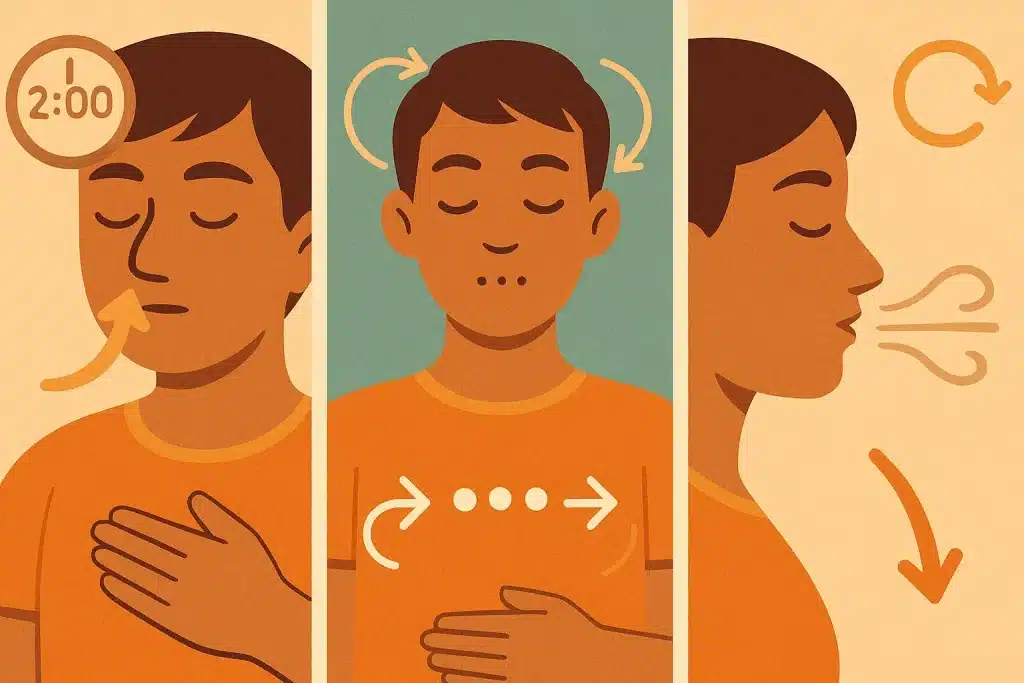
A short, practical breathing exercise can help you feel more calm and energetic—and it’s easy to do. The following mini exercise is based on A52 breathing, which is particularly suitable for beginners and is based on the latest findings on slow, conscious breathing. Before we start, an important note: Stop immediately if you feel dizzy, if your vision briefly goes black, or if you feel severely unwell. If you have severe nasal congestion, heart or lung disease, you should consult your doctor beforehand.
Sit comfortably with your feet firmly on the floor. Lean back and place one hand loosely on your stomach. This will help you feel your breathing better and make it easier to center yourself.
Now breathe in slowly through your nose and count to five in your head. Let the breath flow calmly into your belly so that your abdominal wall rises gently. If your nose is blocked, breathe calmly through your mouth, but keep the same slow pace.
Then exhale just as slowly—again through your nose or alternatively gently through your mouth—and count to five again. Feel the air leaving your body and your abdominal wall lowering again.
Popular products
-
Lotus Schale Amethyst
26,00 € -
Holz Armband Set
22,00 € -
Oranges Meditationskissen
41,00 € – 49,00 € -
7 Chakra Talisman
30,00 € – 35,00 €
After exhaling, pause for two seconds without inhaling. Enjoy this brief moment of silence, in which neither inhalation nor exhalation takes place. This is a small but effective stimulus for your nervous system.
Repeat these four steps a total of five times. This takes about two to three minutes. If you like, you can extend the exercise to five to ten minutes—studies show that even short sessions of slow breathing have positive effects on your well-being.
As you count your breaths, keep focusing your attention on the movement of your hand on your stomach. Feel how your shoulders relax with each breath and perhaps a feeling of greater clarity emerges. It is completely normal for your thoughts to wander from time to time. Gently bring them back to your breathing and don’t let it bother you.
A52 breathing utilizes the natural interaction between oxygen and CO₂. The deliberate pause after exhaling ensures that your body tolerates slightly more CO₂. This helps to deliver oxygen to the cells more effectively and calm the autonomic nervous system. Nasal breathing further supports this effect because it filters and humidifies the air and produces nitric oxide—a substance that dilates the blood vessels and improves oxygen uptake.
Be careful not to build up too much pressure. Your breathing should be quiet, almost invisible. The goal is not to breathe particularly deeply or in a controlled manner, but to find a calm, steady rhythm. If you can relax while doing this, you will usually feel your pulse and thoughts calm down after just a few minutes.
After the exercise, take a moment to ask yourself: What has changed? Do you feel your pulse slowing down, your neck relaxing, or your mind clearing? Feel free to write what you noticed in the comments—this way, you can share your experience and perhaps inspire others to try it for themselves.
You can do this exercise in the morning, during breaks at work, or in the evening before going to bed. Many people report feeling calmer, clearer, and more alert afterwards. The more regularly you practice, the easier it will be to breathe consciously and relaxed in everyday life—especially in stressful moments.
With this little exercise, you are laying the foundation for greater body awareness and inner peace. In the next step, you will learn how you can continue to use this approach in everyday life and why conscious breathing less is so powerful.
Less is more – and the first step counts
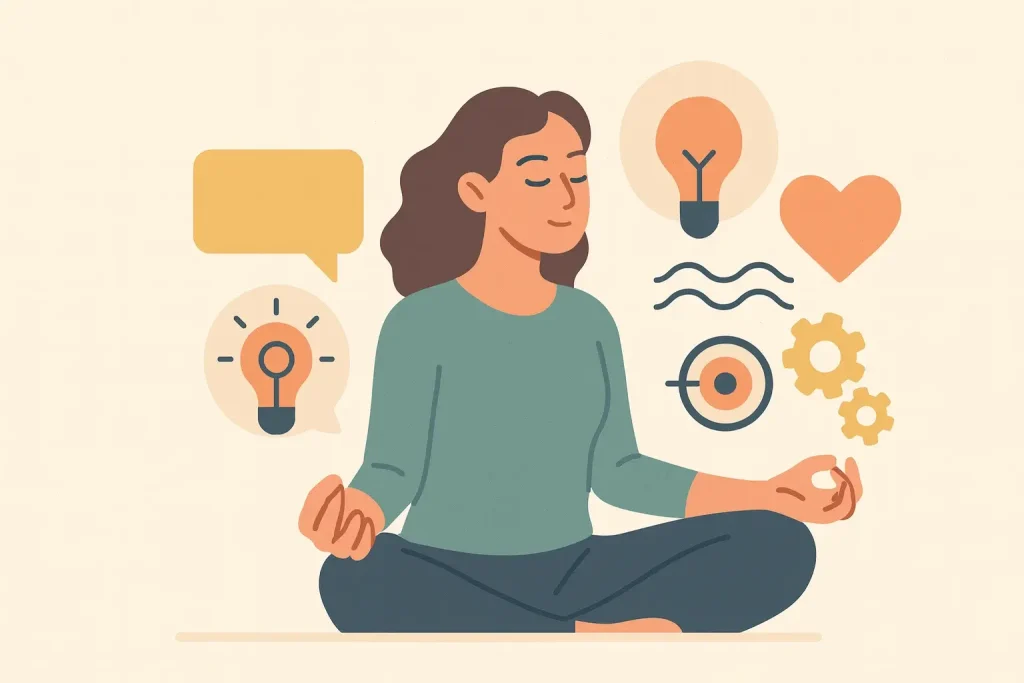
Many people underestimate how much calmness and energy can be found in conscious, slow breathing. Research and our practical experience show that true power often lies in doing less. It’s not about taking in as much air as possible, but about finding a calm, steady rhythm and gently increasing your CO₂ tolerance. Even short breathing breaks strengthen your inner balance and help you stay calmer in everyday life.
This is how meditation becomes a habit
The real moment when motivation arises Do you know that great feeling you get right after exercising…
In short: Calm, nasal, and slow breathing improves vagal regulation and the balance between O₂ and CO₂ — and this has a noticeable effect on calmness, focus, and energy. Try the exercise now, write what you felt in the comments — and if you like these simple tools, subscribe for more.
FAQ – Questions about breathing
What happens in the body when you hyperventilate?
When you hyperventilate, the CO₂ level in your blood drops, which means that oxygen is not delivered to your cells as efficiently. This often leads to dizziness, nervousness, or fatigue.
Why is breathing less sometimes healthier than breathing deeply?
Slow, calm breathing improves your CO₂ balance and helps transport oxygen to your cells more effectively. This makes you feel more relaxed and clear-headed.
What is A52 breathing?
The A52 method combines 5 seconds of inhalation, 5 seconds of exhalation, and a 2-second pause. This breathing technique strengthens the nervous system and calms the pulse.
How can I tell if I am hyperventilating in everyday life?
Typical signs include mouth breathing, rapid or shallow breathing, frequent sighing, inner restlessness, or the feeling of not being able to find true peace despite breathing.
What are the advantages of nasal breathing over mouth breathing?
Nasal breathing filters, humidifies, and warms the air, producing nitric oxide (NO) and thereby improving oxygen utilization and vascular health.

Warum Klangmeditation dein Nervensystem rettet
Es ist sechs Uhr morgens, und in deinem Kopf steht schon die erste Aufgabe. Du öffnest die Augen und…

Geführte vs. Stille Meditation: Was passiert wirklich in deinem Gehirn?
Ich saß in einem Raum mit dreißig Menschen, und eine Stimme führte uns durch den Atem. Zum ersten Ma…

Warum deine Glaubenssätze dich stressen (und wie du sie loswirst)
Es ist kurz vor 22 Uhr, du stehst vor dem Spiegel im Bad, und der Tag war lang und voll….
